Department of Pediatrics, Institute for Computational Health Sciences, University of California, San Francisco, 550 16th Street, San Francisco, California 94143, USA.
Department of Surgery, Asian Liver Center, School of Medicine, Stanford University, 1201 Welch Road, Stanford, California 94305, USA.
Nat Commun. 2017 Jul 12;8:16022. doi: 10.1038/ncomms16022.
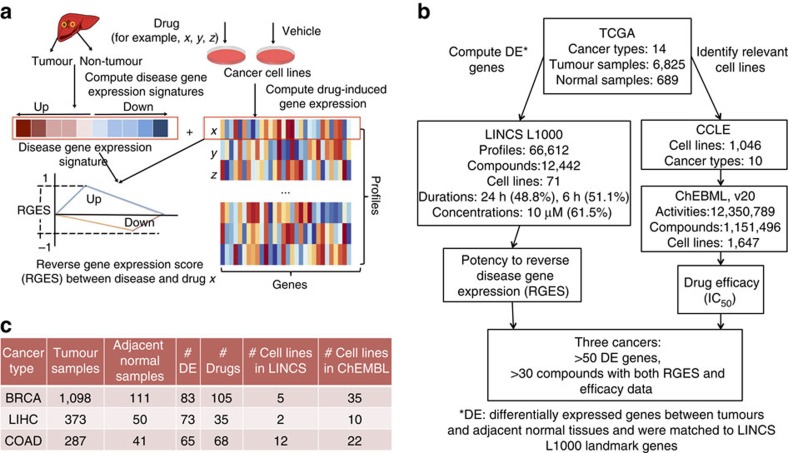
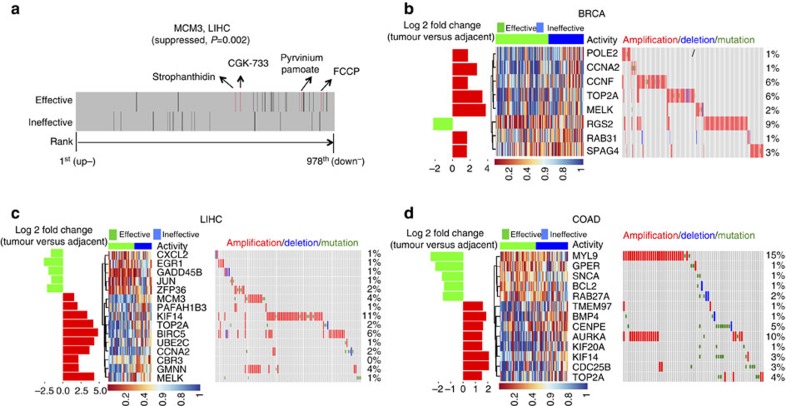
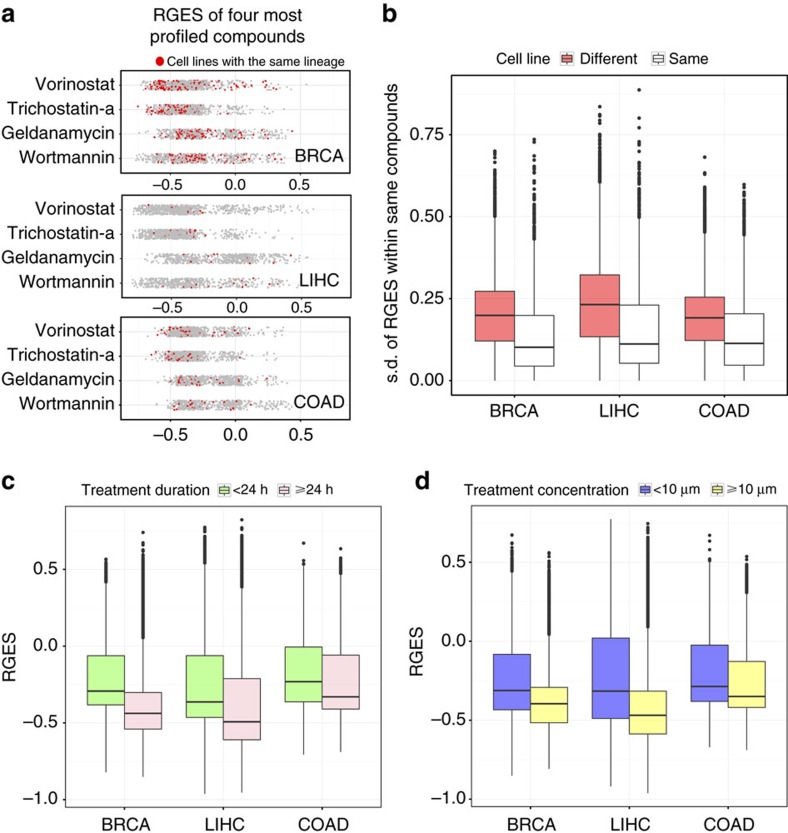
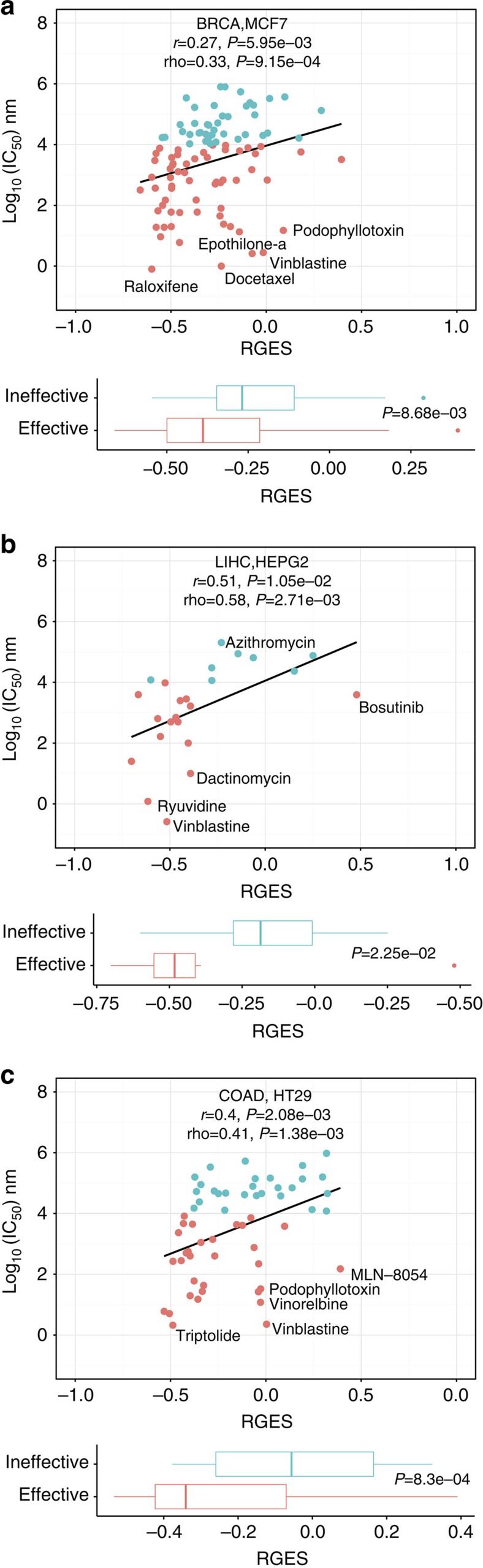
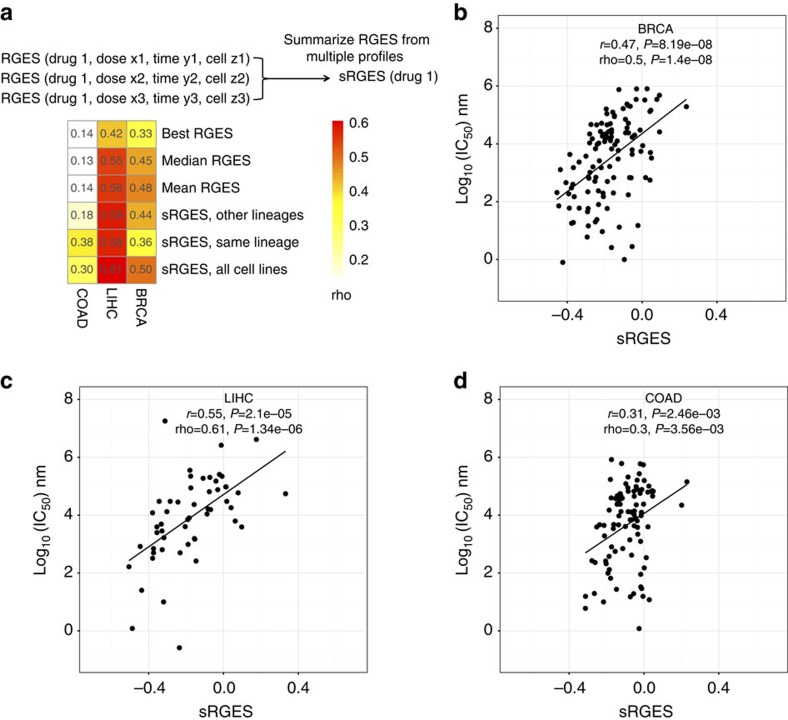
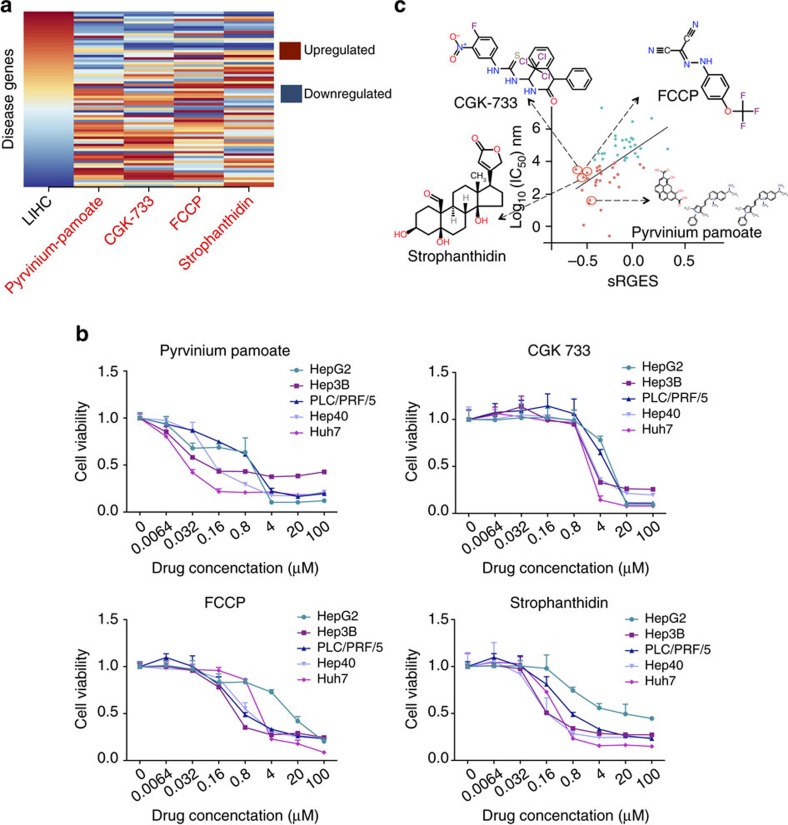
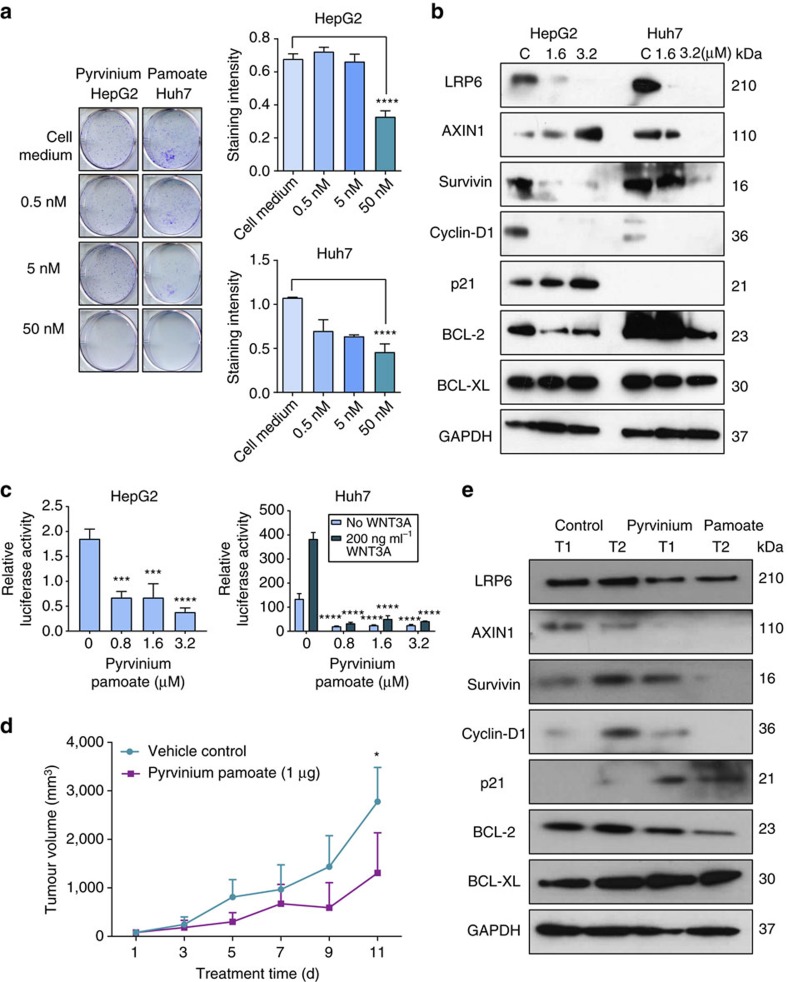
The decreasing cost of genomic technologies has enabled the molecular characterization of large-scale clinical disease samples and of molecular changes upon drug treatment in various disease models. Exploring methods to relate diseases to potentially efficacious drugs through various molecular features is critically important in the discovery of new therapeutics. Here we show that the potency of a drug to reverse cancer-associated gene expression changes positively correlates with that drug's efficacy in preclinical models of breast, liver and colon cancers. Using a systems-based approach, we predict four compounds showing high potency to reverse gene expression in liver cancer and validate that all four compounds are effective in five liver cancer cell lines. The in vivo efficacy of pyrvinium pamoate is further confirmed in a subcutaneous xenograft model. In conclusion, this systems-based approach may be complementary to the traditional target-based approach in connecting diseases to potentially efficacious drugs.
基因组技术成本的降低使人们能够对大规模临床疾病样本进行分子特征分析,并能够对各种疾病模型中药物治疗引起的分子变化进行分析。通过各种分子特征将疾病与可能有效的药物联系起来的方法对于新疗法的发现至关重要。在这里,我们发现药物逆转与癌症相关的基因表达变化的效力与该药物在乳腺癌、肝癌和结肠癌的临床前模型中的疗效呈正相关。我们采用基于系统的方法,预测了四种在肝癌中具有高逆转基因表达能力的化合物,并验证了这四种化合物在五种肝癌细胞系中均有效。吡喹酮在皮下异种移植模型中的体内疗效也得到了进一步证实。总之,这种基于系统的方法可能与传统的基于靶点的方法相辅相成,有助于将疾病与可能有效的药物联系起来。