Dat Vu Quoc, Vu Hieu Ngoc, Nguyen The Hung, Nguyen Hoa Thi, Hoang Long Bao, Vu Tien Viet Dung, Bui Chi Linh, Van Nguyen Kinh, Nguyen Trung Vu, Trinh Dao Tuyet, Torre Alessandro, van Doorn H Rogier, Nadjm Behzad, Wertheim Heiman F L
Department of Infectious Diseases, Hanoi Medical University, Hanoi, Vietnam.
National Hospital for Tropical Diseases, Hanoi, Vietnam.
BMC Infect Dis. 2017 Jul 12;17(1):493. doi: 10.1186/s12879-017-2582-7.
Bloodstream infections (BSIs) are associated with high morbidity and mortality worldwide. However their aetiology, antimicrobial susceptibilities and associated outcomes differ between developed and developing countries. Systematic data from Vietnam are scarce. Here we present aetiologic data on BSI in adults admitted to a large tertiary referral hospital for infectious diseases in Hanoi, Vietnam.
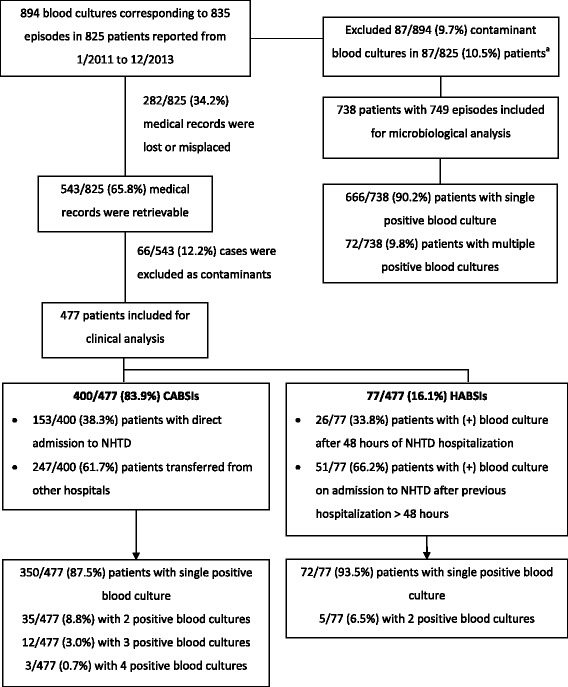
A retrospective study was conducted at the National Hospital for Tropical Diseases between January 2011 and December 2013. Cases of BSI were determined from records in the microbiology department. Case records were obtained where possible and clinical findings, treatment and outcome were recorded. BSI were classified as community acquired if the blood sample was drawn ≤48 h after hospitalization or hospital acquired if >48 h.
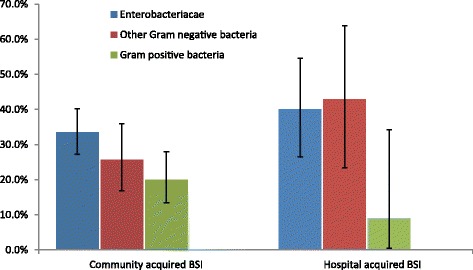
A total of 738 patients with BSI were included for microbiological analysis. The predominant pathogens were: Klebsiella pneumoniae (17.5%), Escherichia coli (17.3%), Staphylococcus aureus (14.9%), Stenotrophomonas maltophilia (9.6%) and Streptococcus suis (7.6%). The overall proportion of extended spectrum beta-lactamase (ESBL) production among Enterobacteriaceae was 25.1% (67/267 isolates) and of methicillin-resistance in S. aureus (MRSA) 37% (40/108). Clinical data was retrieved for 477 (64.6%) patients; median age was 48 years (IQR 36-60) with 27.7% female. The overall case fatality rate was 28.9% and the highest case fatality was associated with Enterobacteriaceae BSI (34.7%) which accounted for 61.6% of all BSI fatalities.
Enterobacteriaceae (predominantly K. pneumoniae and E. coli) are the most common cause of both community and hospital acquired bloodstream infections in a tertiary referral clinic in northern Vietnam.
血流感染(BSIs)在全球范围内都与高发病率和高死亡率相关。然而,其病因、抗菌药物敏感性及相关结果在发达国家和发展中国家之间存在差异。越南的系统性数据较为匮乏。在此,我们呈现越南河内一家大型三级传染病转诊医院收治的成年血流感染患者的病因学数据。
于2011年1月至2013年12月在国家热带病医院开展了一项回顾性研究。血流感染病例通过微生物科记录确定。尽可能获取病例记录,并记录临床发现、治疗及结果。若血样在住院后≤48小时采集,则血流感染分类为社区获得性;若>48小时采集,则为医院获得性。
共有738例血流感染患者纳入微生物学分析。主要病原体为:肺炎克雷伯菌(17.5%)、大肠埃希菌(17.3%)、金黄色葡萄球菌(14.9%)、嗜麦芽窄食单胞菌(9.6%)和猪链球菌(7.6%)。肠杆菌科中产超广谱β-内酰胺酶(ESBL)的总体比例为25.1%(67/267株分离菌),金黄色葡萄球菌中耐甲氧西林(MRSA)的比例为37%(40/108)。为477例(64.6%)患者检索到临床数据;中位年龄为48岁(四分位间距36 - 60),女性占27.7%。总体病死率为28.9%,最高病死率与肠杆菌科血流感染相关(34.7%),其占所有血流感染死亡病例的61.6%。
在越南北部一家三级转诊诊所中,肠杆菌科(主要是肺炎克雷伯菌和大肠埃希菌)是社区获得性和医院获得性血流感染的最常见病因。