Wengaard Eivind, Kristoffersen Morten, Harris Anette, Gundersen Hilde
Department of Sport and Physical Education, Western Norway University of Applied SciencesBergen, Norway.
Department of Psychosocial Science, Faculty of Psychology, Institute of Psychosocial Science, University of BergenBergen, Norway.
Front Hum Neurosci. 2017 Jun 28;11:330. doi: 10.3389/fnhum.2017.00330. eCollection 2017.
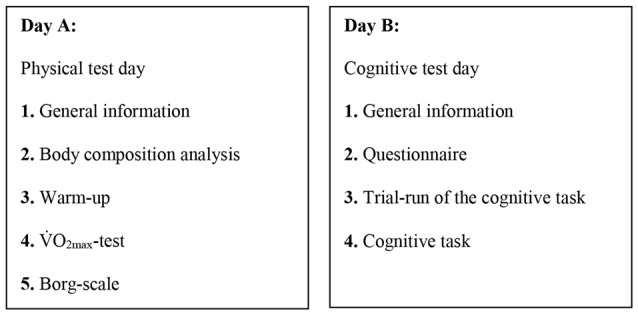
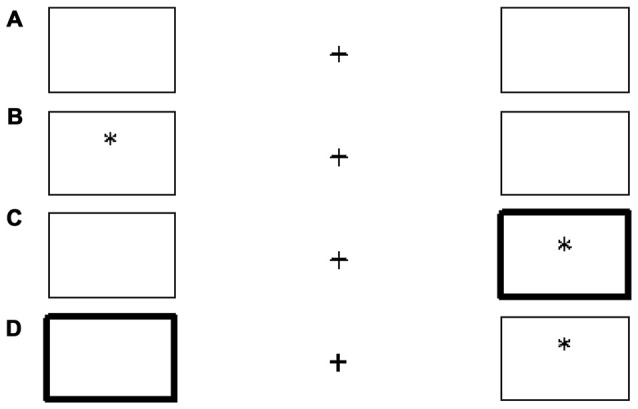
: Previous studies have shown associations of physical fitness and cognition in children and in younger and older adults. However, knowledge about associations in high-school adolescents and young adults is sparse. Thus, the aim of this study was to evaluate the association of physical fitness, measured as maximal oxygen uptake ([Formula: see text]), muscle mass, weekly training, and cognitive function in the executive domains of selective attention and inhibitory control, in healthy male high-school students. : Fifty-four males (17.9 ± 0.9 years, 72 ± 11 kg and 182 ± 7 cm) completed a [Formula: see text] test, a body composition test and a visual cognitive task based on the Posner cue paradigm with three types of stimuli with different attentional demands (i.e., stimuli presentation following no cue, valid cue or invalid cue presentations). The task consisted of 336 target stimuli, where 56 (17%) of the target stimuli appeared without a cue (no cue), 224 (67%) appeared in the same rectangle as the cue (valid cue) and 56 (17%) appeared in the rectangle opposite to the cue (invalid cue). Mean reaction time (RT) and corresponding errors was calculated for each stimuli type. Total task duration was 9 min and 20 s In addition, relevant background information was obtained in a questionnaire. : Linear mixed model analyses showed that higher [Formula: see text] was associated with faster RT for stimuli following invalid cue (Estimate = -2.69, SE = 1.03, = 0.011), and for stimuli following valid cue (Estimate = -2.08, SE = 1.03, = 0.048). There was no association of muscle mass and stimuli ( = 1.01, = 0.397) or of weekly training and stimuli ( = 0.99, = 0.405). : The results suggest that cardiorespiratory fitness is associated with cognitive performance in healthy male high-school students in the executive domains of selective attention.
以往的研究表明,儿童以及年轻人和老年人的身体健康状况与认知能力之间存在关联。然而,关于高中青少年和青年成年人之间关联的知识却很稀少。因此,本研究的目的是评估在健康男性高中生中,以最大摄氧量([公式:见正文])、肌肉质量、每周训练量衡量的身体健康状况与选择性注意力和抑制控制执行领域的认知功能之间的关联。
54名男性(17.9±0.9岁,72±11千克,身高182±7厘米)完成了一项[公式:见正文]测试、一项身体成分测试以及一项基于波斯纳线索范式的视觉认知任务,该任务有三种具有不同注意力需求的刺激类型(即无线索、有效线索或无效线索呈现后呈现刺激)。该任务由336个目标刺激组成,其中56个(17%)目标刺激无线索出现(无线索),224个(67%)出现在与线索相同的矩形中(有效线索),56个(17%)出现在与线索相对的矩形中(无效线索)。计算每种刺激类型的平均反应时间(RT)和相应的错误率。总任务时长为9分20秒。此外,通过问卷调查获取了相关背景信息。
线性混合模型分析表明,较高的[公式:见正文]与无效线索后刺激的更快反应时间相关(估计值=-2.69,标准误=1.03,P=0.011),也与有效线索后刺激的更快反应时间相关(估计值=-2.08,标准误=1.03,P=0.048)。肌肉质量与刺激之间(P=1.01,P=0.397)以及每周训练量与刺激之间均无关联(P=0.99,P=0.405)。
结果表明,心肺适能与健康男性高中生在选择性注意力执行领域的认知表现相关。