Ghimire Pramesh Raj, Agho Kingsley Emwinyore, Renzaho Andre, Christou Aliki, Nisha Monjura Khatun, Dibley Michael, Raynes-Greenow Camille
School of Science and Health, Western Sydney University, Penrith, New South Wales, Australia.
School of Social Sciences and Psychology, Western Sydney University, Penrith, New South Wales, Australia.
PLoS One. 2017 Jul 13;12(7):e0181332. doi: 10.1371/journal.pone.0181332. eCollection 2017.
Stillbirth has a long-lasting impact on parents and families. This study examined socio-economic predictors associated with stillbirth in Nepal for the year 2001, 2006 and 2011.
The Nepalese Demographic and Health Survey (NDHS) data for the period (2001-2011) were pooled to estimate socio-economic predictors associated with stillbirths in Nepal using binomial logistic regression while taking clustering and sampling weights into account.
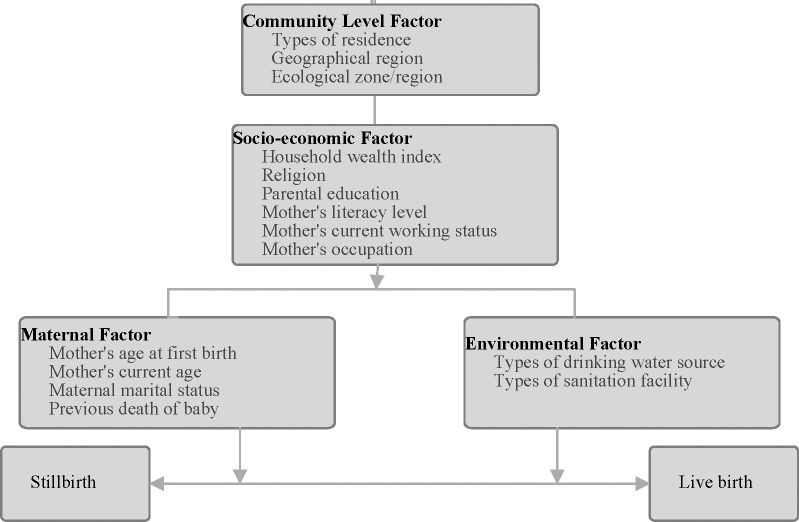
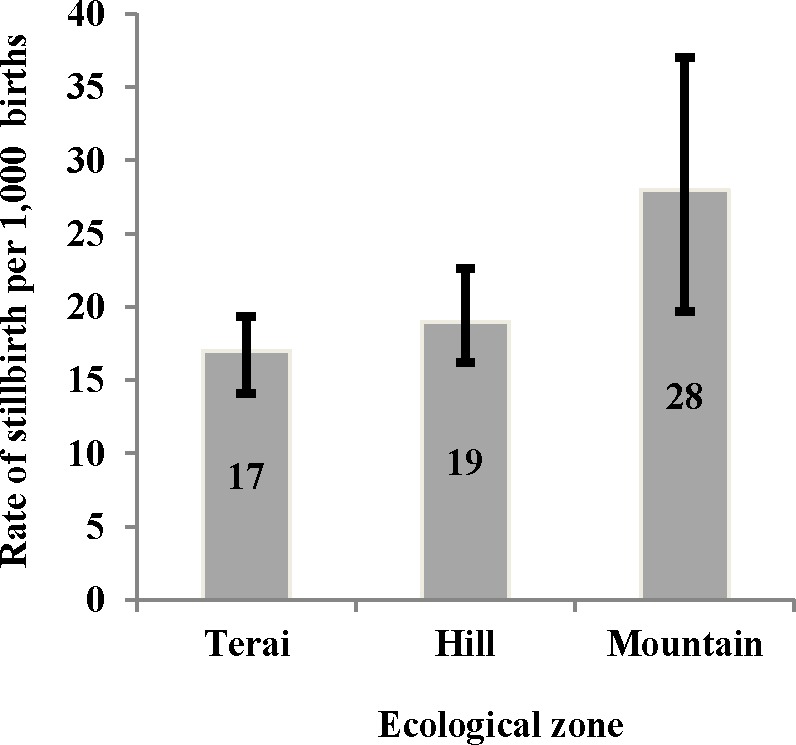
A total of 18,386 pregnancies of at least 28 weeks gestation were identified. Of these pregnancies, 335 stillbirths were reported. Stillbirth increased significantly among women that lived in the hills ecological zones (aRR 1.38, 95% CI 1.02, 1.87) or in the mountains ecological zones (aRR 1.71, 95% CI 1.10, 2.66). Women with no schooling (aRR 1.72, 95% CI 1.10, 2.69), women with primary education (aRR 1.81, 95% CI 1.11, 2.97); open defecation (aRR 1.48, 95% CI 1.00, 2.18), and those whose major occupation was agriculture (aRR 1.80, 95% CI 1.16, 2.78) are more likely to report higher stillbirth.
Low levels of education, ecological zones and open defecation were found to be strong predictors of stillbirth. Access to antenatal care services and skilled birth attendants for women in the mountainous and hilly ecological zones of Nepal is needed to further reduce stillbirth and improved services should also focus on women with low levels of education.
死产对父母和家庭有着持久的影响。本研究调查了2001年、2006年和2011年尼泊尔与死产相关的社会经济预测因素。
汇总2001 - 2011年期间的尼泊尔人口与健康调查(NDHS)数据,采用二项逻辑回归,同时考虑聚类和抽样权重,以估计尼泊尔与死产相关的社会经济预测因素。
共识别出18386例妊娠周数至少为28周的孕妇。在这些妊娠中,报告了335例死产。生活在山区生态区(调整相对危险度1.38,95%置信区间1.02, 1.87)或山区生态区(调整相对危险度1.71,95%置信区间1.10, 2.66)的女性死产率显著增加。未受过教育的女性(调整相对危险度1.72,95%置信区间1.10, 2.69)、受过小学教育的女性(调整相对危险度1.81,95%置信区间1.11, 2.97);露天排便(调整相对危险度1.48,95%置信区间1.00, 2.18)以及主要职业为农业的女性(调整相对危险度1.80,95%置信区间1.16, 2.78)更有可能报告较高的死产率。
发现教育水平低、生态区和露天排便情况是死产的有力预测因素。尼泊尔山区和丘陵生态区的妇女需要获得产前护理服务和熟练的助产人员,以进一步降低死产率,改进服务还应关注教育水平低的妇女。