Maciejewska Marta, Adam Delphine, Naômé Aymeric, Martinet Loïc, Tenconi Elodie, Całusińska Magdalena, Delfosse Philippe, Hanikenne Marc, Baurain Denis, Compère Philippe, Carnol Monique, Barton Hazel A, Rigali Sébastien
InBioS-Centre for Protein Engineering, Institut de Chimie B6a, University of LiègeLiège, Belgium.
Environmental Research and Innovation Department, Luxembourg Institute of Science and TechnologyBelvaux, Luxembourg.
Front Microbiol. 2017 Jun 29;8:1181. doi: 10.3389/fmicb.2017.01181. eCollection 2017.
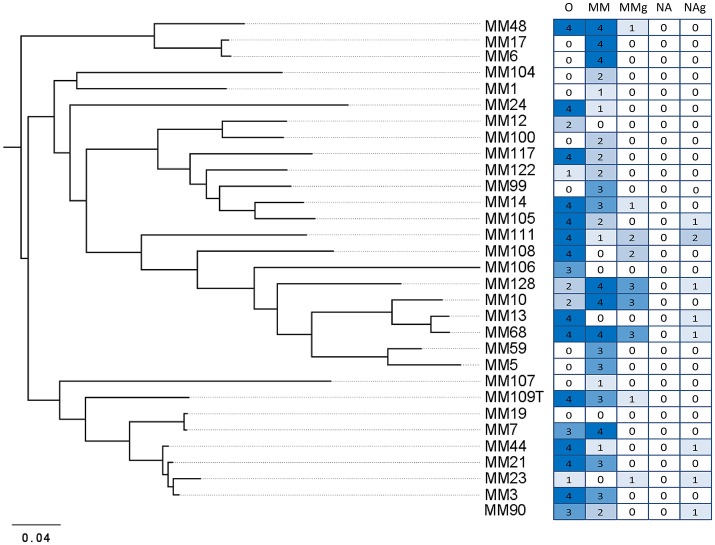
Moonmilk is a karstic speleothem mainly composed of fine calcium carbonate crystals (CaCO) with different textures ranging from pasty to hard, in which the contribution of biotic rock-building processes is presumed to involve indigenous microorganisms. The real microbial input in the genesis of moonmilk is difficult to assess leading to controversial hypotheses explaining the origins and the mechanisms (biotic vs. abiotic) involved. In this work, we undertook a comprehensive approach in order to assess the potential role of filamentous bacteria, particularly a collection of moonmilk-originating , in the genesis of this speleothem. Scanning electron microscopy (SEM) confirmed that indigenous filamentous bacteria could indeed participate in moonmilk development by serving as nucleation sites for CaCO deposition. The metabolic activities involved in CaCO transformation were furthermore assessed among the collection of moonmilk , which revealed that peptides/amino acids ammonification, and to a lesser extend ureolysis, could be privileged metabolic pathways participating in carbonate precipitation by increasing the pH of the bacterial environment. Additionally, search for the genes involved in biomineralization processes including ureolysis, dissimilatory nitrate reduction to ammonia, active calcium ion transport, and reversible hydration of CO allowed to identify genetic predispositions for carbonate precipitation in . Finally, their biomineralization abilities were confirmed by environmental SEM, which allowed to visualize the formation of abundant mineral deposits under laboratory conditions. Overall, our study provides novel evidences that filamentous Actinobacteria could be key protagonists in the genesis of moonmilk through a wide spectrum of biomineralization processes.
月奶石是一种岩溶洞穴沉积物,主要由质地各异(从糊状到坚硬)的细碳酸钙晶体(CaCO₃)组成,其中生物造岩过程的贡献被认为涉及本地微生物。月奶石形成过程中真正的微生物作用难以评估,这导致了关于其起源和所涉及机制(生物成因与非生物成因)的争议性假说。在这项研究中,我们采用了一种综合方法来评估丝状细菌,特别是一组源自月奶石的丝状细菌,在这种洞穴沉积物形成过程中的潜在作用。扫描电子显微镜(SEM)证实,本地丝状细菌确实可以通过作为碳酸钙沉积的成核位点参与月奶石的形成。此外,我们还评估了月奶石样本中参与碳酸钙转化的代谢活动,结果表明肽/氨基酸氨化作用以及程度较轻的尿素分解作用,可能是通过提高细菌环境的pH值参与碳酸盐沉淀的主要代谢途径。此外,对参与生物矿化过程的基因进行搜索,包括尿素分解、异化硝酸盐还原为氨、活性钙离子运输以及二氧化碳的可逆水合作用,从而确定了月奶石样本中碳酸盐沉淀的遗传倾向。最后,通过环境扫描电子显微镜证实了它们的生物矿化能力,该显微镜能够观察到在实验室条件下大量矿物沉积物的形成。总体而言,我们的研究提供了新的证据,表明丝状放线菌可能通过广泛的生物矿化过程成为月奶石形成的关键因素。