Berenguer Eduardo, Bárány Ivett, Solís María-Teresa, Pérez-Pérez Yolanda, Risueño María C, Testillano Pilar S
Pollen Biotechnology of Crop Plants Laboratory, Biological Research Center, Centro de Investigaciones Biológicas - Consejo Superior de Investigaciones Científicas (CIB-CSIC)Madrid, Spain.
Front Plant Sci. 2017 Jun 29;8:1161. doi: 10.3389/fpls.2017.01161. eCollection 2017.
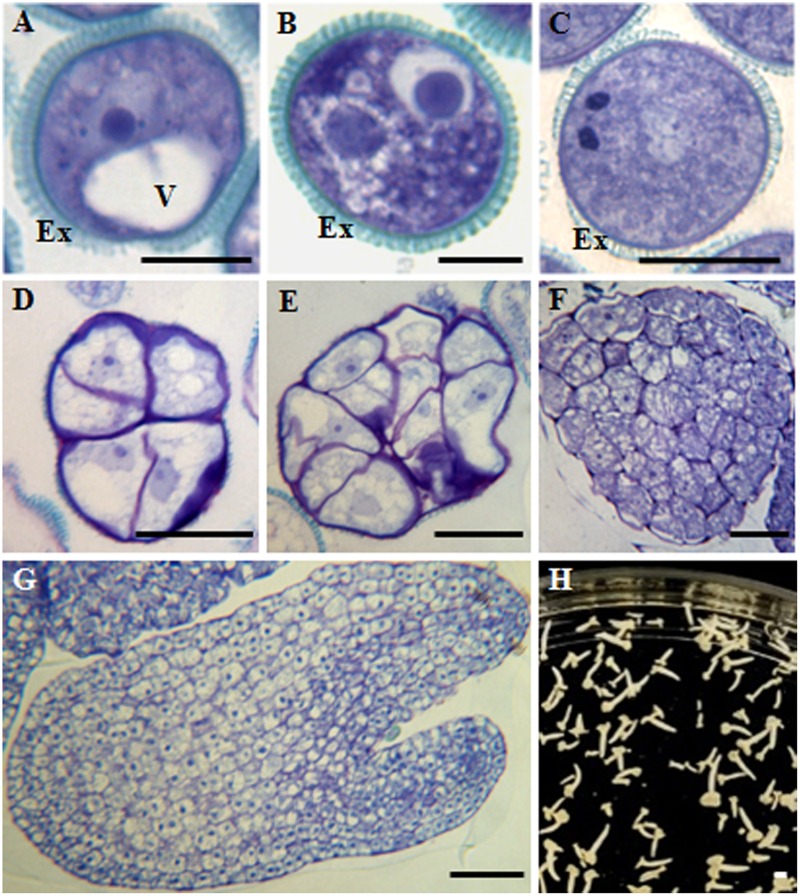
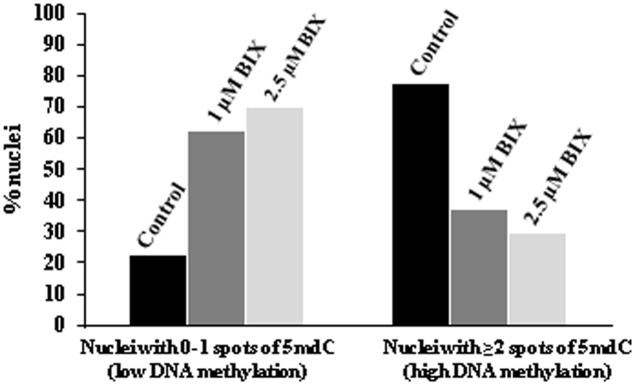
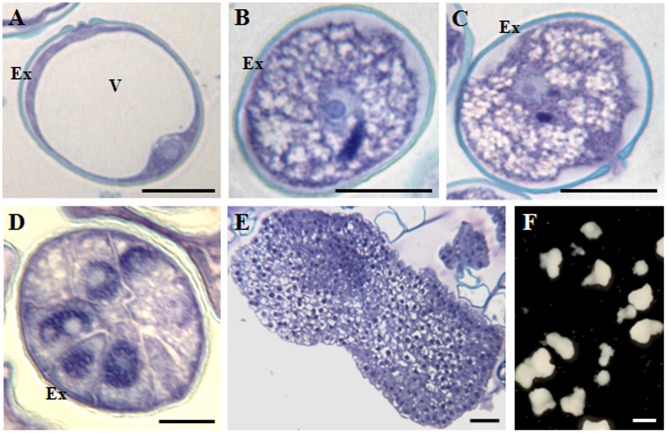
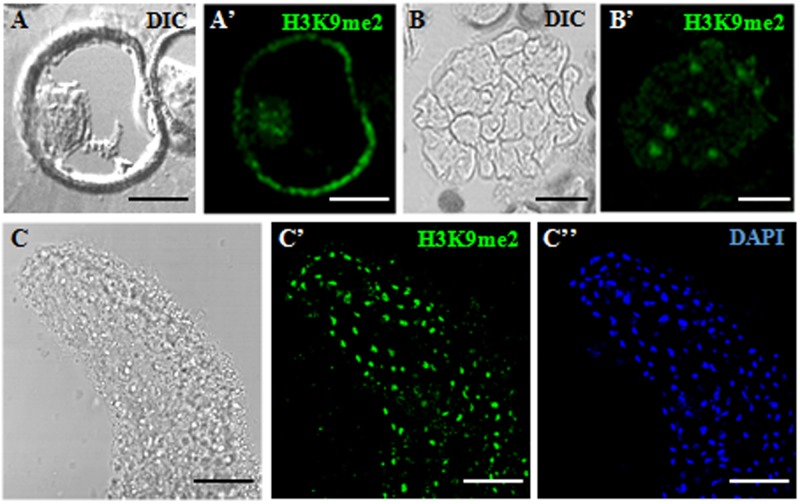
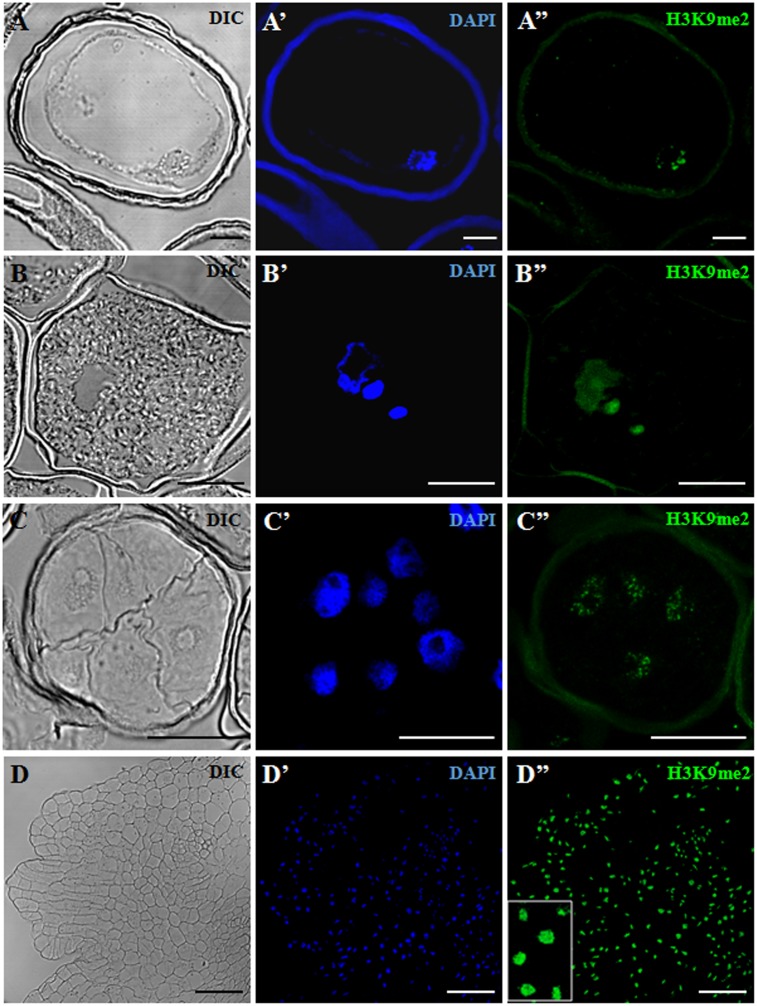
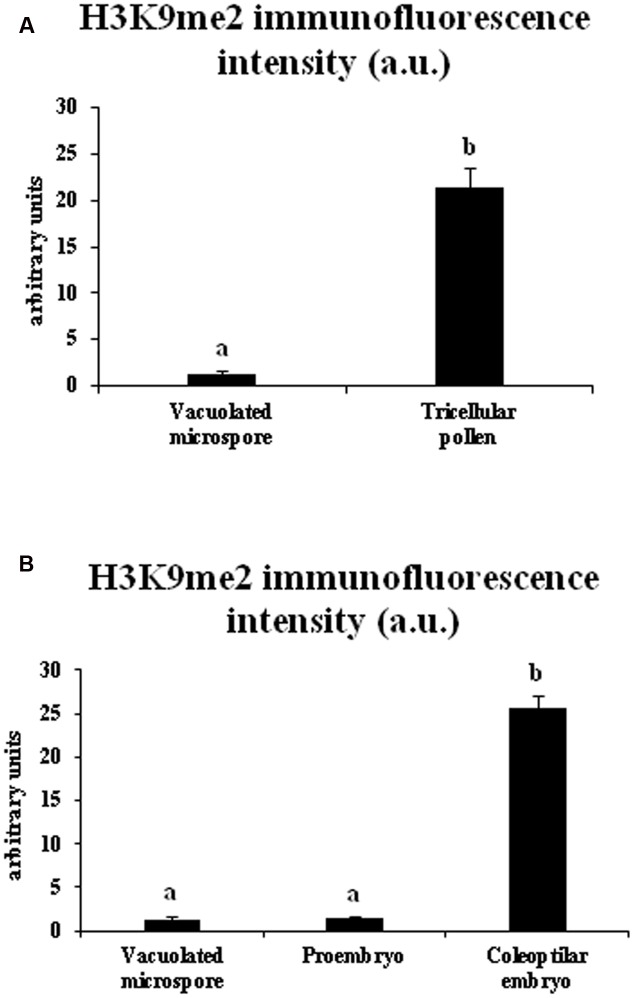
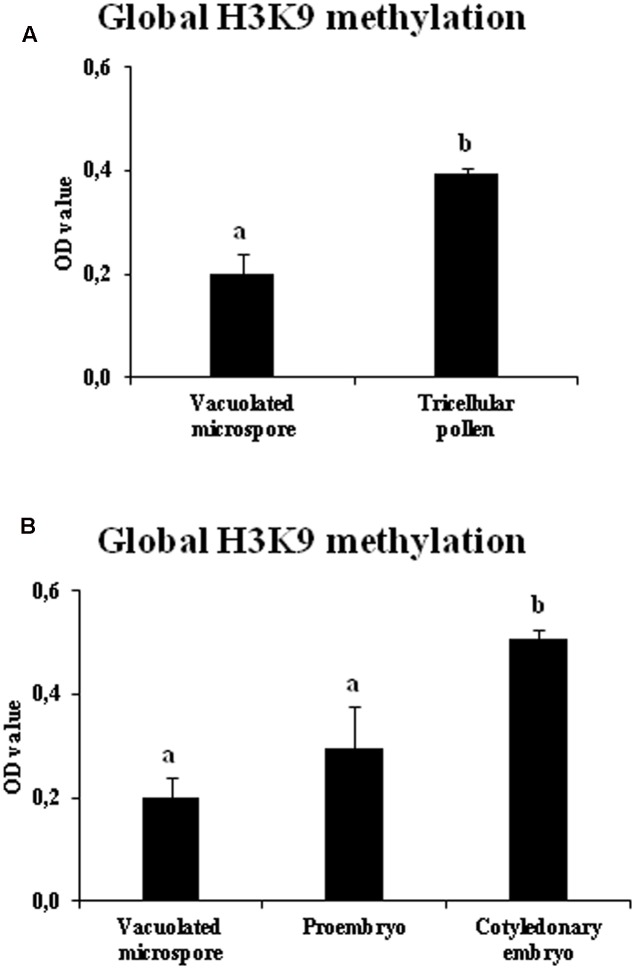
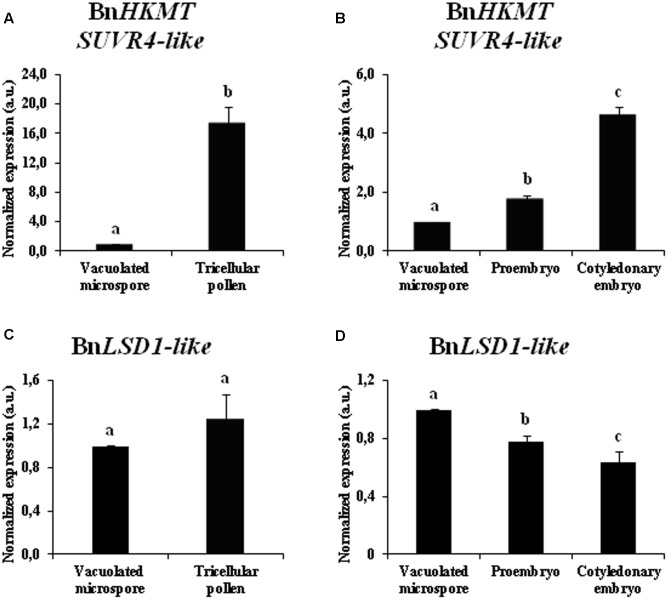
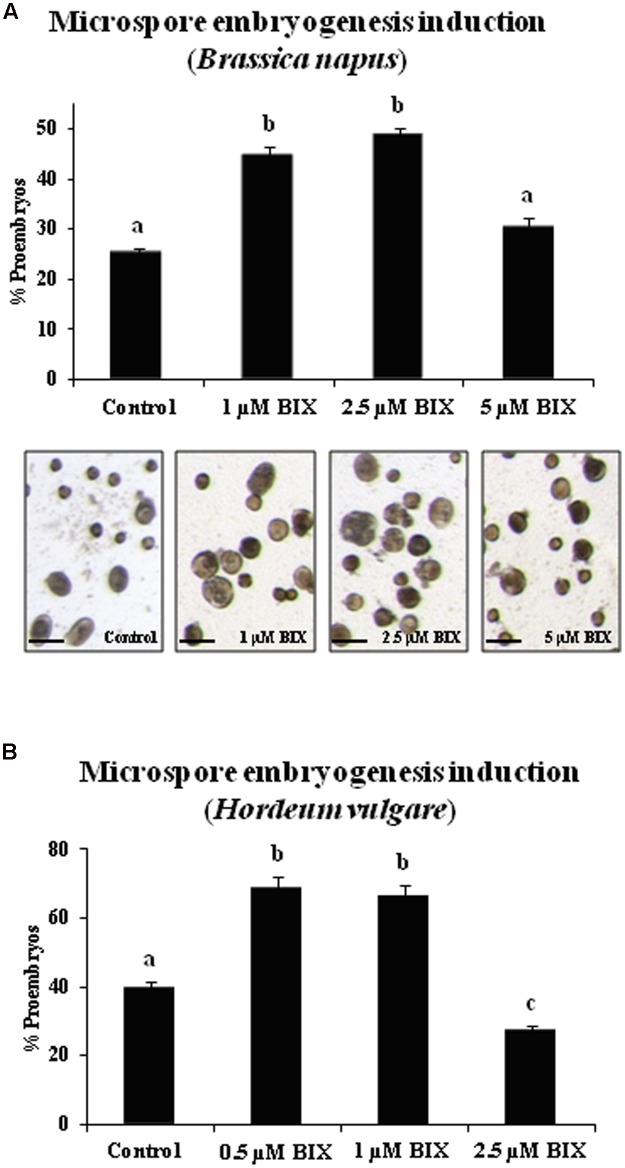
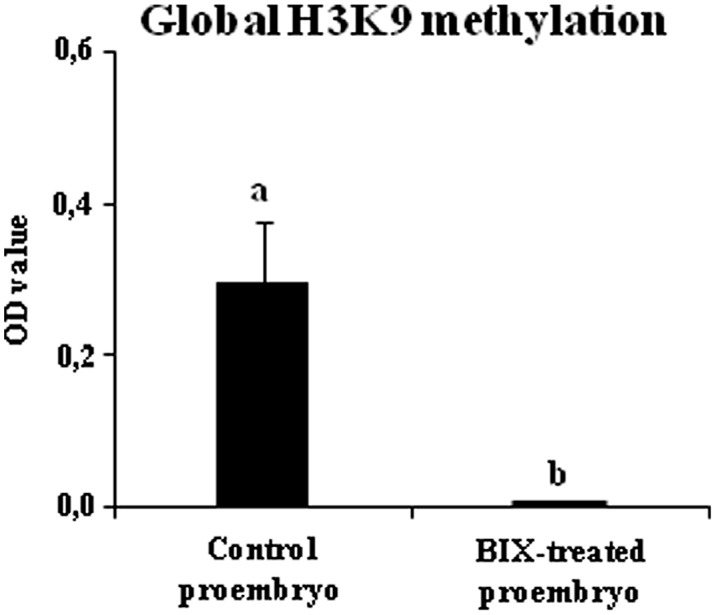
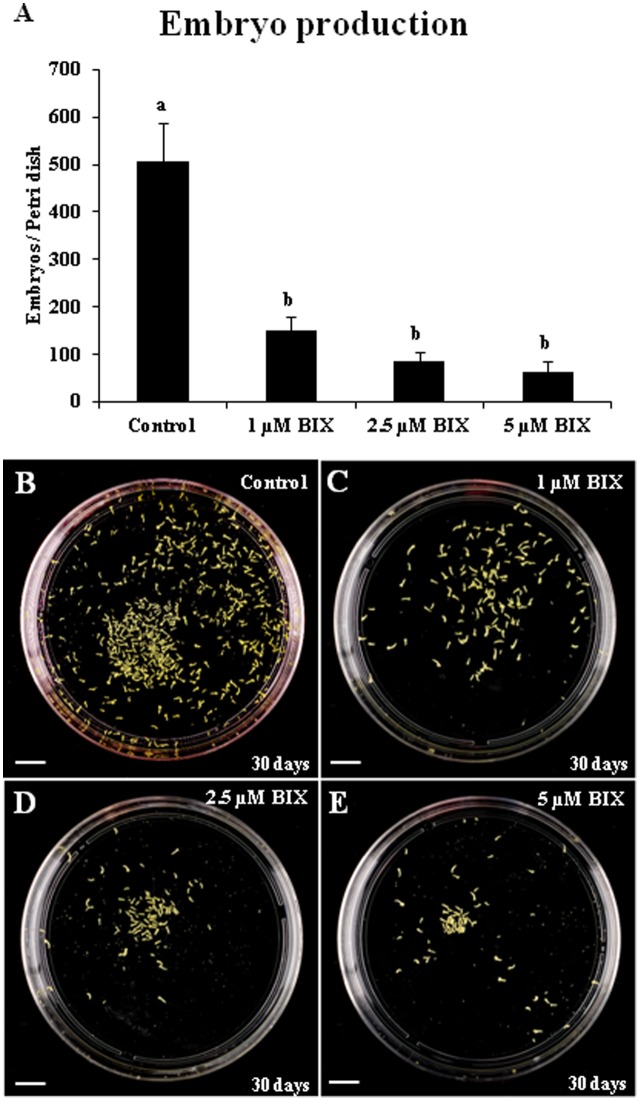
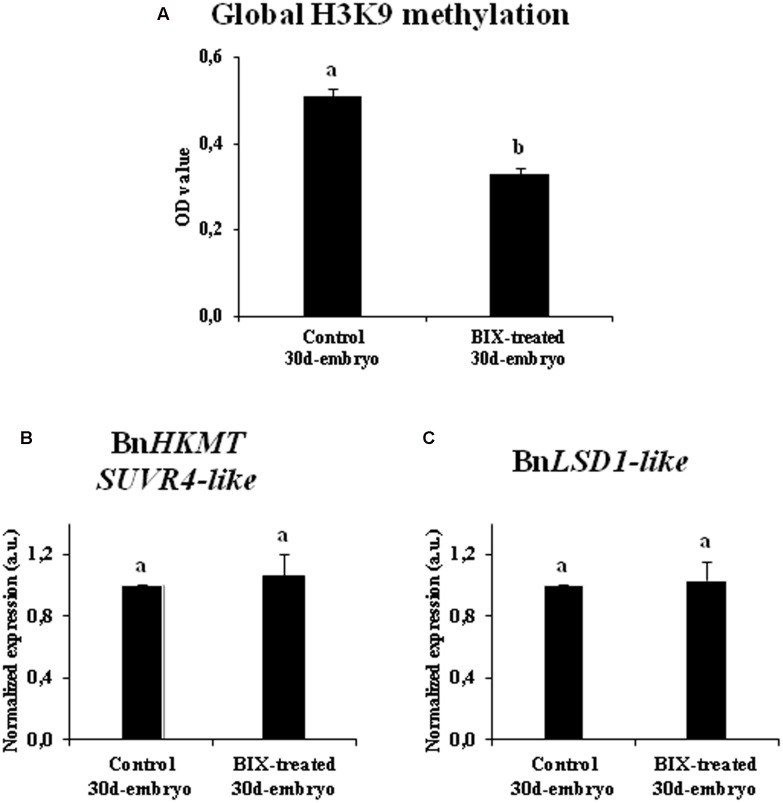
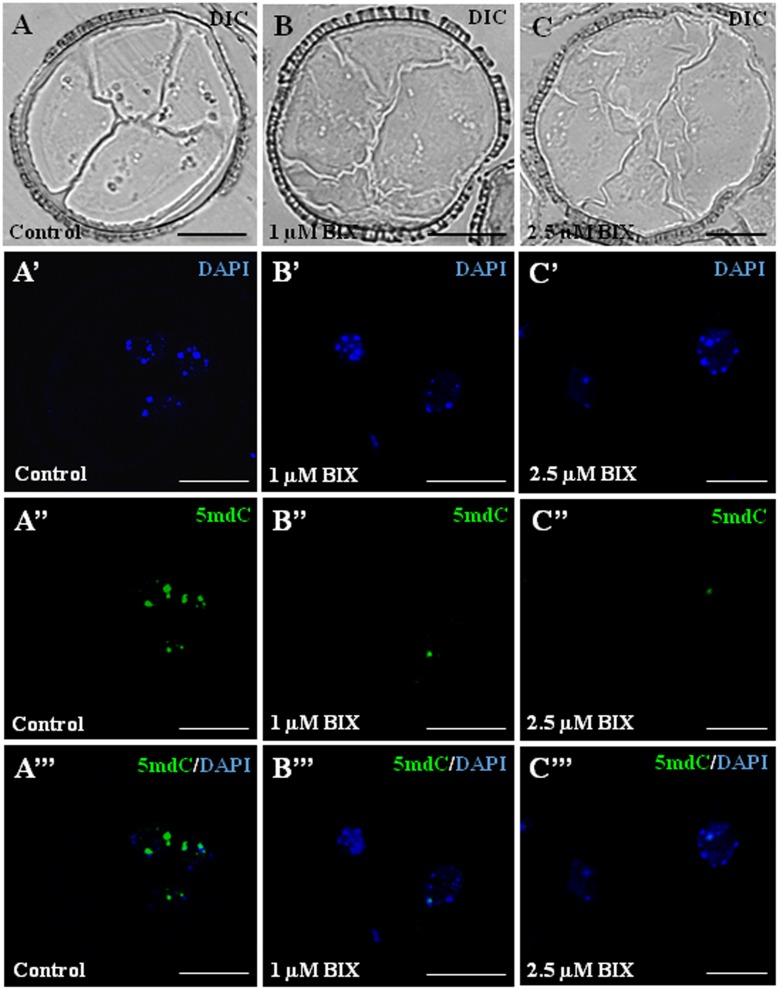
Microspore embryogenesis is a process of cell reprogramming, totipotency acquisition and embryogenesis initiation, induced by stress treatments and widely used in plant breeding for rapid production of doubled-haploids, but its regulating mechanisms are still largely unknown. Increasing evidence has revealed epigenetic reprogramming during microspore embryogenesis, through DNA methylation, but less is known about the involvement of histone modifications. In this study, we have analyzed the dynamics and possible role of histone H3K9 methylation, a major repressive modification, as well as the effects on microspore embryogenesis initiation of BIX-01294, an inhibitor of histone methylation, tested for the first time in plants, in and . Results revealed that microspore reprogramming and initiation of embryogenesis involved a low level of H3K9 methylation. With the progression of embryogenesis, methylation of H3K9 increased, correlating with gene expression profiles of and (writer and eraser enzymes of H3K9me2). At early stages, BIX-01294 promoted cell reprogramming, totipotency and embryogenesis induction, while diminishing bulk H3K9 methylation. DNA methylation was also reduced by short-term BIX-01294 treatment. By contrast, long BIX-01294 treatments hindered embryogenesis progression, indicating that H3K9 methylation is required for embryo differentiation. These findings open up new possibilities to enhance microspore embryogenesis efficiency in recalcitrant species through pharmacological modulation of histone methylation by using BIX-01294.
小孢子胚胎发生是一个细胞重编程、获得全能性和启动胚胎发生的过程,由胁迫处理诱导,广泛应用于植物育种中以快速产生双单倍体,但其调控机制仍 largely 未知。越来越多的证据表明,在小孢子胚胎发生过程中存在通过 DNA 甲基化的表观遗传重编程,但关于组蛋白修饰的参与情况了解较少。在本研究中,我们分析了组蛋白 H3K9 甲基化(一种主要的抑制性修饰)的动态变化和可能作用,以及首次在植物中测试的组蛋白甲基化抑制剂 BIX - 01294 对小孢子胚胎发生启动的影响。结果表明,小孢子重编程和胚胎发生启动涉及低水平的 H3K9 甲基化。随着胚胎发生的进行,H3K9 的甲基化增加,这与 H3K9me2 的写入酶和擦除酶的基因表达谱相关。在早期阶段,BIX - 01294 促进细胞重编程、全能性和胚胎发生诱导,同时减少整体 H3K9 甲基化。短期 BIX - 01294 处理也会降低 DNA 甲基化。相比之下,长期 BIX - 01294 处理会阻碍胚胎发生进程,表明 H3K9 甲基化是胚胎分化所必需的。这些发现为通过使用 BIX - 01294 对组蛋白甲基化进行药理学调节来提高难处理物种中小孢子胚胎发生效率开辟了新的可能性。