Gong Qiaoyun, Xie Jia'nan, Liu Yang, Li Ying, Su Guanfang
Eye Center, The Second Hospital of Jilin University, No. 218 Ziqiang Street, Changchun, Jilin 130021, China.
J Diabetes Res. 2017;2017:4727942. doi: 10.1155/2017/4727942. Epub 2017 Jun 15.
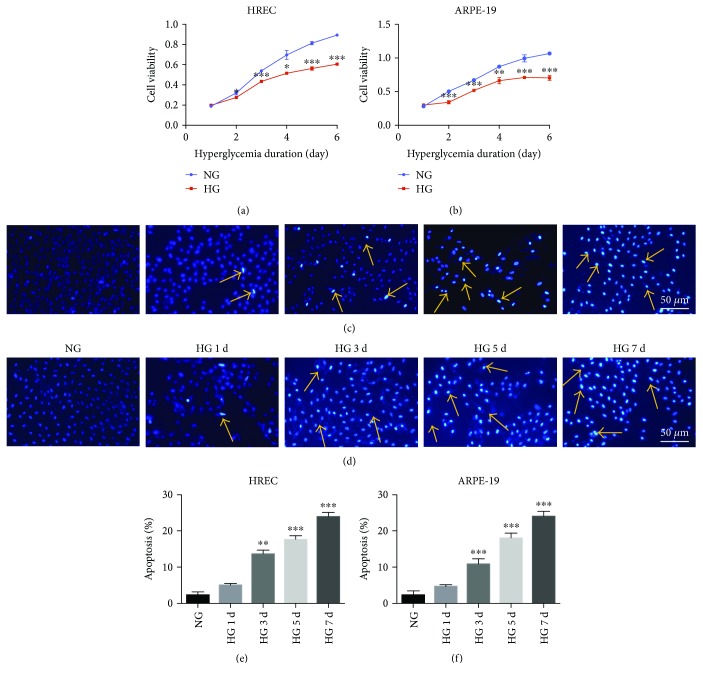
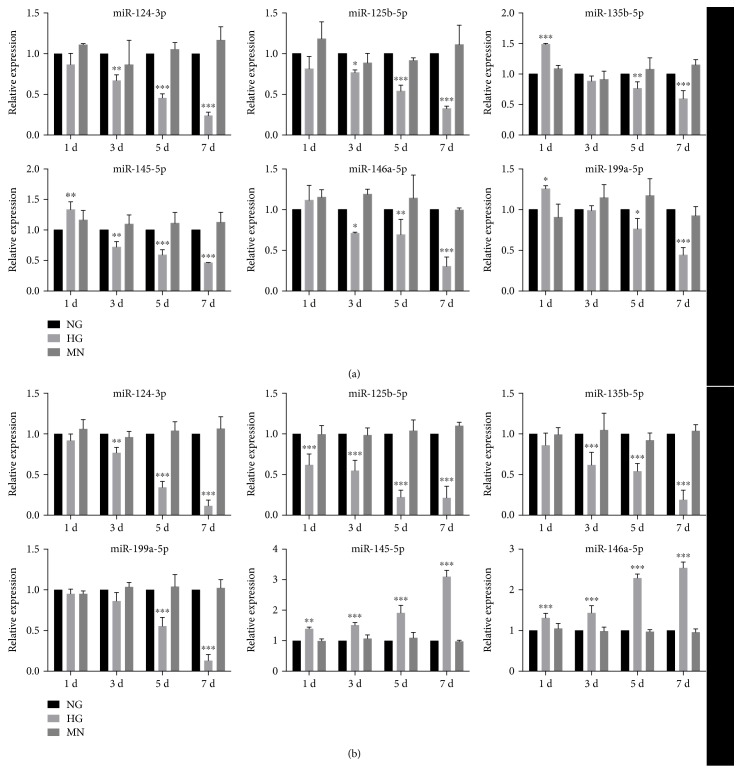
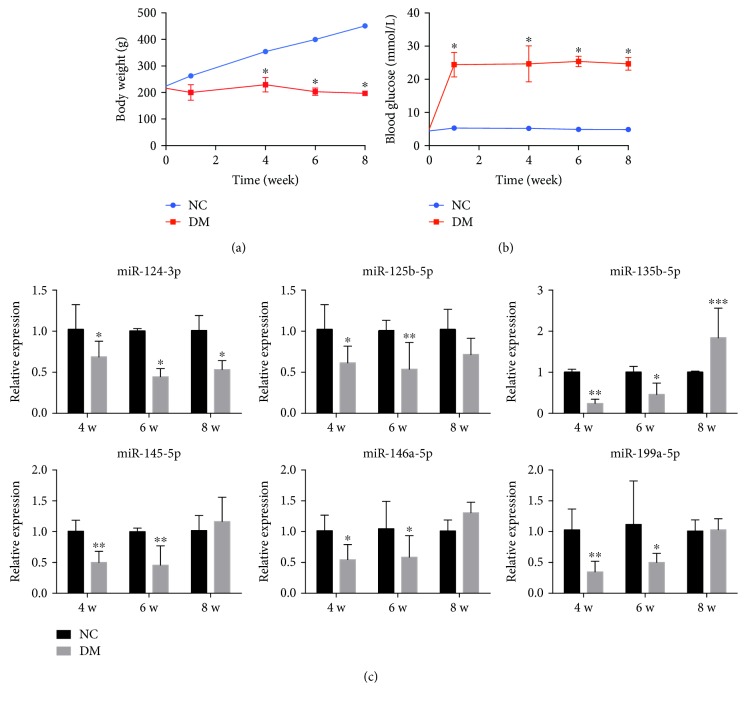
The pathological mechanisms of diabetic retinopathy (DR), a leading cause of blindness in adults with diabetes mellitus, remain incompletely understood. Because microRNAs (miRNAs) represent effective DR therapeutic targets, we identified aberrantly expressed miRNAs associated with cellular dysfunction in early DR and detected their potential targets. We exposed human retinal endothelial cells (HRECs) and a cell line of retinal pigment epithelial (RPE) cells to high glucose (25 mmol/L, 1-7 days) to mimic DR progression and used streptozotocin-injected rats (4-8 weeks) for an in vivo diabetes model. HREC/RPE viability decreased after 24 h incubation and diminished further over 6 days, and Hoechst staining revealed hyperglycemia-induced HREC/RPE apoptosis. Although miR-124/-125b expression decreased with DR progression in vitro and in vivo, miR-135b/-199a levels decreased in retinal cells under hyperglycemia exposure, but increased in diabetic retinas. Moreover, miR-145/-146a expression decreased gradually in high-glucose-treated HRECs, but increased in hyperglycemia-exposed RPE cells and in diabetic rats. Our findings suggested that aberrant miRNA expression could be involved in hyperglycemia-induced retinal-cell dysfunction, and the identified miRNAs might vary in different retinal layers, with expression changes associated with DR development. Therefore, miRNA modulation and the targeting of miRNA effects on transcription factors could represent novel and effective DR-treatment strategies.
糖尿病视网膜病变(DR)是成年糖尿病患者失明的主要原因,其病理机制仍未完全明确。由于微小RNA(miRNA)是有效的DR治疗靶点,我们鉴定了与早期DR细胞功能障碍相关的异常表达的miRNA,并检测了它们的潜在靶点。我们将人视网膜内皮细胞(HREC)和视网膜色素上皮(RPE)细胞系暴露于高糖(25 mmol/L,1 - 7天)以模拟DR进展,并使用注射链脲佐菌素的大鼠(4 - 8周)建立体内糖尿病模型。孵育24小时后HREC/RPE活力下降,并在6天内进一步降低,Hoechst染色显示高血糖诱导HREC/RPE凋亡。虽然miR - 124/-125b的表达在体外和体内均随DR进展而降低,但miR - 135b/-199a水平在高血糖暴露下的视网膜细胞中降低,但在糖尿病视网膜中升高。此外,miR - 145/-146a的表达在高糖处理的HREC中逐渐降低,但在高血糖暴露的RPE细胞和糖尿病大鼠中升高。我们的研究结果表明,miRNA异常表达可能参与高血糖诱导的视网膜细胞功能障碍,并且所鉴定的miRNA在不同视网膜层中可能有所不同,其表达变化与DR发展相关。因此,miRNA调节以及miRNA对转录因子作用的靶向可能代表新的有效DR治疗策略。