Kim Tae-Woon, Kim Chang-Ju, Seo Jinhee
Department of Physiology, College of Medicine, KyungHee University, Seoul, Republic of Korea.
Division of Adaptive Physical Education, Baek Seok University, Cheonan, Republic of Korea.
J Exerc Nutrition Biochem. 2017 Mar 31;21(1):33-39. doi: 10.20463/jenb.2017.0047.
The central fatigue hypothesis suggests that exhaustion, or the maximum level of exercise, induces excessive stress and increases serotonin concentrations in the brain, which in turn decreases central nervous system (CNS) function and induces fatigue. Our aim was to determine the effects of colostrum serum on the serotonergic system in the dorsal raphe nuclei during exhaustive exercise.
Animals were randomly divided into five groups: control, exercise, exercise and treatment with 50, 100, and 200 mg/kg of colostrum serum. The rats in the colostrum serum treatment groups were fed colostrum serum at three different doses of 50, 100, and 200 mg/kg per day for seven days. The rats in the control and exercise groups received water by oral gavage once per day for seven days.
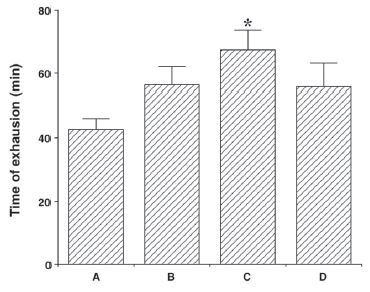
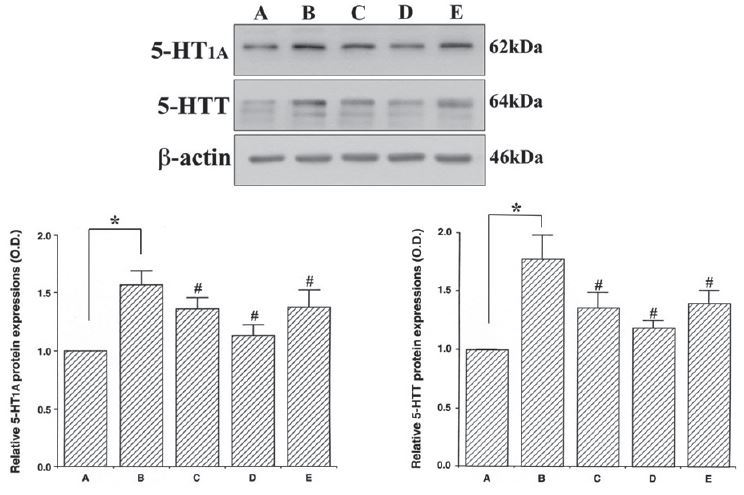
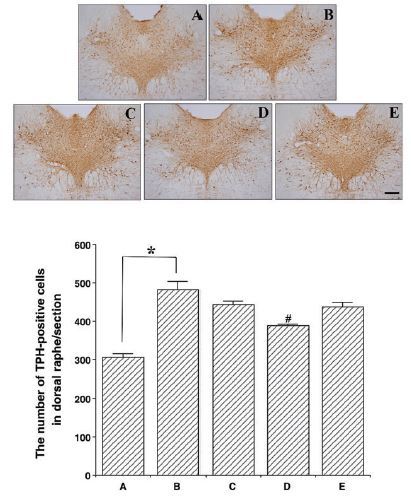
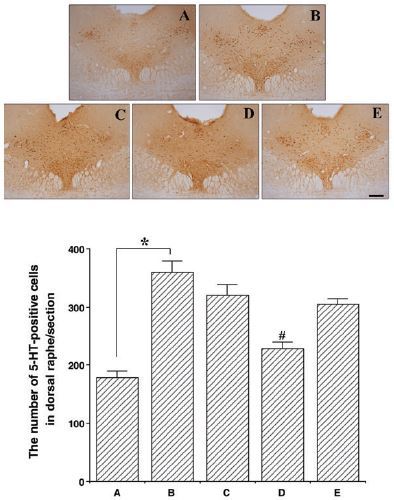
The time to exhaustion in response to treadmill running increased after treatment with colostrum serum. These results show that exhaustive exercise led to over activation of the serotonergic system in the dorsal raphe nuclei, and that treatment with colostrum serum suppressed of the exercise-induced expression of tryptophan hydroxylase (TPH) and serotonin (5-HT). The results also indicated that exhaustive exercise induced 5-HT1A autoreceptor and serotonin transporter (5-HTT) overexpression in the dorsal raphe nuclei, and that colostrum serum treatment suppressed exhaustive exercise-induced 5-HT1A and 5-HTT expression in the dorsal raphe nuclei. The most effective dose of colostrum serum was 100 mg/kg.
Overall, our study suggests that colostrum serum has positive effects on exercise performance and recovery by increasing the resistance to fatigue.
中枢疲劳假说认为,力竭或运动的最大水平会诱发过度应激并增加大脑中的血清素浓度,进而降低中枢神经系统(CNS)功能并诱发疲劳。我们的目的是确定初乳血清对力竭运动期间中缝背核中血清素能系统的影响。
将动物随机分为五组:对照组、运动组、运动并分别用50、100和200mg/kg初乳血清处理组。初乳血清处理组的大鼠每天按50、100和200mg/kg三种不同剂量喂食初乳血清,持续7天。对照组和运动组的大鼠每天经口灌胃给予水一次,持续7天。
用初乳血清处理后,对跑步机跑步的力竭时间增加。这些结果表明,力竭运动会导致中缝背核中血清素能系统过度激活,而初乳血清处理可抑制运动诱导的色氨酸羟化酶(TPH)和血清素(5-HT)表达。结果还表明,力竭运动会诱导中缝背核中5-HT1A自身受体和血清素转运体(5-HTT)过表达,而初乳血清处理可抑制力竭运动诱导的中缝背核中5-HT1A和5-HTT表达。初乳血清的最有效剂量为100mg/kg。
总体而言,我们的研究表明,初乳血清通过增加抗疲劳能力对运动表现和恢复具有积极作用。