Khatua Biswajit, El-Kurdi Bara, Singh Vijay P
Department of Medicine, Mayo Clinic, Scottsdale, Arizona, USA.
Curr Opin Gastroenterol. 2017 Sep;33(5):374-382. doi: 10.1097/MOG.0000000000000386.
The obesity pandemic poses a unique set of problems for acute pancreatitis - both by increasing acute pancreatitis incidence, and worsening acute pancreatitis severity. This review explores these associations, underlying mechanisms, and potential therapies.
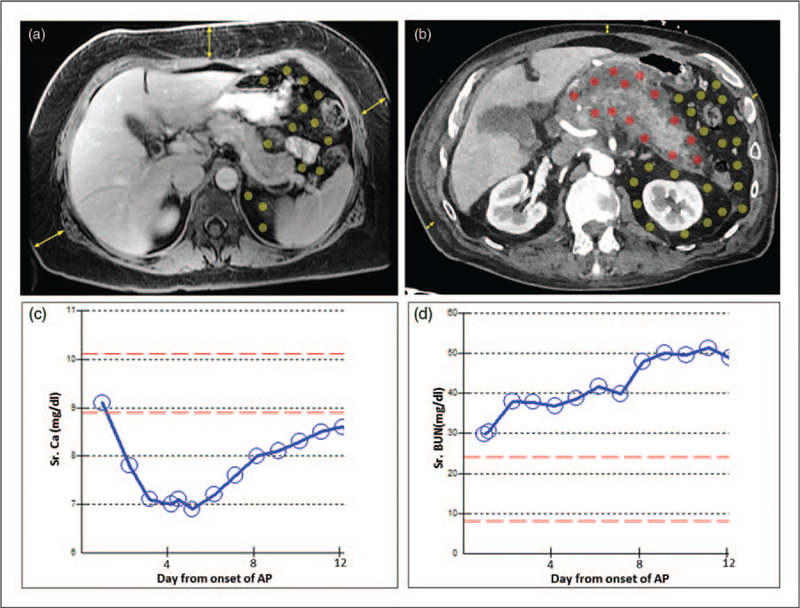
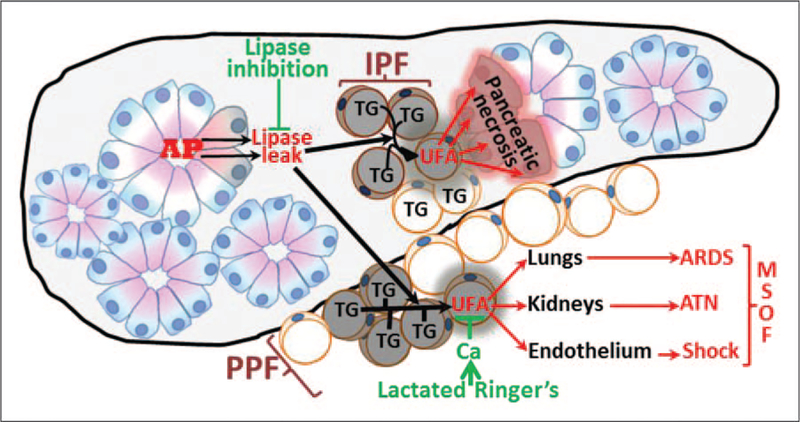
We review how the obesity associated increase in gallstones, surgical, and endoscopic interventions for obesity management, diabetes, and related medications such as incretin-based therapies and hypertriglyceridemia may increase the incidence of acute pancreatitis. The mechanism of how obesity may increase acute pancreatitis severity are discussed with a focus on cytokines, adipokines, damage-associated molecular patterns and unsaturated fatty acid-mediated lipotoxicity. The role of obesity in exacerbating pancreatic necrosis is discussed; focusing on obesity-associated pancreatic steatosis. We also discuss how peripancreatic fat necrosis worsens organ failure independent of pancreatic necrosis. Last, we discuss emerging therapies including choice of intravenous fluids and the use of lipase inhibitors which have shown promise during severe acute pancreatitis.
We discuss how obesity may contribute to increasing acute pancreatitis incidence, the role of lipolytic unsaturated fatty acid release in worsening acute pancreatitis, and potential approaches, including appropriate fluid management and lipase inhibition in improving acute pancreatitis outcomes.
肥胖流行给急性胰腺炎带来了一系列独特问题——既增加了急性胰腺炎的发病率,又加重了急性胰腺炎的严重程度。本综述探讨了这些关联、潜在机制及潜在治疗方法。
我们回顾了肥胖相关的胆结石增加、肥胖管理的手术及内镜干预、糖尿病以及相关药物(如肠促胰岛素类疗法)和高甘油三酯血症如何可能增加急性胰腺炎的发病率。讨论了肥胖可能增加急性胰腺炎严重程度的机制,重点关注细胞因子、脂肪因子、损伤相关分子模式和不饱和脂肪酸介导的脂毒性。探讨了肥胖在加重胰腺坏死中的作用;重点关注肥胖相关的胰腺脂肪变性。我们还讨论了胰腺周围脂肪坏死如何独立于胰腺坏死而加重器官衰竭。最后,我们讨论了新兴疗法,包括静脉输液的选择以及脂肪酶抑制剂的使用,这些在重症急性胰腺炎期间已显示出前景。
我们讨论了肥胖可能如何导致急性胰腺炎发病率增加、脂解不饱和脂肪酸释放在加重急性胰腺炎中的作用以及潜在方法,包括适当的液体管理和脂肪酶抑制以改善急性胰腺炎的预后。