Kumar Swapna, Loughnan Libbet, Luyendijk Rolf, Hernandez Orlando, Weinger Merri, Arnold Fred, Ram Pavani K
University at Buffalo, Buffalo, New York.
Consultant Advisor, World Bank, Washington, District of Columbia.
Am J Trop Med Hyg. 2017 Aug;97(2):447-459. doi: 10.4269/ajtmh.16-0445. Epub 2017 Jul 19.
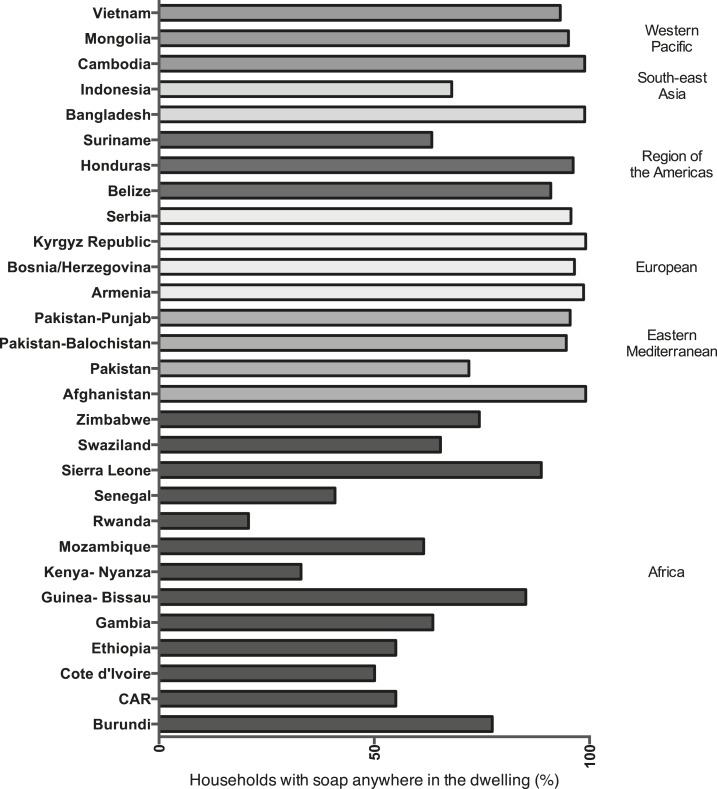
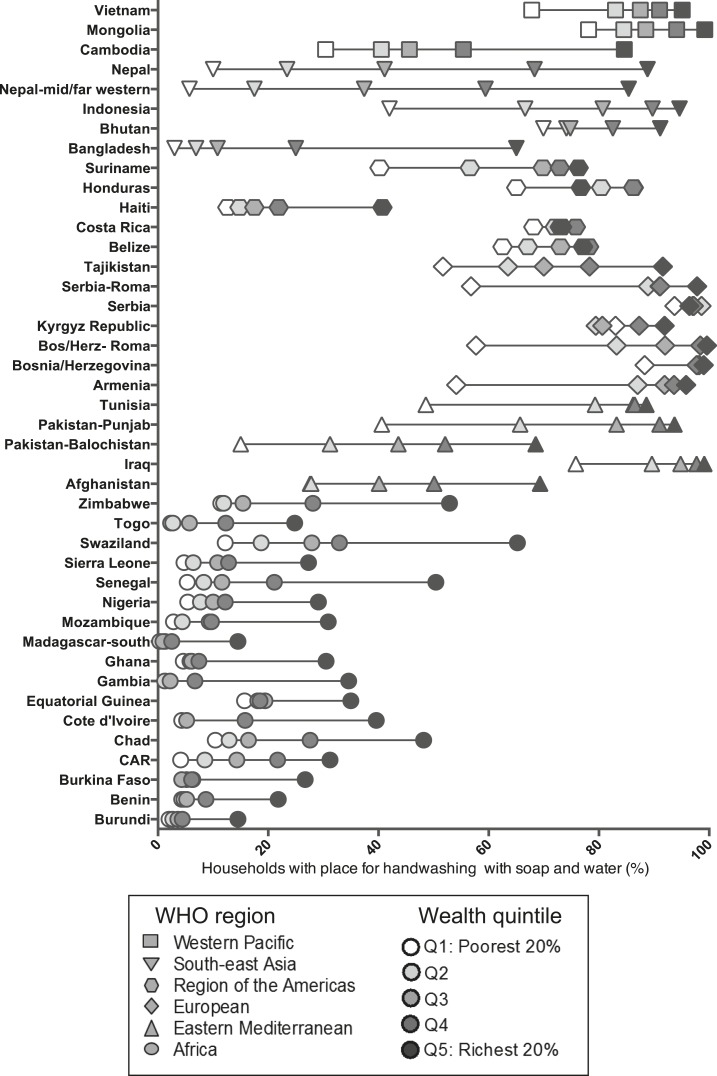
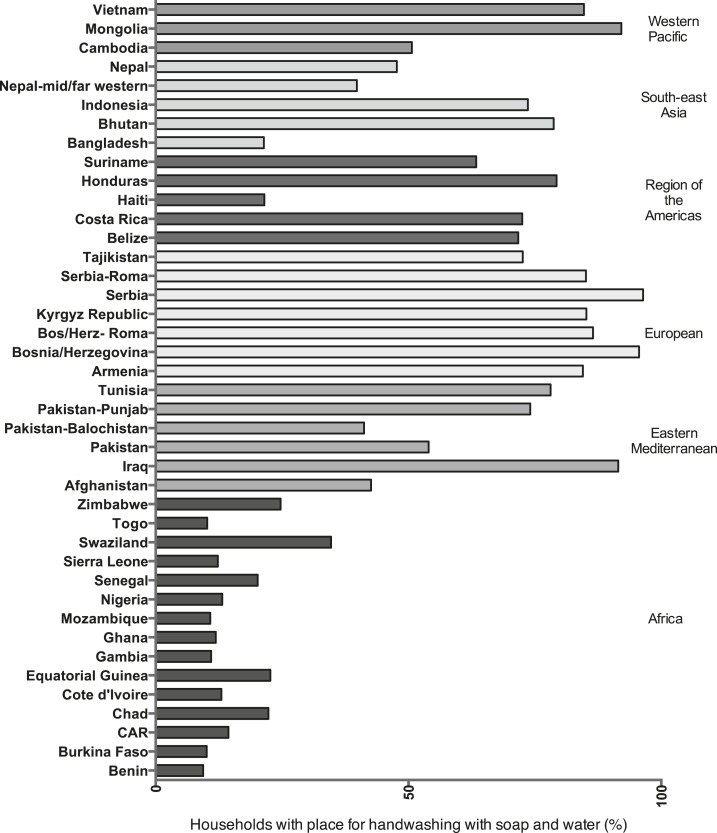
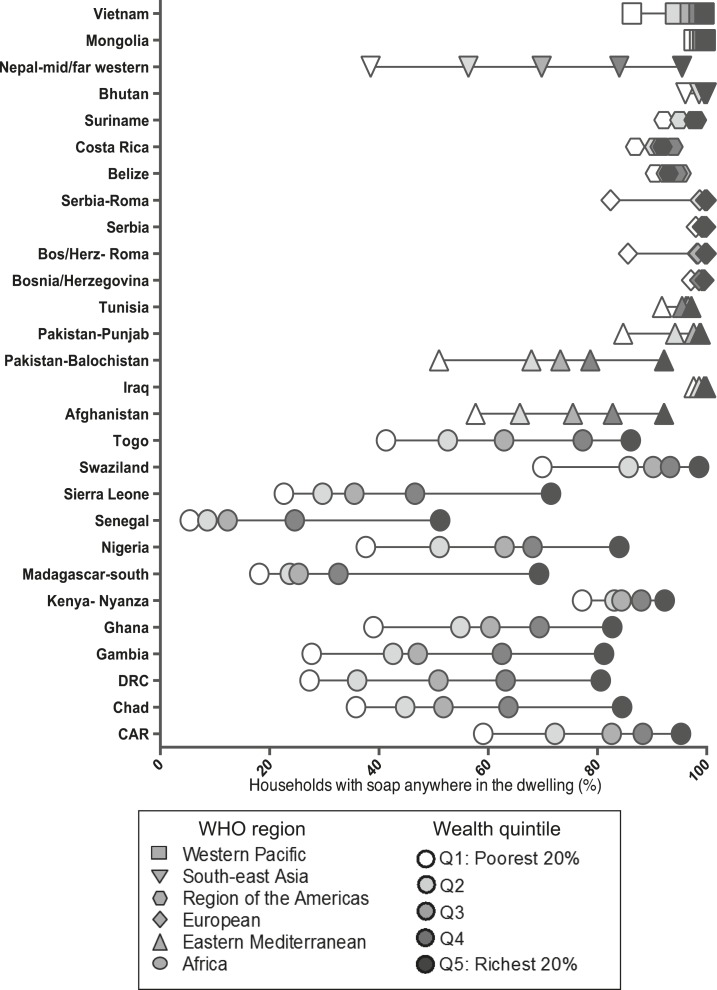
In 2009, a common set of questions addressing handwashing behavior was introduced into nationally representative Demographic and Health Surveys (DHS) and Multiple Indicator Cluster Surveys (MICS), providing large amounts of comparable data from numerous countries worldwide. The objective of this analysis is to describe global handwashing patterns using two proxy indicators for handwashing behavior from 51 DHS and MICS surveys conducted in 2010-2013: availability of soap anywhere in the dwelling and access to a handwashing place with soap and water. Data were also examined across geographic regions, wealth quintiles, and rural versus urban settings. We found large disparities for both indicators across regions, and even among countries within the same World Health Organization region. Within countries, households in lower wealth quintiles and in rural areas were less likely to have soap anywhere in the dwelling and at designated handwashing locations than households in higher wealth quintiles and urban areas. In addition, disparities existed among various geographic regions within countries. This analysis demonstrates the need to promote access to handwashing materials and placement at handwashing locations in the dwelling, particularly in poorer, rural areas where children are more vulnerable to handwashing-preventable syndromes such as pneumonia and diarrhea.
2009年,一套关于洗手行为的常见问题被纳入具有全国代表性的人口与健康调查(DHS)和多指标类集调查(MICS)中,从而提供了来自全球众多国家的大量可比数据。本分析的目的是利用2010年至2013年进行的51次DHS和MICS调查中洗手行为的两个替代指标来描述全球洗手模式:住宅内任何地方是否有肥皂以及是否有带肥皂和水的洗手处。还对地理区域、财富五分位数以及农村与城市环境的数据进行了研究。我们发现,这两个指标在各区域之间存在巨大差异,甚至在同一个世界卫生组织区域内的国家之间也存在差异。在各国国内,财富五分位数较低的家庭和农村地区的家庭,比起财富五分位数较高的家庭和城市地区的家庭,在住宅内任何地方以及指定洗手地点拥有肥皂的可能性更小。此外,各国不同地理区域之间也存在差异。本分析表明,有必要促进获取洗手用品并在住宅内的洗手地点放置这些用品,尤其是在较贫困的农村地区,那里的儿童更容易患上如肺炎和腹泻等可通过洗手预防的综合征。