Institute of Applied Microbiology, Research Center for BioSystems, Land Use, and Nutrition (IFZ), Justus-Liebig-University Giessen, Giessen, Germany.
Faculty of Medical and Life Sciences, Institute of Precision Medicine (IPM), Microbiology and Hygiene Group, Furtwangen University, Villingen-Schwenningen, Germany.
Sci Rep. 2017 Jul 19;7(1):5791. doi: 10.1038/s41598-017-06055-9.
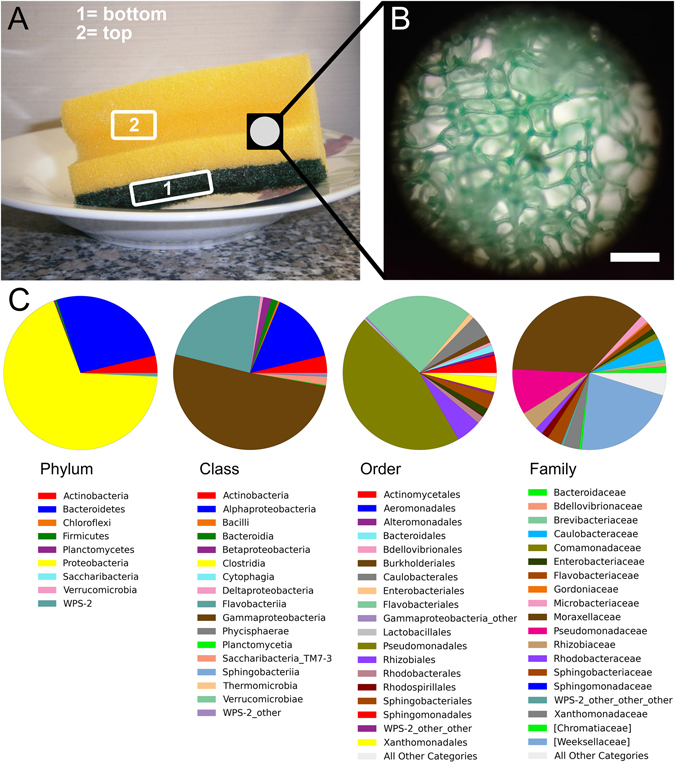
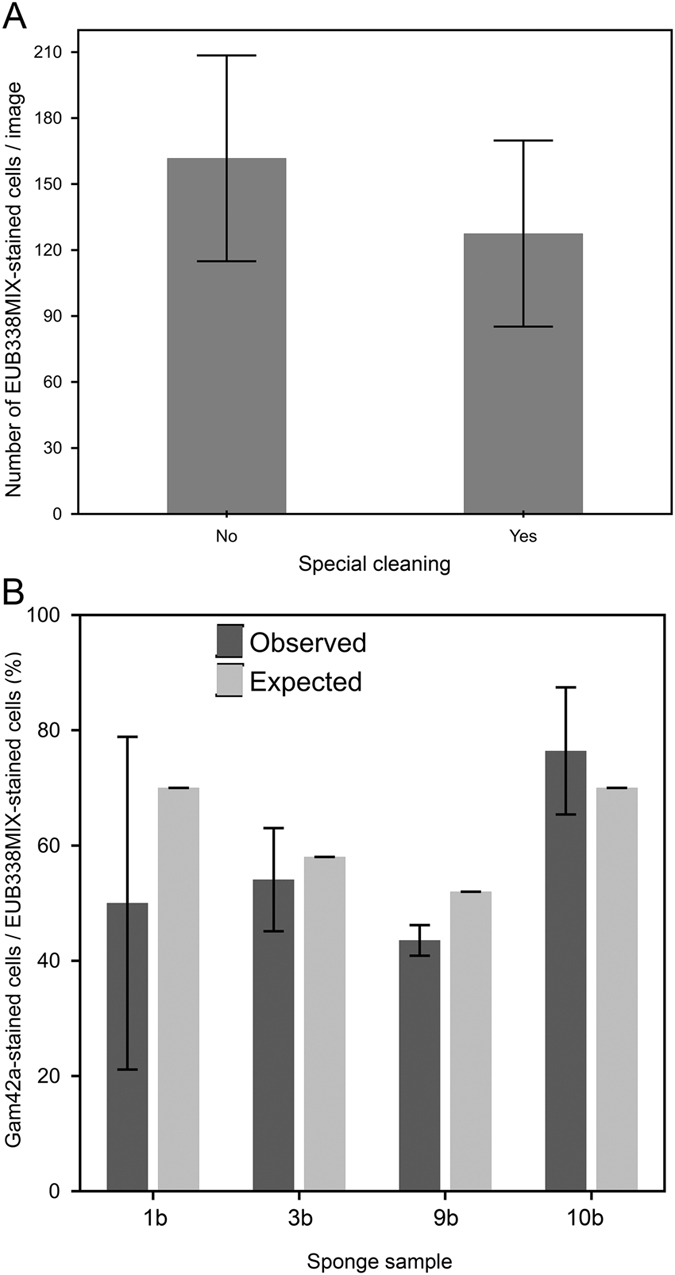
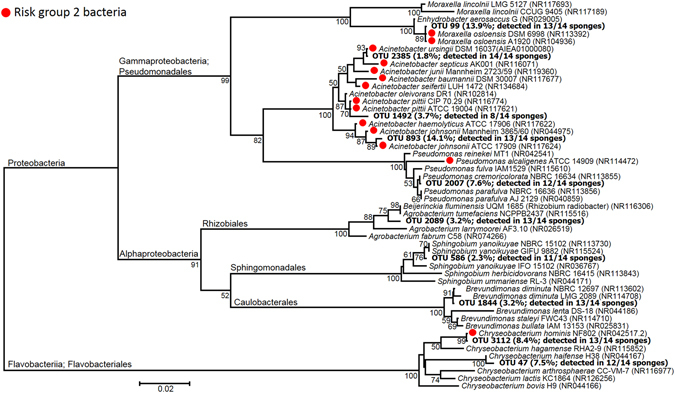
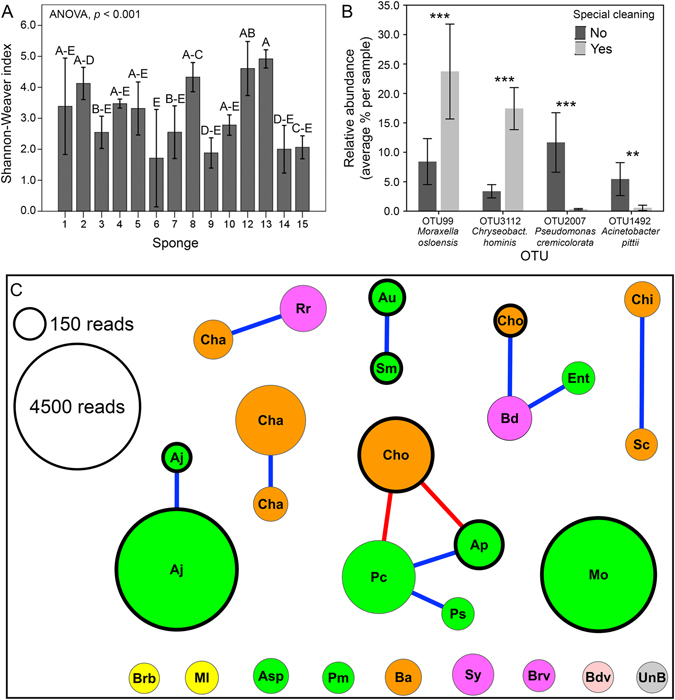
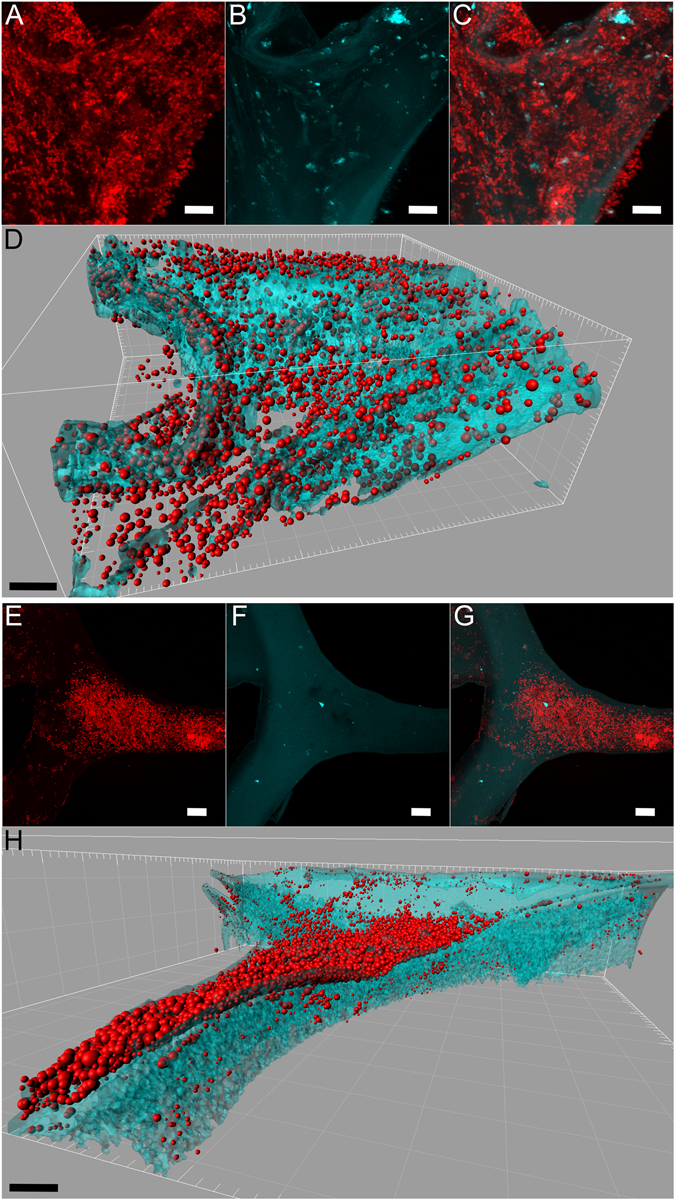
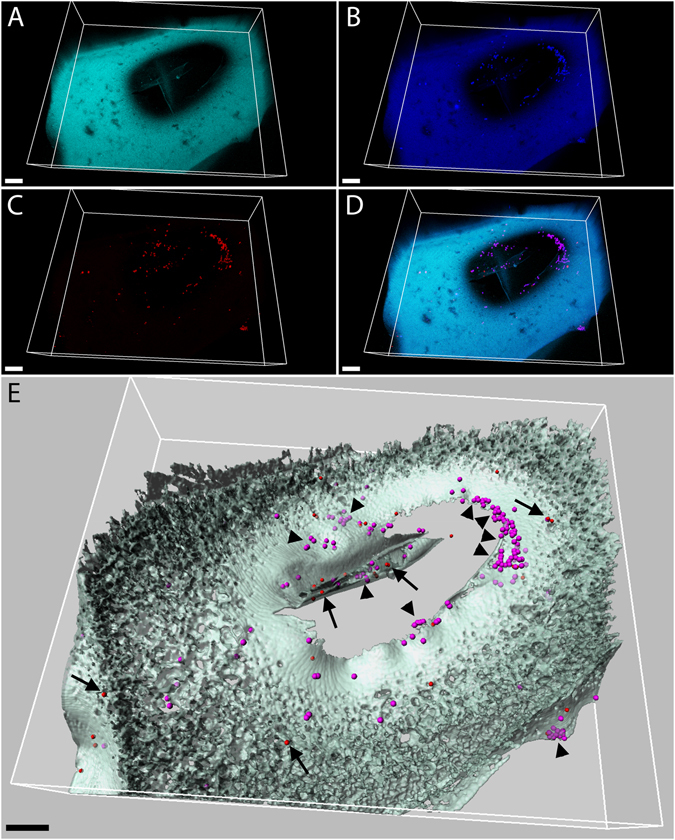
The built environment (BE) and in particular kitchen environments harbor a remarkable microbial diversity, including pathogens. We analyzed the bacterial microbiome of used kitchen sponges by 454-pyrosequencing of 16S rRNA genes and fluorescence in situ hybridization coupled with confocal laser scanning microscopy (FISH-CLSM). Pyrosequencing showed a relative dominance of Gammaproteobacteria within the sponge microbiota. Five of the ten most abundant OTUs were closely related to risk group 2 (RG2) species, previously detected in the BE and kitchen microbiome. Regular cleaning of sponges, indicated by their users, significantly affected the microbiome structure. Two of the ten dominant OTUs, closely related to the RG2-species Chryseobacterium hominis and Moraxella osloensis, showed significantly greater proportions in regularly sanitized sponges, thereby questioning such sanitation methods in a long term perspective. FISH-CLSM showed an ubiquitous distribution of bacteria within the sponge tissue, concentrating in internal cavities and on sponge surfaces, where biofilm-like structures occurred. Image analysis showed local densities of up to 5.4 * 10 cells per cm, and confirmed the dominance of Gammaproteobacteria. Our study stresses and visualizes the role of kitchen sponges as microbiological hot spots in the BE, with the capability to collect and spread bacteria with a probable pathogenic potential.
建筑环境(BE),特别是厨房环境,拥有着惊人的微生物多样性,包括病原体。我们通过对 16S rRNA 基因的 454 焦磷酸测序和荧光原位杂交与共聚焦激光扫描显微镜(FISH-CLSM)联用的方法,分析了使用过的厨房海绵中的细菌微生物组。焦磷酸测序显示海绵微生物组中Gamma 变形菌具有相对优势。在最丰富的 10 个 OTUs 中,有 5 个与之前在 BE 和厨房微生物组中检测到的 2 类风险组(RG2)物种密切相关。用户定期清洁海绵的行为显著影响了微生物组的结构。在经常进行消毒的海绵中,两个最主要的 OTUs(与 RG2 种 Chryseobacterium hominis 和 Moraxella osloensis 密切相关)的比例显著增加,这使得长期采用这种卫生方法受到质疑。FISH-CLSM 显示了细菌在海绵组织中的普遍分布,集中在内部腔室和海绵表面,那里存在生物膜样结构。图像分析显示,局部密度高达每平方厘米 5.4×10 个细胞,并证实了 Gamma 变形菌的优势地位。我们的研究强调并可视化了厨房海绵作为 BE 中微生物热点的作用,它具有收集和传播可能具有致病性的细菌的能力。