Braga Rodrigo M, Buckner Randy L
Department of Psychology, Center for Brain Science, Harvard University, Cambridge, MA 02138, USA; The Computational, Cognitive & Clinical Neuroimaging Laboratory, Hammersmith Hospital Campus, Imperial College London, London W12 0NN, UK; Athinoula A. Martinos Center for Biomedical Imaging, Massachusetts General Hospital, Charlestown, MA 02129, USA.
Department of Psychology, Center for Brain Science, Harvard University, Cambridge, MA 02138, USA; Athinoula A. Martinos Center for Biomedical Imaging, Massachusetts General Hospital, Charlestown, MA 02129, USA; Department of Psychiatry, Massachusetts General Hospital, Charlestown, MA 02129, USA.
Neuron. 2017 Jul 19;95(2):457-471.e5. doi: 10.1016/j.neuron.2017.06.038.
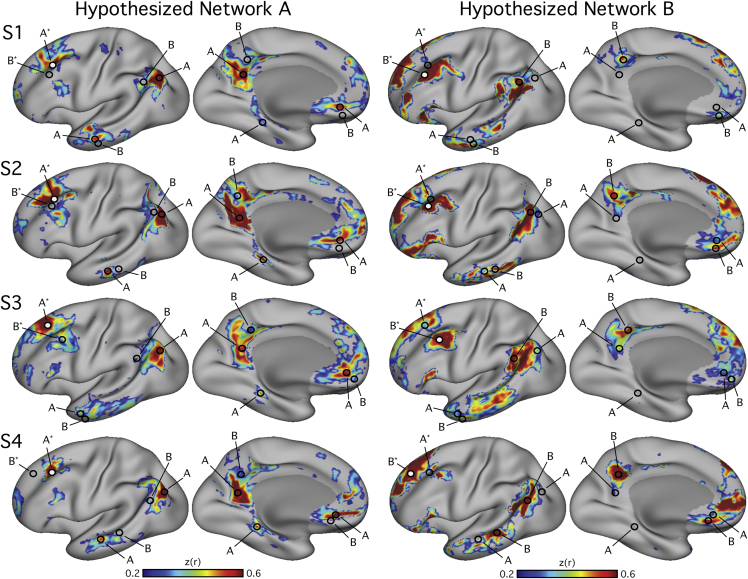
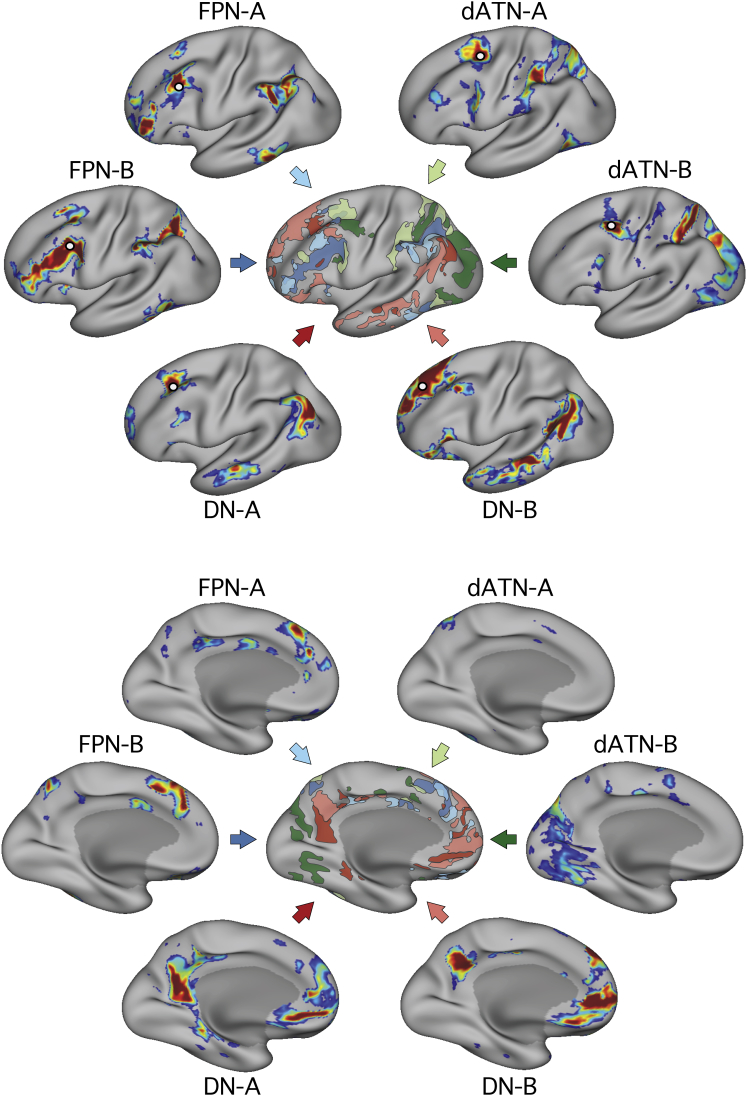
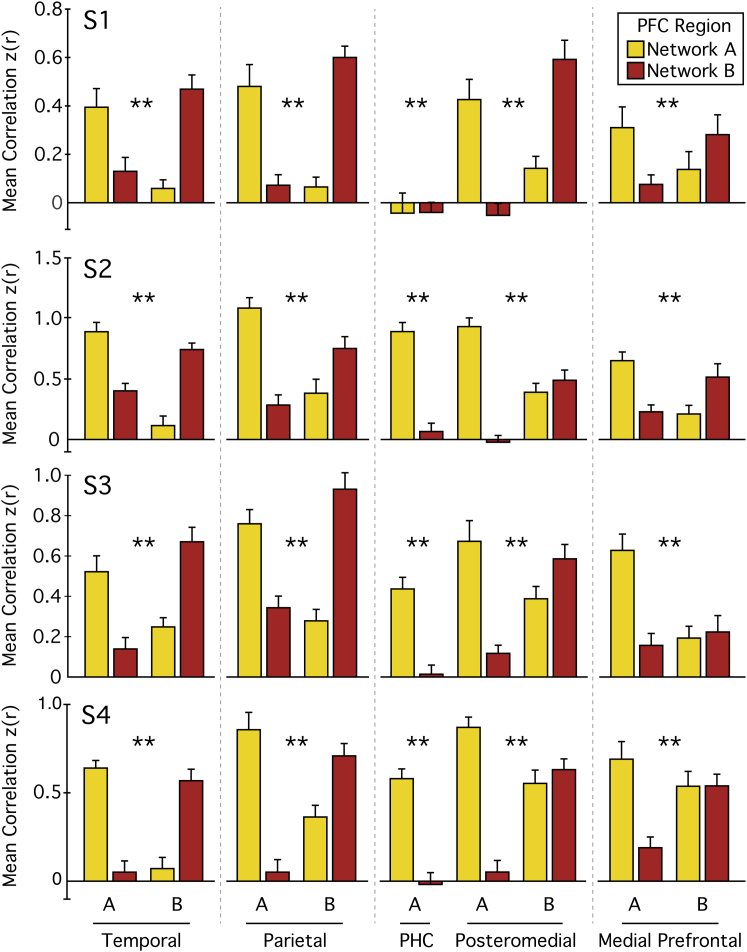
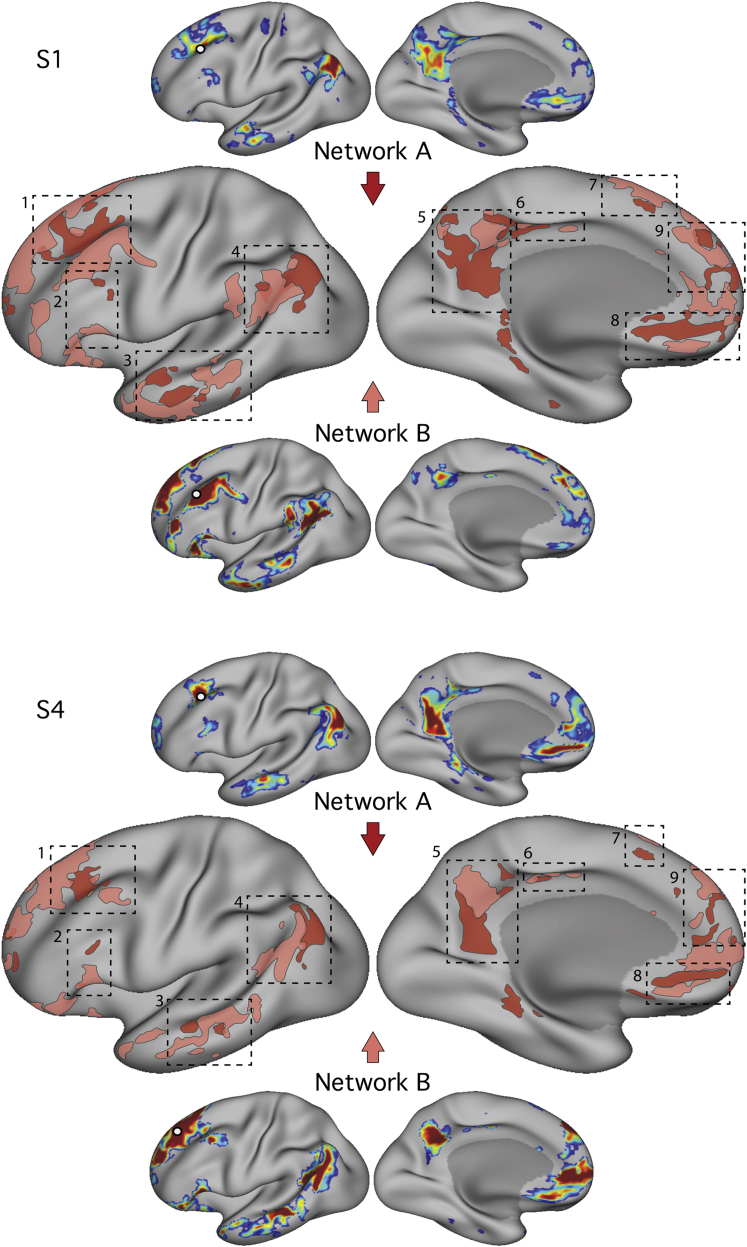
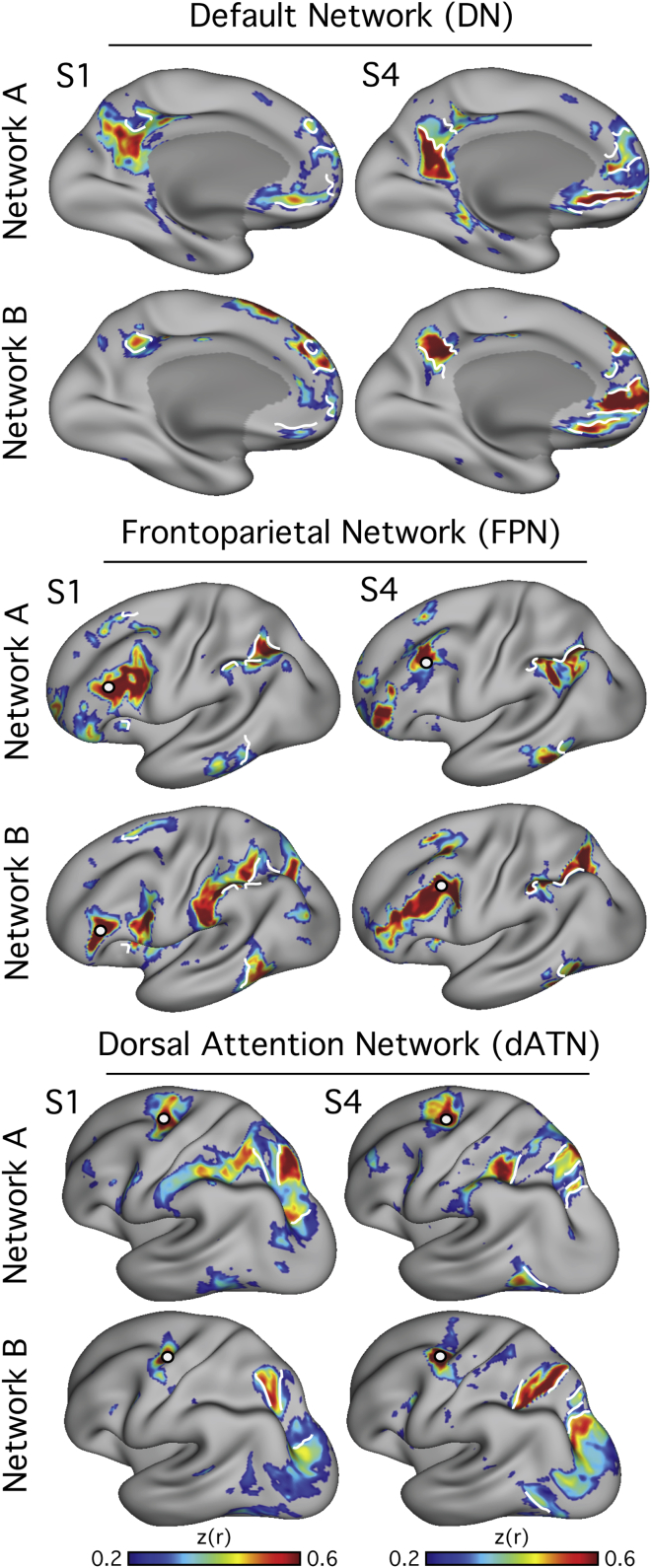
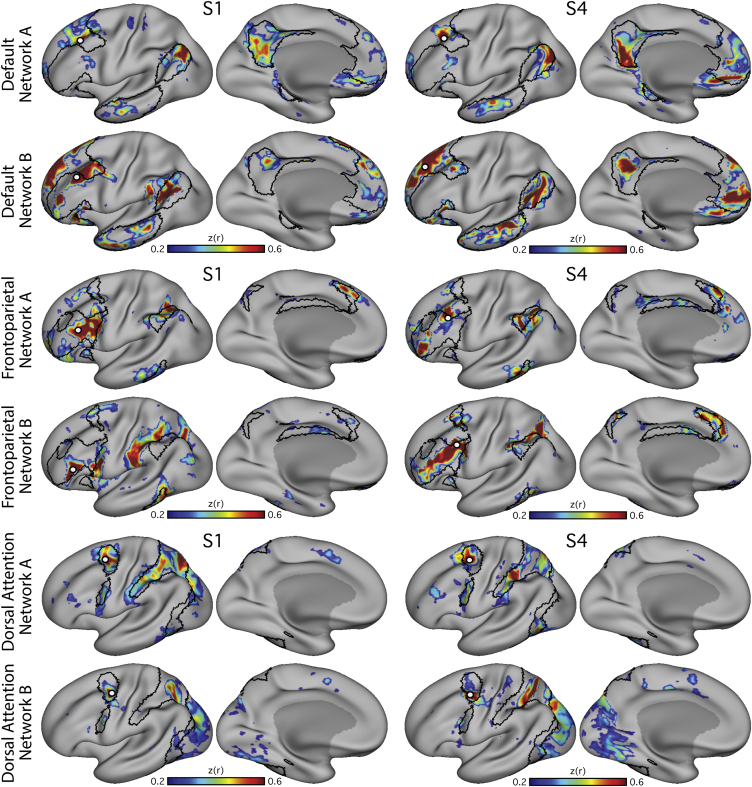
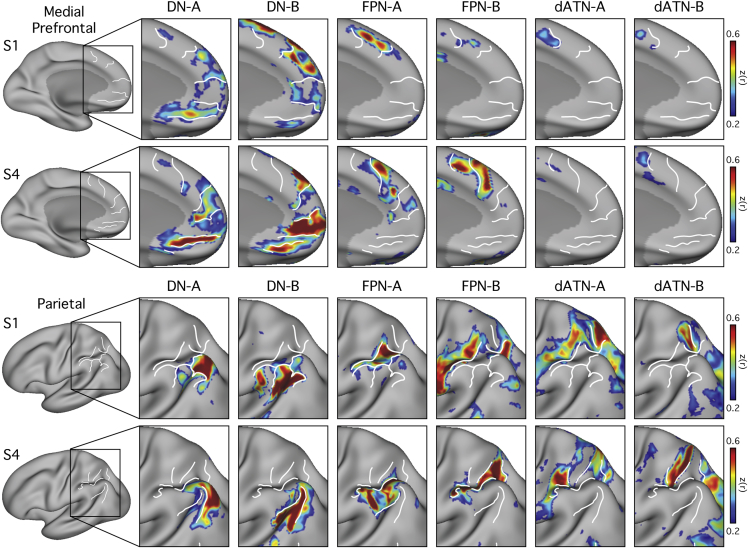
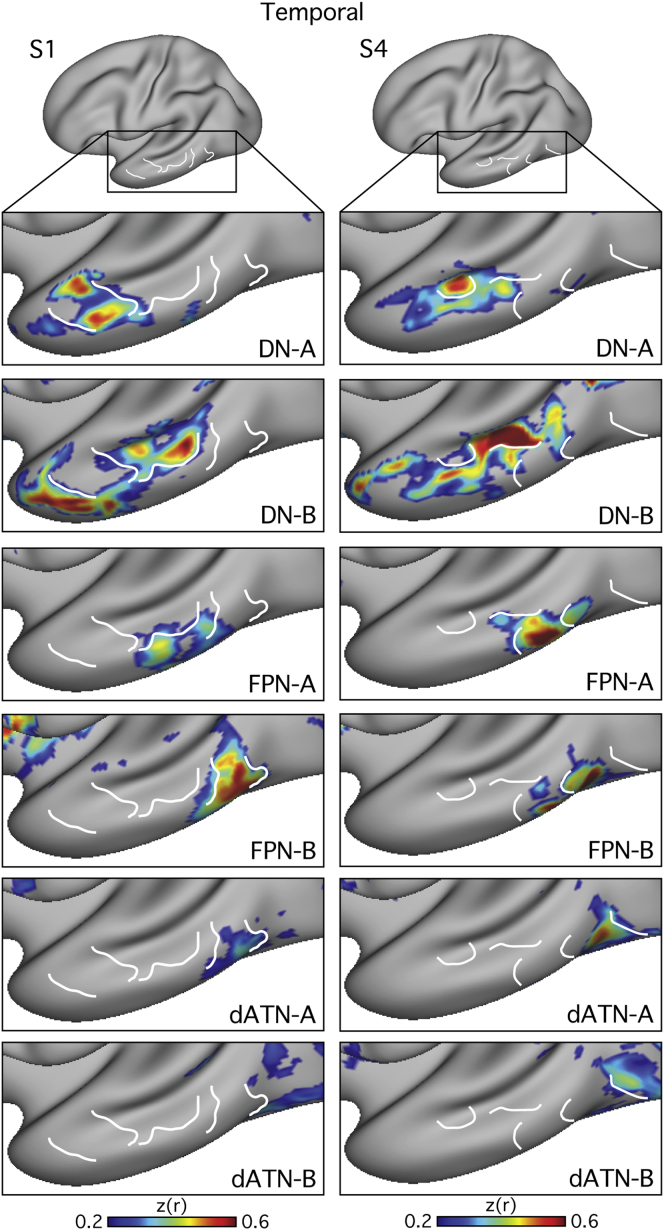
Certain organizational features of brain networks present in the individual are lost when central tendencies are examined in the group. Here we investigated the detailed network organization of four individuals each scanned 24 times using MRI. We discovered that the distributed network known as the default network is comprised of two separate networks possessing adjacent regions in eight or more cortical zones. A distinction between the networks is that one is coupled to the hippocampal formation while the other is not. Further exploration revealed that these two networks were juxtaposed with additional networks that themselves fractionate group-defined networks. The collective networks display a repeating spatial progression in multiple cortical zones, suggesting that they are embedded within a broad macroscale gradient. Regions contributing to the newly defined networks are spatially variable across individuals and adjacent to distinct networks, raising issues for network estimation in group-averaged data and applied endeavors, including targeted neuromodulation.
当在群体中研究中心趋势时,个体大脑网络中存在的某些组织特征会丢失。在这里,我们研究了四名个体的详细网络组织,每名个体使用磁共振成像(MRI)扫描了24次。我们发现,被称为默认网络的分布式网络由两个独立的网络组成,这两个网络在八个或更多皮质区域拥有相邻区域。这两个网络的区别在于,一个与海马结构相连,而另一个则不相连。进一步的探索表明,这两个网络与其他网络并列,而这些其他网络本身又将群体定义的网络进行了细分。这些集合网络在多个皮质区域呈现出重复的空间进展,表明它们嵌入在一个广泛的宏观尺度梯度中。对新定义网络有贡献的区域在个体之间存在空间差异,并且与不同的网络相邻,这给群体平均数据中的网络估计以及包括靶向神经调节在内的应用研究带来了问题。