Department of Epidemiology and Biostatistics, Imperial College London, MRC-HPA Centre for Environment and Health, Norfolk Place, London, W2 1PG, UK.
Curr Environ Health Rep. 2017 Sep;4(3):340-348. doi: 10.1007/s40572-017-0151-2.
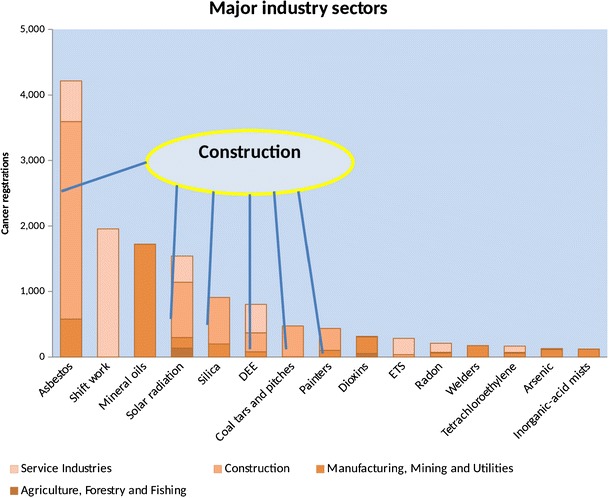
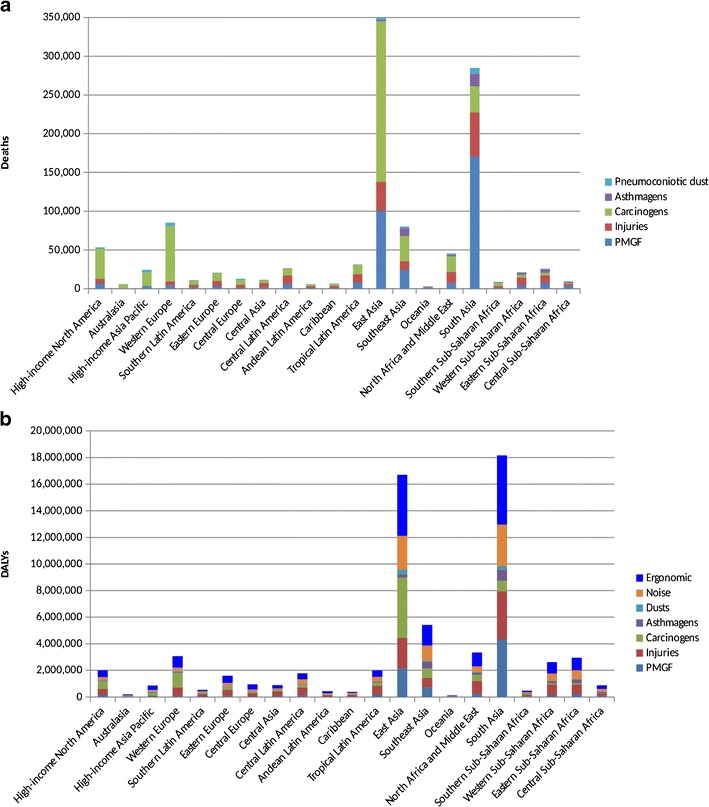
Burden of occupational disease estimation contributes to understanding of both magnitude and relative importance of different occupational hazards and provides essential information for targeting risk reduction. This review summarises recent key findings and discusses their impact on occupational regulation and practice.
New methods have been developed to estimate burden of occupational disease that take account of the latency of many chronic diseases and allow for exposure trends and workforce turnover. Results from these studies have shown in several countries and globally that, in spite of improvements in workplace technology, practices and exposures over the last decades, occupational hazards remain an important cause of ill health and mortality worldwide. Major data gaps have been identified particularly regarding exposure information. Reliable data on employment and disease are also lacking especially in developing countries. Burden of occupational disease estimates form an important part of decision-making processes.
职业病负担的评估有助于了解不同职业危害的程度和相对重要性,并为有针对性地降低风险提供必要信息。本综述总结了最近的主要发现,并讨论了它们对职业监管和实践的影响。
已经开发出了新的方法来评估职业病负担,这些方法考虑到了许多慢性疾病的潜伏期,并允许考虑暴露趋势和劳动力更替。这些研究的结果表明,尽管过去几十年中工作场所技术、实践和暴露情况有所改善,但在许多国家和全球范围内,职业危害仍然是全世界造成健康不良和死亡的一个重要原因。特别是在暴露信息方面,已经确定了重大的数据差距。在发展中国家,关于就业和疾病的可靠数据也很缺乏。职业病负担的评估是决策过程的重要组成部分。