Sah Keshav, Poudel Ishab, Subedi Suyog, Singh Dinesh Kumar, Cocker Jo, Kushwaha Peetambar, Colston Angela, Donadeu Meritxell, Lightowlers Marshall W
Heifer International, G.P.O. Box 6043, Kathmandu, Nepal.
Department of Pathology and Clinics (HOD), Tribhuvan University, Institute of Agriculture and Animal Science, Rampur Campus, Chitwan, Nepal.
Acta Trop. 2017 Dec;176:78-82. doi: 10.1016/j.actatropica.2017.07.022. Epub 2017 Jul 21.
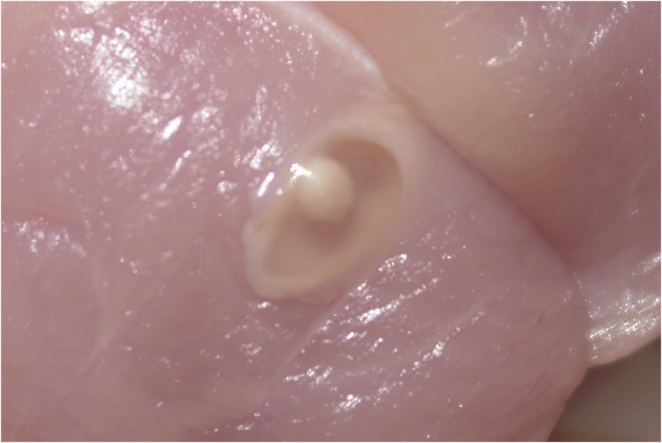
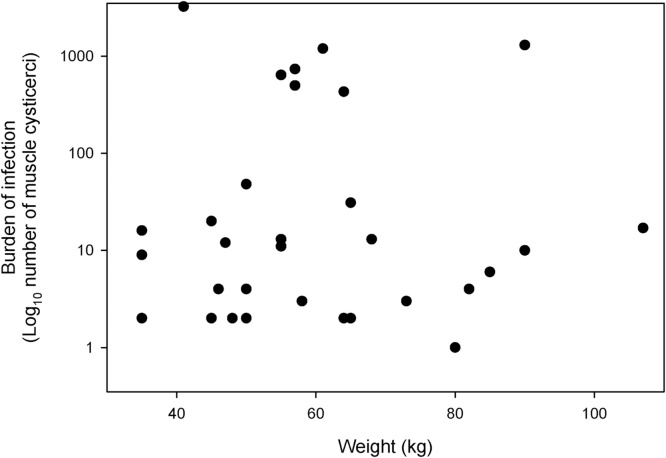
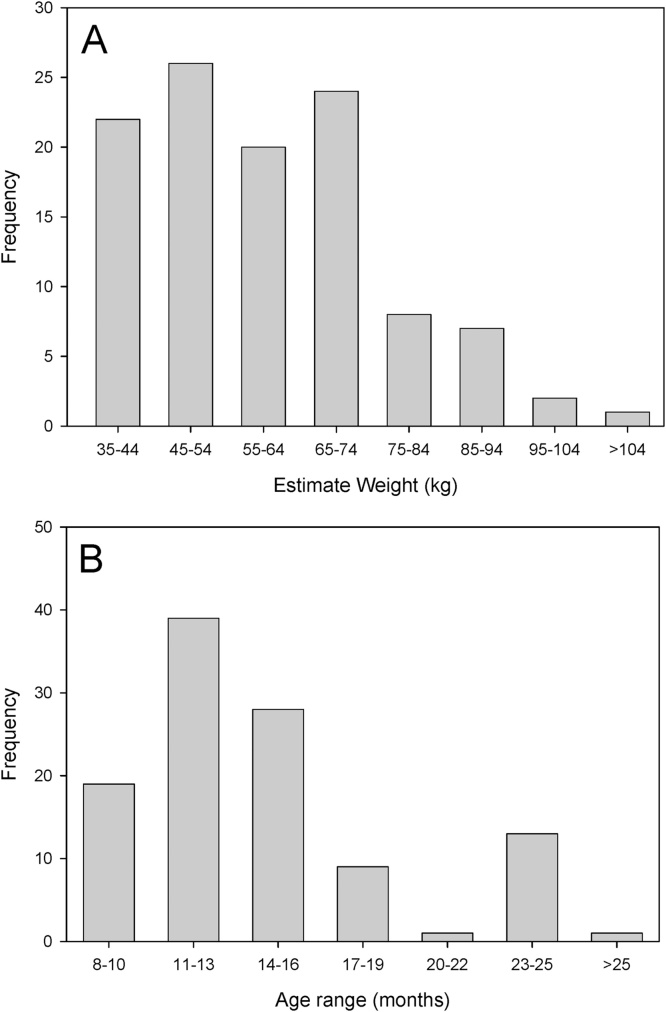
Neurocysticercosis is a major cause of epilepsy in countries where Taenia solium is endemic and the parasite is a major cause of food-borne disease globally. Pigs are the natural intermediate host involved in transmission of the parasite. T. solium is known to be endemic in Nepal, however there is limited reliable data about the prevalence of the disease in Nepal. The aim of this study was to determine accurately the prevalence of porcine cysticercosis in slaughter age pigs in an area of Nepal where pigs are known to be free-roaming. Pigs were obtained from the Udaypur Village Development Committee (VDC) and Hirminiya & Betahani VDC of the Banke district in Nepal. One hundred and ten animals of slaughter age (approximately 8-16 months old) were purchased, slaughtered and the heart, liver, brain and half the body skeletal musculature were sliced using hand knives and the number and viability of T. solium cysts determined. Thirty two of the 110 animals were found to harbour T. solium cysticerci (29%), of which 30 (27%) were found to have viable cysticerci (93% of the infected animals). This is one of the highest prevalences of porcine cysticercosis that has been reported to date from the results of necropsy on randomly selected animals. This study highlights a high rate of transmission of T. solium in the Banke District of Nepal. It encourages further investigation of human and porcine cysticercosis in Nepal, as well as implementation of efforts to reduce transmission of the parasite and the associated human disease.
在猪带绦虫流行的国家,神经囊尾蚴病是癫痫的主要病因,并且该寄生虫是全球食源性疾病的主要病因。猪是参与该寄生虫传播的天然中间宿主。已知猪带绦虫在尼泊尔流行,然而关于尼泊尔该病患病率的可靠数据有限。本研究的目的是准确确定尼泊尔一个已知猪自由放养地区屠宰年龄猪的猪囊尾蚴病患病率。从尼泊尔班凯区的乌代布尔村发展委员会(VDC)以及希尔米尼亚和贝塔哈尼VDC获取猪。购买了110头屠宰年龄的动物(约8 - 16个月大),进行屠宰,并使用手刀将心脏、肝脏、大脑和一半的体骨骼肌切片,确定猪带绦虫囊肿的数量和活力。110只动物中有32只(29%)被发现携带猪带绦虫囊尾蚴,其中30只(27%)被发现有活的囊尾蚴(占感染动物的93%)。这是迄今为止从对随机选择动物的尸检结果中报告的猪囊尾蚴病最高患病率之一。本研究突出了尼泊尔班凯区猪带绦虫的高传播率。它鼓励对尼泊尔的人和猪囊尾蚴病进行进一步调查,以及开展减少该寄生虫传播和相关人类疾病的工作。