Cerrone Marina, Montnach Jerome, Lin Xianming, Zhao Yan-Ting, Zhang Mingliang, Agullo-Pascual Esperanza, Leo-Macias Alejandra, Alvarado Francisco J, Dolgalev Igor, Karathanos Thomas V, Malkani Kabir, Van Opbergen Chantal J M, van Bavel Joanne J A, Yang Hua-Qian, Vasquez Carolina, Tester David, Fowler Steven, Liang Fengxia, Rothenberg Eli, Heguy Adriana, Morley Gregory E, Coetzee William A, Trayanova Natalia A, Ackerman Michael J, van Veen Toon A B, Valdivia Hector H, Delmar Mario
Leon H Charney Division of Cardiology, NYU School of Medicine, 520 First Avenue, New York, NY, 10016, USA.
Center for Arrhythmia Research, Division of Cardiology, University of Michigan, 2800 Plymouth Road, Ann Arbor, MI, 48109, USA.
Nat Commun. 2017 Jul 24;8(1):106. doi: 10.1038/s41467-017-00127-0.
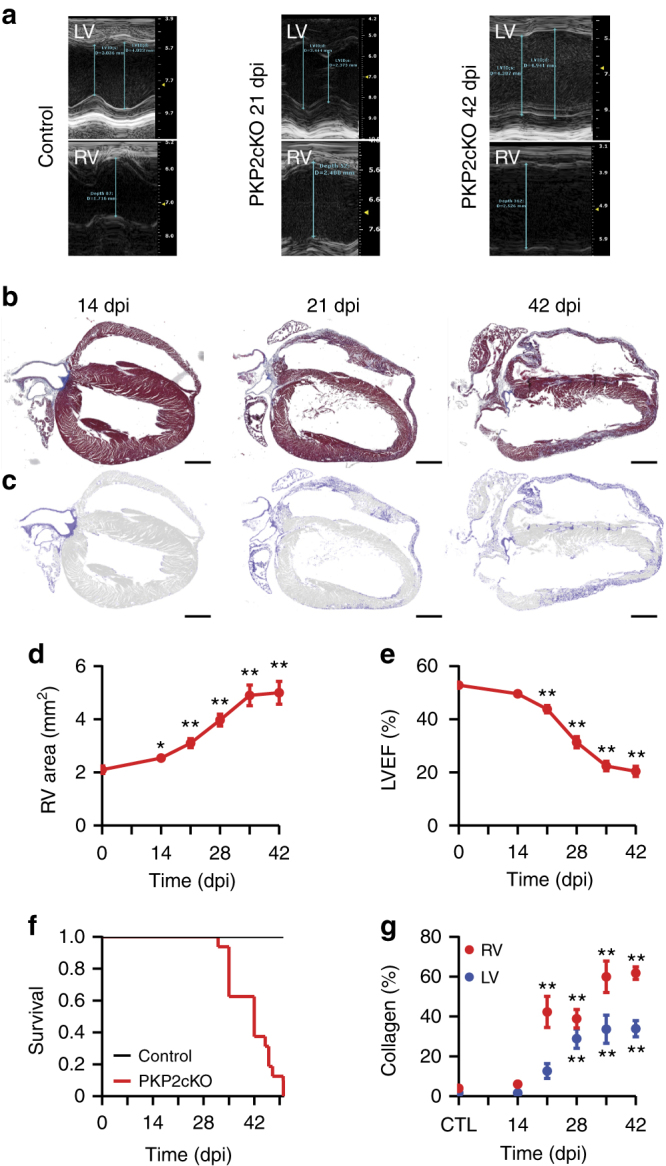
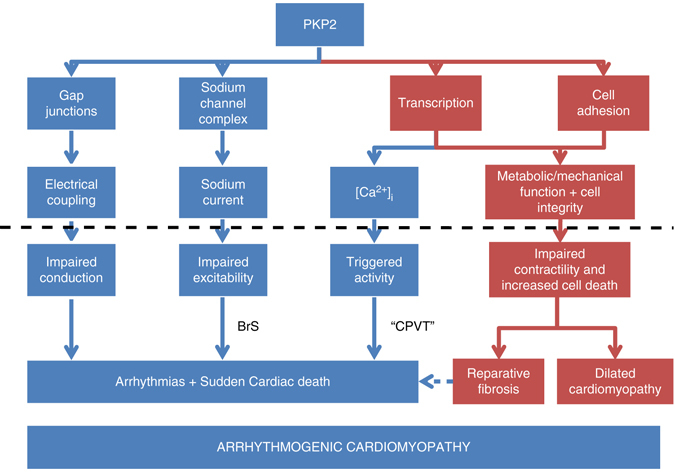
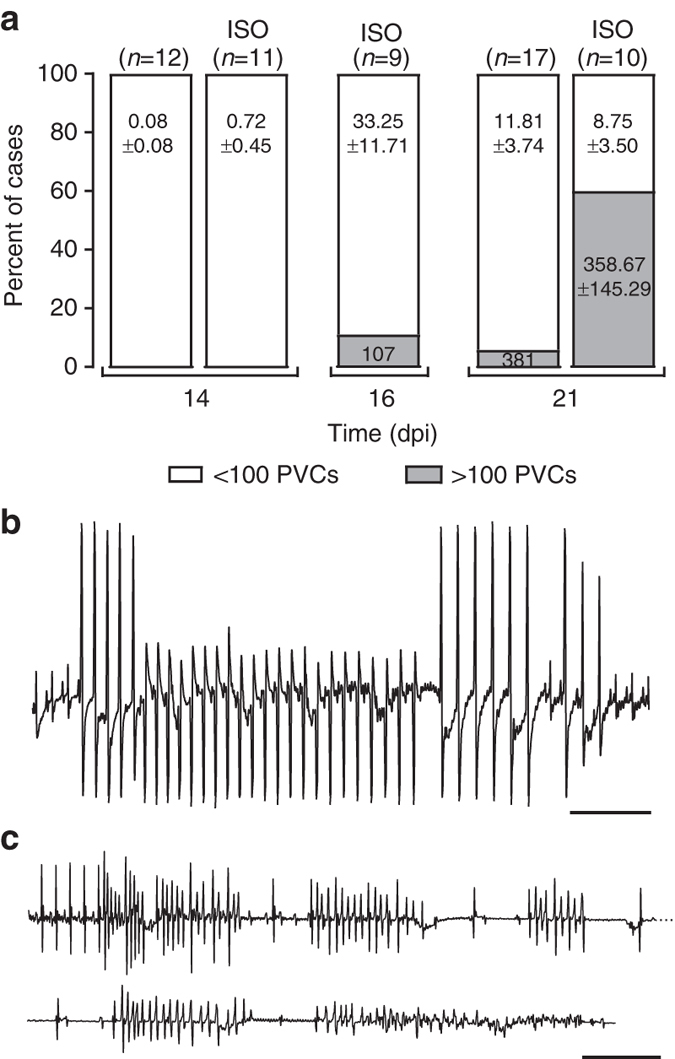
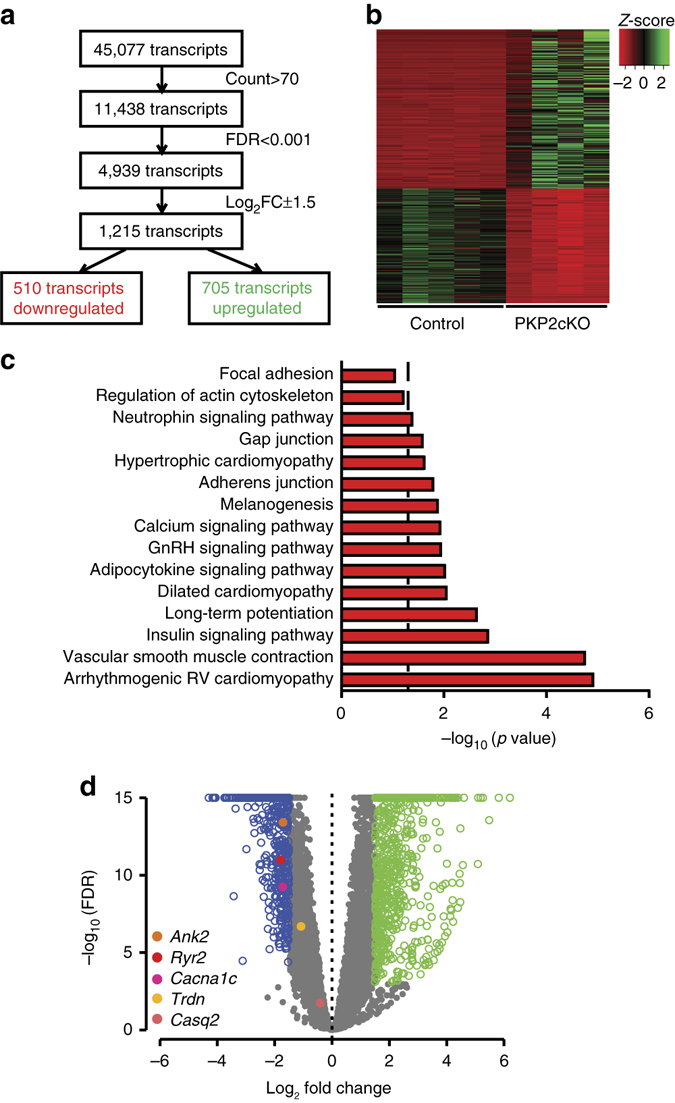
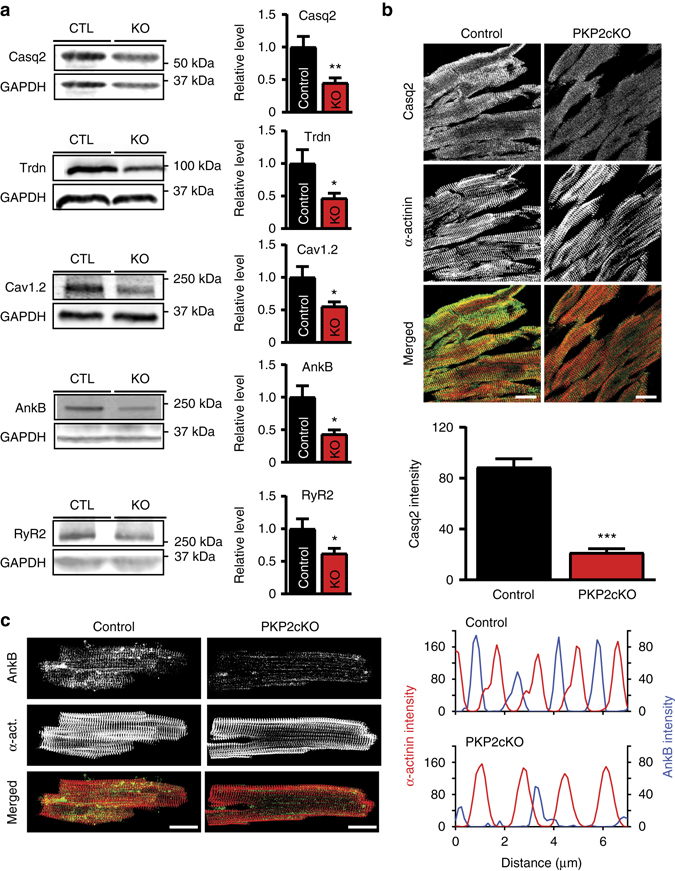
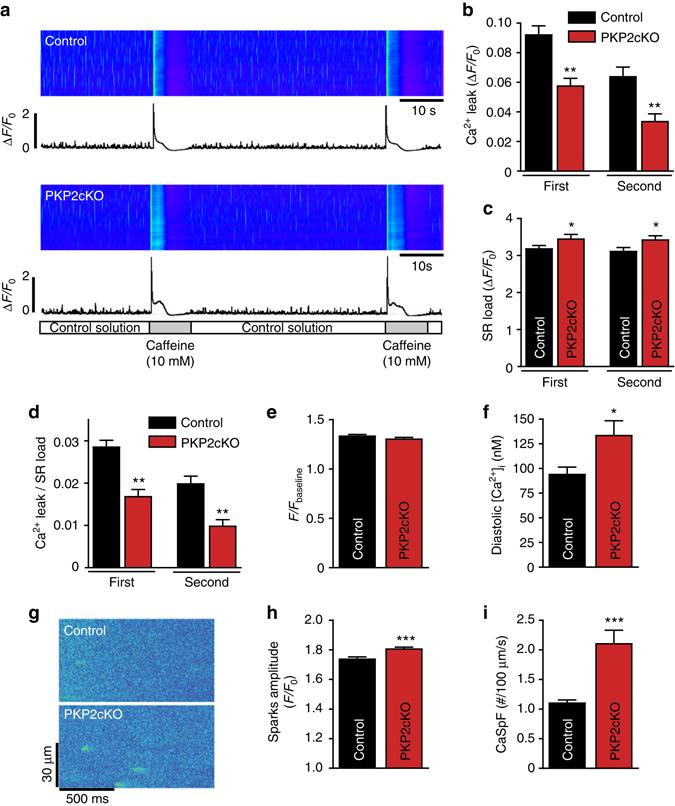
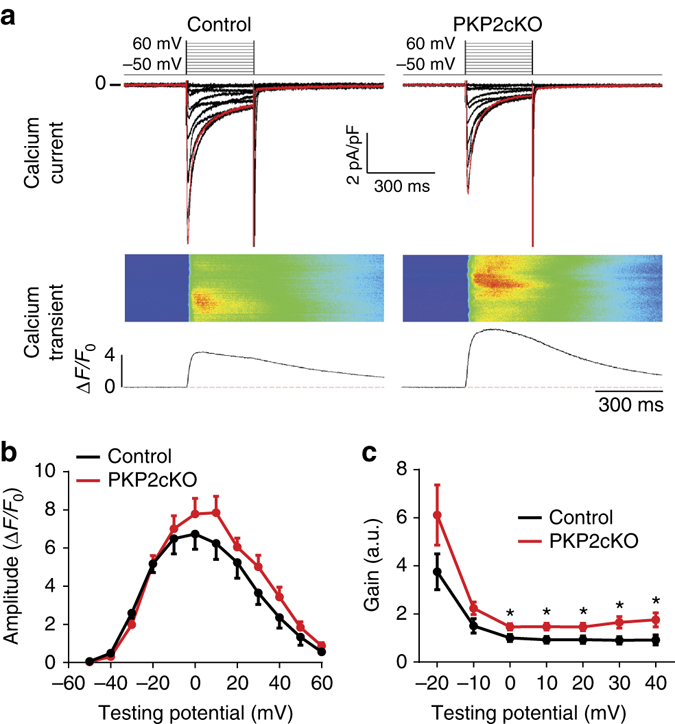
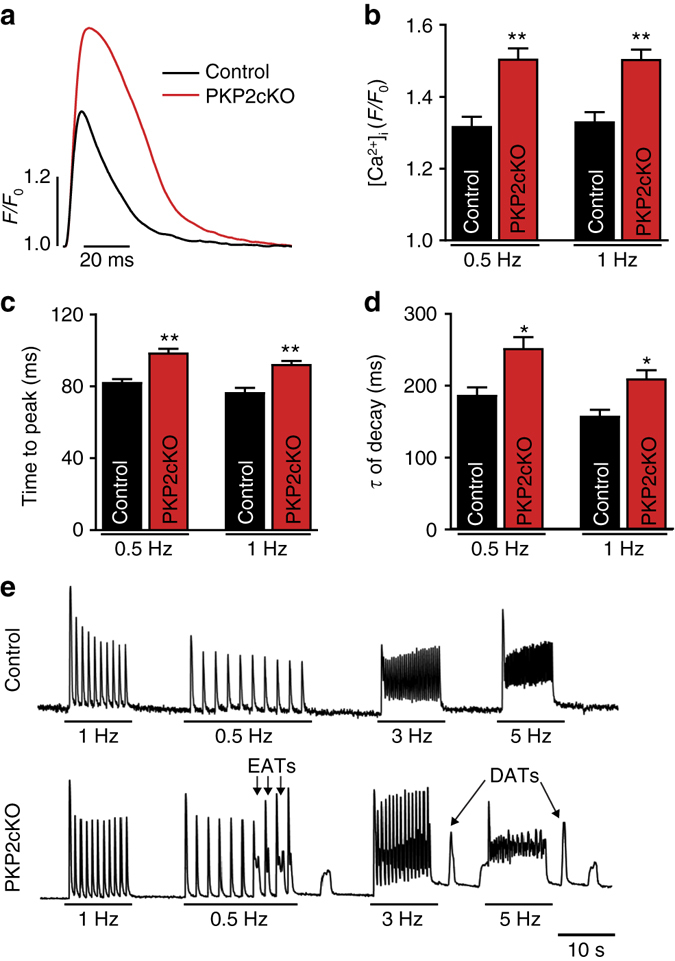
Plakophilin-2 (PKP2) is a component of the desmosome and known for its role in cell-cell adhesion. Mutations in human PKP2 associate with a life-threatening arrhythmogenic cardiomyopathy, often of right ventricular predominance. Here, we use a range of state-of-the-art methods and a cardiomyocyte-specific, tamoxifen-activated, PKP2 knockout mouse to demonstrate that in addition to its role in cell adhesion, PKP2 is necessary to maintain transcription of genes that control intracellular calcium cycling. Lack of PKP2 reduces expression of Ryr2 (coding for Ryanodine Receptor 2), Ank2 (coding for Ankyrin-B), Cacna1c (coding for Ca1.2) and Trdn (coding for triadin), and protein levels of calsequestrin-2 (Casq2). These factors combined lead to disruption of intracellular calcium homeostasis and isoproterenol-induced arrhythmias that are prevented by flecainide treatment. We propose a previously unrecognized arrhythmogenic mechanism related to PKP2 expression and suggest that mutations in PKP2 in humans may cause life-threatening arrhythmias even in the absence of structural disease.It is believed that mutations in desmosomal adhesion complex protein plakophilin 2 (PKP2) cause arrhythmia due to loss of cell-cell communication. Here the authors show that PKP2 controls the expression of proteins involved in calcium cycling in adult mouse hearts, and that lack of PKP2 can cause arrhythmia in a structurally normal heart.
桥粒斑菲素蛋白-2(PKP2)是桥粒的一个组成部分,因其在细胞间黏附中的作用而闻名。人类PKP2基因的突变与一种危及生命的致心律失常性心肌病相关,这种心肌病通常以右心室为主。在这里,我们使用一系列最先进的方法,并利用一种心肌细胞特异性、他莫昔芬激活的PKP2基因敲除小鼠来证明,除了其在细胞黏附中的作用外,PKP2对于维持控制细胞内钙循环的基因转录也是必需的。缺乏PKP2会降低兰尼碱受体2(Ryr2,编码Ryanodine Receptor 2)、锚蛋白B(Ank2,编码Ankyrin-B)、L型钙通道α1C亚基(Cacna1c,编码Ca1.2)和三联蛋白(Trdn,编码triadin)的表达,以及肌集钙蛋白-2(Casq2)的蛋白水平。这些因素共同导致细胞内钙稳态的破坏以及异丙肾上腺素诱导的心律失常,而氟卡尼治疗可预防这种心律失常。我们提出了一种与PKP2表达相关的此前未被认识到的致心律失常机制,并表明人类PKP2基因的突变即使在没有结构性疾病的情况下也可能导致危及生命的心律失常。据信,桥粒黏附复合体蛋白桥粒斑菲素蛋白2(PKP2)的突变会因细胞间通讯丧失而导致心律失常。本文作者表明,PKP₂控制成年小鼠心脏中参与钙循环的蛋白质的表达,并且缺乏PKP₂会在结构正常的心脏中导致心律失常。