Li Rui, Wang Hexing, Shi Qingfeng, Wang Na, Zhang Zhijie, Xiong Chenglong, Liu Jianxiang, Chen Yue, Jiang Lufang, Jiang Qingwu
Key Laboratory of Public Health Safety of Ministry of Education, School of Public Health, Fudan University, Shanghai, China.
School of Epidemiology and Public Health, Faculty of Medicine, University of Ottawa, Ottawa, Ontario, Canada.
PLoS One. 2017 Jul 25;12(7):e0181690. doi: 10.1371/journal.pone.0181690. eCollection 2017.
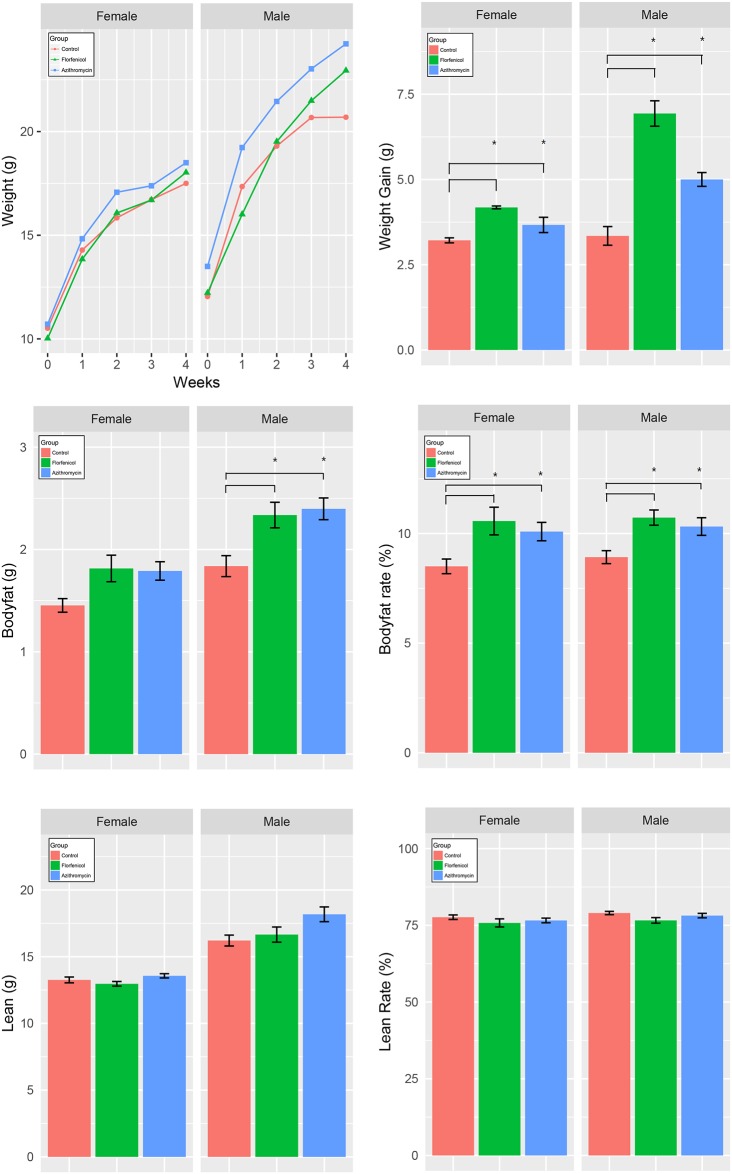
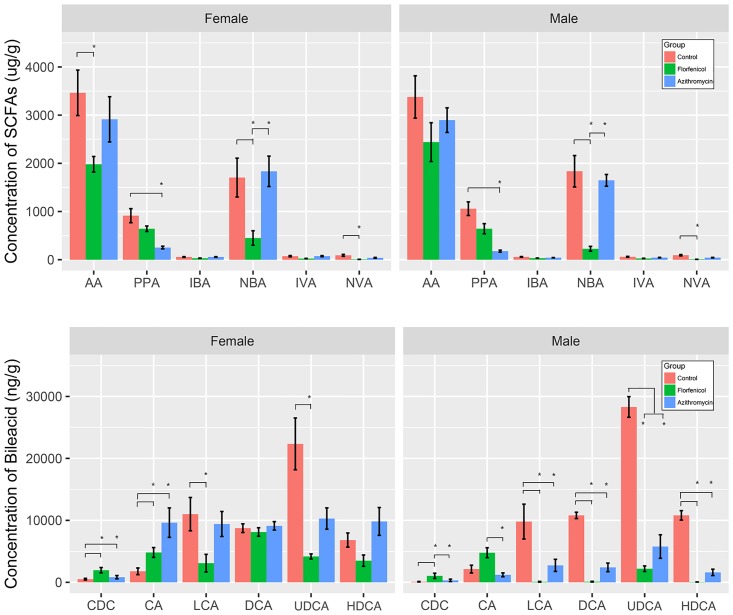
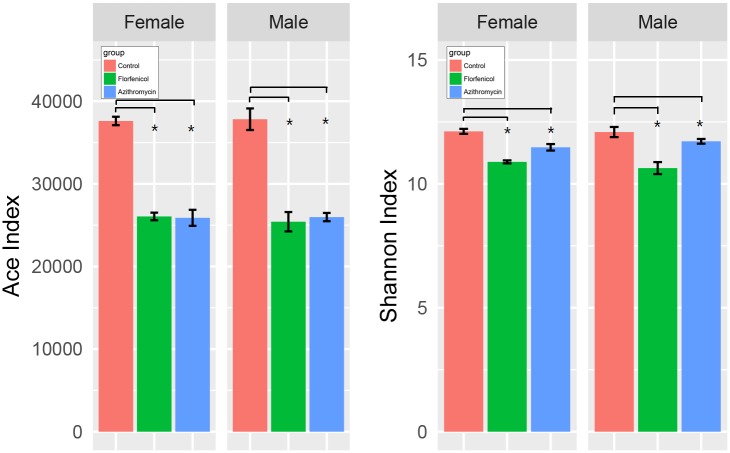
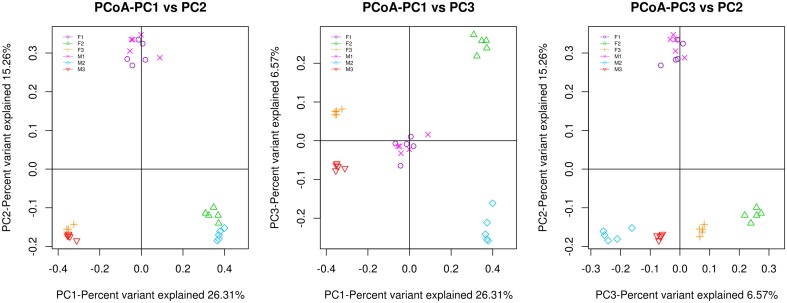
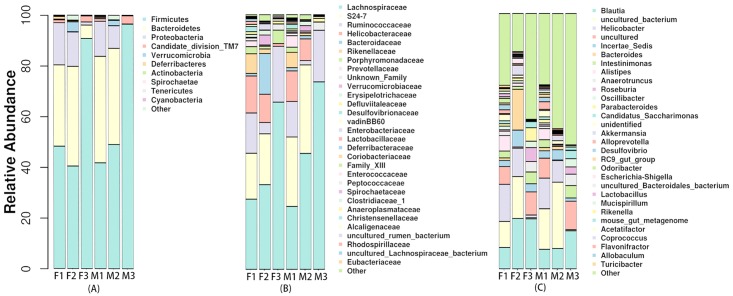
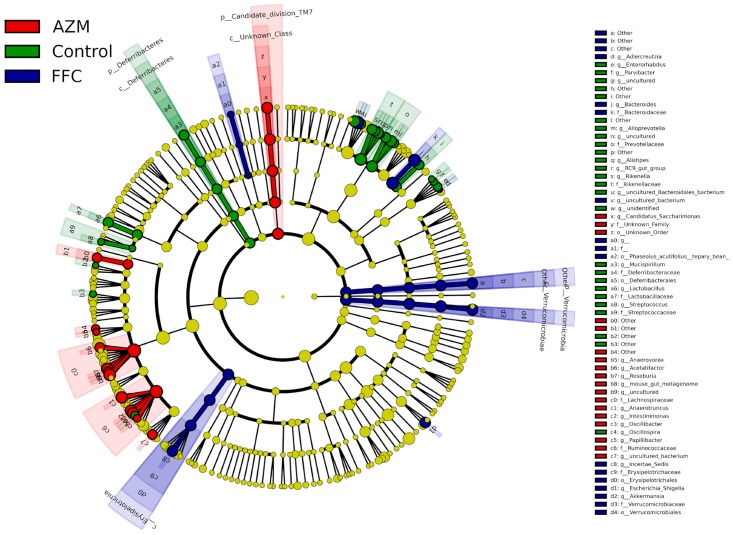
Certain antibiotics detected in urine are associated with childhood obesity. In the current experimental study, we investigated two representative antibiotics detected in urine, florfenicol and azithromycin, for their early effects on adipogenesis, gut microbiota, short-chain fatty acids (SCFAs), and bile acids in mice. Thirty C57BL/6 mice aged four weeks were randomly divided into three groups (florfenicol, azithromycin and control). The two experimental groups were administered florfenicol or azithromycin at 5 mg/kg/day for four weeks. Body weight was measured weekly. The composition of the gut microbiota, body fat, SCFAs, and bile acids in colon contents were measured at the end of the experiment. The composition of the gut microbiota was determined by sequencing the bacterial 16S rRNA gene. The concentration of SCFAs and bile acids was determined using gas chromatography and liquid chromatography coupled to tandem mass spectrometry, respectively. The composition of the gut microbiota indicated that the two antibiotics altered the gut microbiota composition and decreased its richness and diversity. At the phylum level, the ratio of Firmicutes/Bacteroidetes increased significantly in the antibiotic groups. At the genus level, there were declines in Christensenella, Gordonibacter and Anaerotruncus in the florfenicol group, in Lactobacillus in the azithromycin group, and in Alistipes, Desulfovibrio, Parasutterella and Rikenella in both the antibiotic groups. The decrease in Rikenella in the azithromycin group was particularly noticeable. The concentration of SCFAs and secondary bile acids decreased in the colon, but the concentration of primary bile acids increased. These findings indicated that florfenicol and azithromycin increased adipogenesis and altered gut microbiota composition, SCFA production, and bile acid metabolism, suggesting that exposure to antibiotics might be one risk factor for childhood obesity. More studies are needed to investigate the specific mechanisms.
尿液中检测到的某些抗生素与儿童肥胖有关。在当前的实验研究中,我们研究了尿液中检测到的两种代表性抗生素氟苯尼考和阿奇霉素对小鼠脂肪生成、肠道微生物群、短链脂肪酸(SCFAs)和胆汁酸的早期影响。将30只4周龄的C57BL/6小鼠随机分为三组(氟苯尼考组、阿奇霉素组和对照组)。两个实验组分别以5mg/kg/天的剂量给予氟苯尼考或阿奇霉素,持续四周。每周测量体重。在实验结束时测量结肠内容物中肠道微生物群的组成、体脂、SCFAs和胆汁酸。通过对细菌16S rRNA基因进行测序来确定肠道微生物群的组成。分别使用气相色谱法和液相色谱-串联质谱法测定SCFAs和胆汁酸的浓度。肠道微生物群的组成表明,这两种抗生素改变了肠道微生物群的组成,降低了其丰富度和多样性。在门水平上,抗生素组中厚壁菌门/拟杆菌门的比例显著增加。在属水平上,氟苯尼考组中的克里斯滕森菌属、戈登菌属和厌氧短杆菌属减少,阿奇霉素组中的乳酸杆菌属减少,两个抗生素组中的阿利斯杆菌属、脱硫弧菌属、副萨特菌属和理研菌属均减少。阿奇霉素组中理研菌属的减少尤为明显。结肠中SCFAs和次级胆汁酸的浓度降低,但初级胆汁酸的浓度增加。这些发现表明,氟苯尼考和阿奇霉素增加了脂肪生成,改变了肠道微生物群组成、SCFA产生和胆汁酸代谢,表明接触抗生素可能是儿童肥胖的一个风险因素。需要更多的研究来调查具体机制。