Silva Ubiana C, Medeiros Julliane D, Leite Laura R, Morais Daniel K, Cuadros-Orellana Sara, Oliveira Christiane A, de Paula Lana Ubiraci G, Gomes Eliane A, Dos Santos Vera L
Microbiology Department, Universidade Federal de Minas GeraisBelo Horizonte, Brazil.
Biosystems Informatics and Genomics Group, René Rachou Research Center, FiocruzBelo Horizonte, Brazil.
Front Microbiol. 2017 Jul 11;8:1266. doi: 10.3389/fmicb.2017.01266. eCollection 2017.
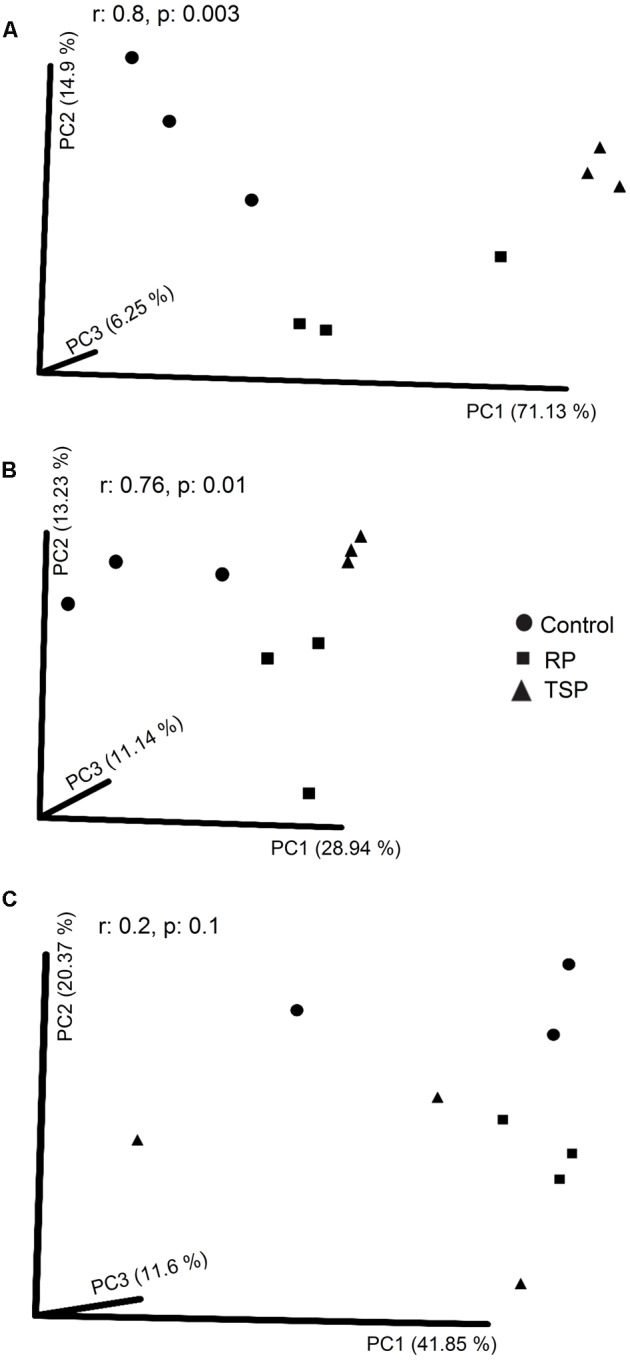
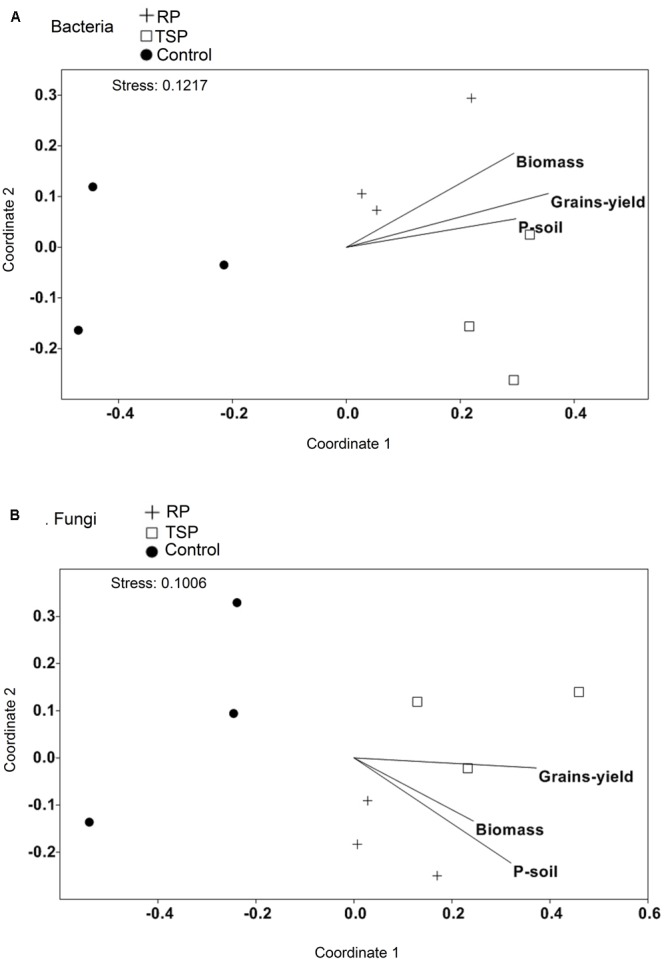
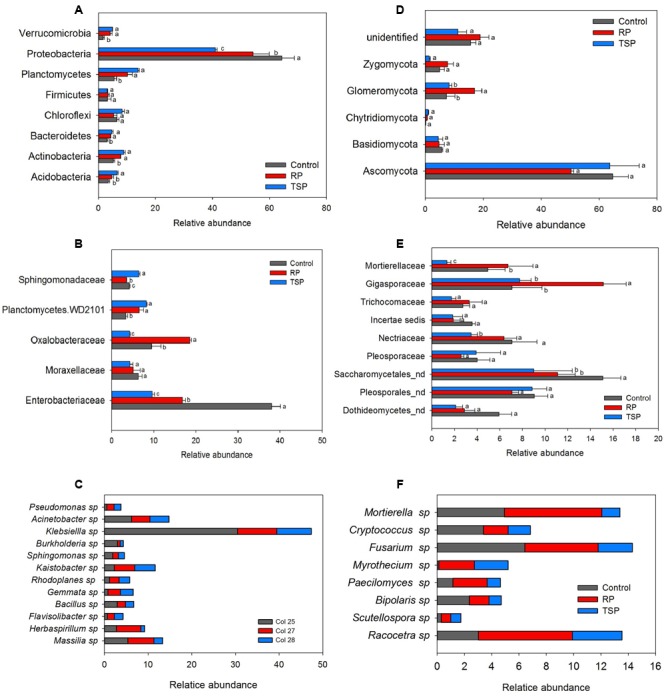
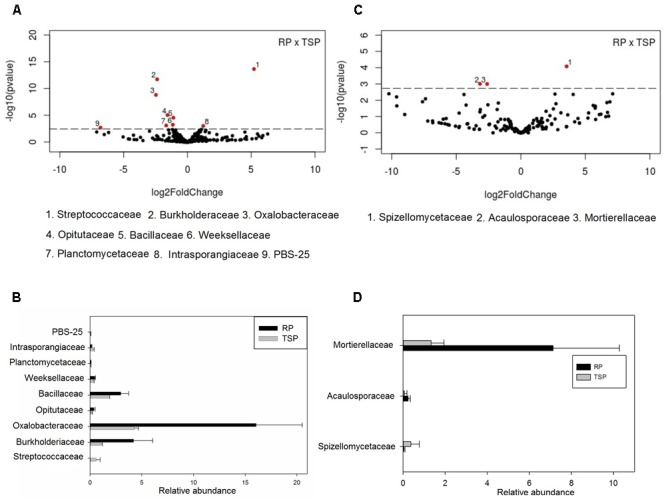
Phosphate fertilization is a common practice in agriculture worldwide, and several commercial products are widely used. Triple superphosphate (TSP) is an excellent soluble phosphorus (P) source. However, its high cost of production makes the long-term use of crude rock phosphate (RP) a more attractive alternative in developing countries, albeit its influence on plant-associated microbiota remains unclear. Here, we compared long-term effects of TSP and RP fertilization on the structure of maize rhizosphere microbial community using next generation sequencing. Proteobacteria were dominant in all conditions, whereas Oxalobacteraceae (mainly and ) was enriched in the RP-amended soil. was the second most abundant taxon in the RP-treated soil. sp. and sp. were enriched in the RP-amended soil when compared to the TSP-treated soil. Regarding fungi, Glomeromycota showed highest abundance in RP-amended soils, and the main genera were and . These taxa are already described as important for P solubilization/acquisition in RP-fertilized soil. Maize grown on TSP and RP-treated soil presented similar productivity, and a positive correlation was detected for P content and the microbial community of the soils. The results suggest changes of the microbial community composition associated to the type of phosphate fertilization. Whilst it is not possible to establish causality relations, our data highlights a few candidate taxa that could be involved in RP solubilization and plant growth promotion. Moreover, this can represent a shorter path for further studies aiming the isolation and validation of the taxa described here concerning P release on the soil plant system and their use as bioinoculants.
磷肥施用是全球农业中的常见做法,有几种商业产品被广泛使用。重过磷酸钙(TSP)是一种优质的可溶性磷(P)源。然而,其高昂的生产成本使得在发展中国家长期使用粗磷酸岩(RP)成为更具吸引力的选择,尽管其对与植物相关的微生物群的影响尚不清楚。在这里,我们使用下一代测序技术比较了TSP和RP施肥对玉米根际微生物群落结构的长期影响。变形菌门在所有条件下均占主导地位,而草酸杆菌科(主要是 和 )在施用RP的土壤中富集。 是RP处理土壤中第二丰富的分类群。与TSP处理的土壤相比, 菌属和 菌属在施用RP的土壤中富集。关于真菌,球囊菌门在施用RP的土壤中丰度最高,主要属为 和 。这些分类群已被描述为在施用RP的土壤中对磷的溶解/获取很重要。在TSP和RP处理的土壤上种植的玉米表现出相似的生产力,并且检测到土壤磷含量与微生物群落之间存在正相关。结果表明,微生物群落组成的变化与磷肥类型有关。虽然不可能建立因果关系,但我们的数据突出了一些可能参与RP溶解和促进植物生长的候选分类群。此外,这可以为进一步研究提供一条捷径,旨在分离和验证本文所述的分类群在土壤-植物系统中磷释放方面的作用及其作为生物接种剂的用途。