Carrión Ornella, Pratscher Jennifer, Curson Andrew R J, Williams Beth T, Rostant Wayne G, Murrell J Colin, Todd Jonathan D
School of Biological Sciences, University of East Anglia, Norwich, UK.
School of Environmental Sciences, University of East Anglia, Norwich, UK.
ISME J. 2017 Oct;11(10):2379-2390. doi: 10.1038/ismej.2017.105. Epub 2017 Aug 1.
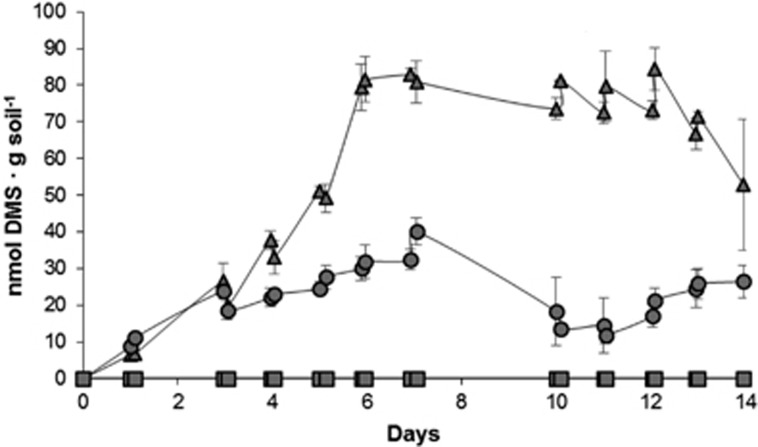
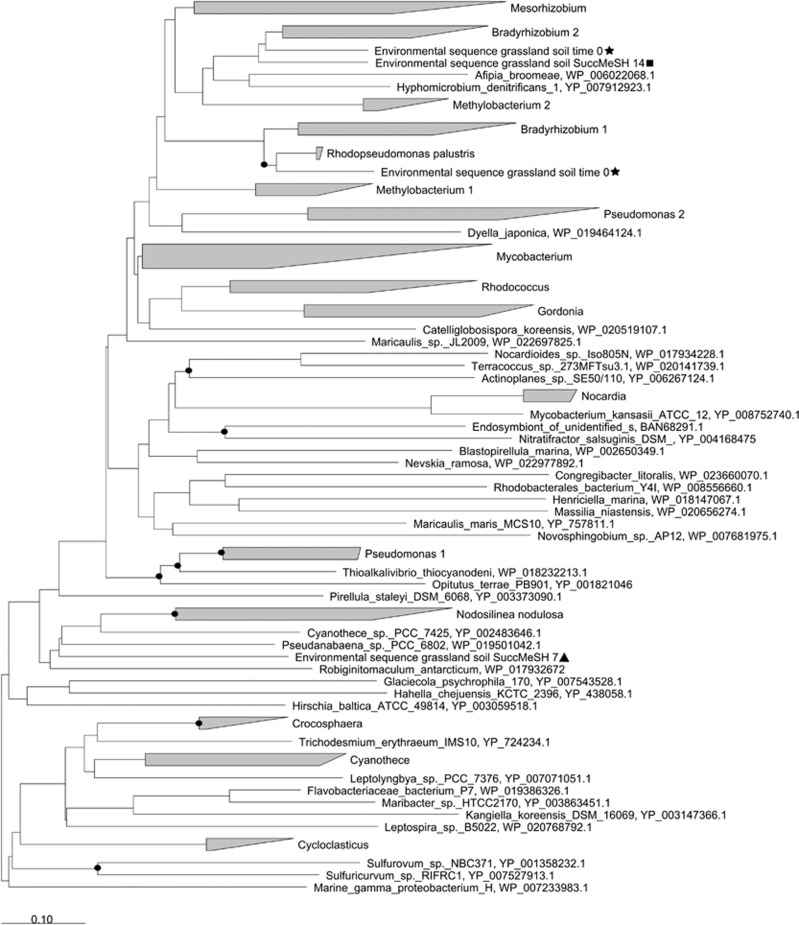
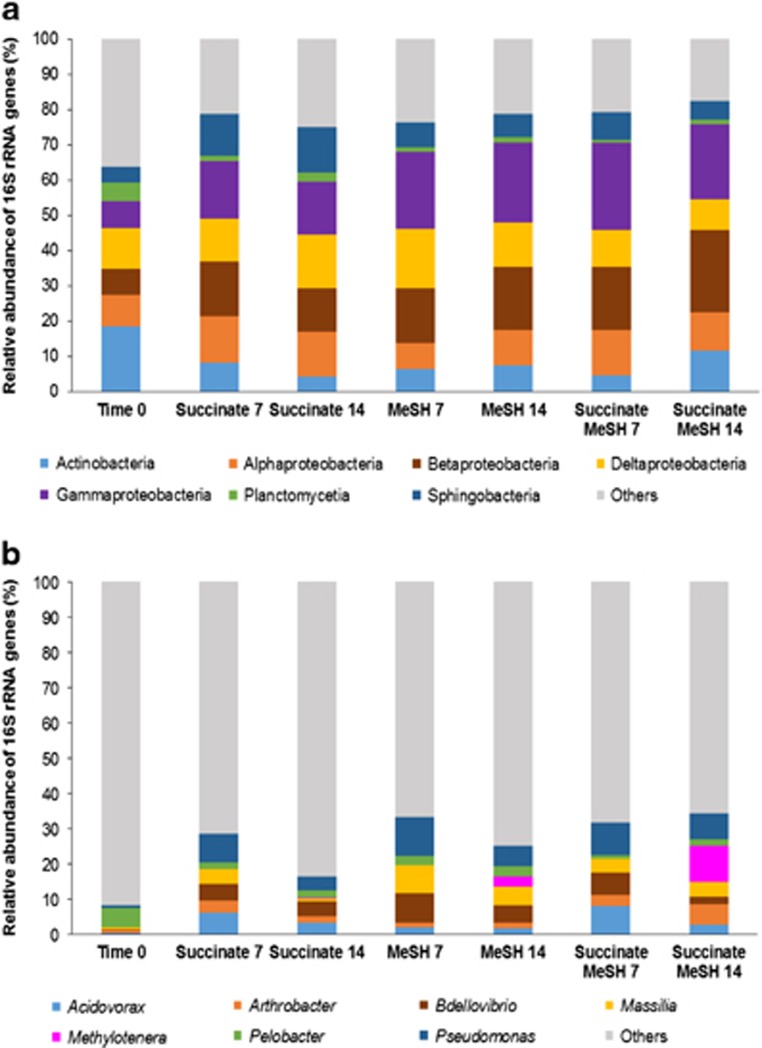
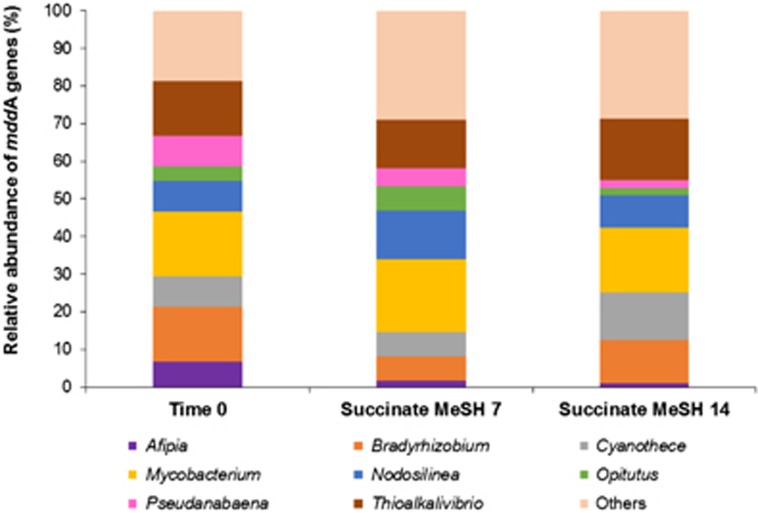
Dimethylsulfide (DMS) is an environmentally important trace gas with roles in sulfur cycling, signalling to higher organisms and in atmospheric chemistry. DMS is believed to be predominantly produced in marine environments via microbial degradation of the osmolyte dimethylsulfoniopropionate (DMSP). However, significant amounts of DMS are also generated from terrestrial environments, for example, peat bogs can emit ~6 μmol DMS m per day, likely via the methylation of methanethiol (MeSH). A methyltransferase enzyme termed 'MddA', which catalyses the methylation of MeSH, generating DMS, in a wide range of bacteria and some cyanobacteria, may mediate this process, as the mddA gene is abundant in terrestrial metagenomes. This is the first study investigating the functionality of MeSH-dependent DMS production (Mdd) in a wide range of aerobic environments. All soils and marine sediment samples tested produced DMS when incubated with MeSH. Cultivation-dependent and cultivation-independent methods were used to assess microbial community changes in response to MeSH addition in a grassland soil where 35.9% of the bacteria were predicted to contain mddA. Bacteria of the genus Methylotenera were enriched in the presence of MeSH. Furthermore, many novel Mdd bacterial strains were isolated. Despite the abundance of mddA in the grassland soil, the Mdd pathway may not be a significant source of DMS in this environment as MeSH addition was required to detect DMS at only very low conversion rates.
二甲基硫醚(DMS)是一种对环境具有重要意义的痕量气体,在硫循环、向高等生物发出信号以及大气化学中发挥作用。人们认为DMS主要是在海洋环境中通过渗透调节物质二甲基巯基丙酸内盐(DMSP)的微生物降解产生的。然而,陆地环境也会产生大量的DMS,例如,泥炭沼泽每天可排放约6 μmol DMS·m,可能是通过甲硫醇(MeSH)的甲基化作用。一种名为“MddA”的甲基转移酶可催化MeSH的甲基化,在多种细菌和一些蓝细菌中生成DMS,这一过程可能由其介导,因为mddA基因在陆地宏基因组中大量存在。这是第一项研究在多种有氧环境中依赖MeSH产生DMS(Mdd)功能的研究。所有测试的土壤和海洋沉积物样本在与MeSH一起培养时都会产生DMS。采用依赖培养和不依赖培养的方法来评估在草地土壤中添加MeSH后微生物群落的变化,据预测该草地土壤中35.9%的细菌含有mddA。在有MeSH存在的情况下,甲基营养菌属的细菌会富集。此外,还分离出了许多新型的Mdd细菌菌株。尽管草地土壤中mddA含量丰富,但在这种环境中,Mdd途径可能不是DMS的重要来源,因为只有在极低的转化率下添加MeSH才能检测到DMS。