Sun Gongping, Guzman Elmer, Balasanyan Varuzhan, Conner Christopher M, Wong Kirsten, Zhou Hongjun Robin, Kosik Kenneth S, Montell Denise J
Molecular, Cellular, and Developmental Biology Department, Neuroscience Research Institute, University of California, Santa Barbara, Santa Barbara, CA.
Molecular, Cellular, and Developmental Biology Department, Neuroscience Research Institute, University of California, Santa Barbara, Santa Barbara, CA
J Cell Biol. 2017 Oct 2;216(10):3355-3368. doi: 10.1083/jcb.201706134. Epub 2017 Aug 2.
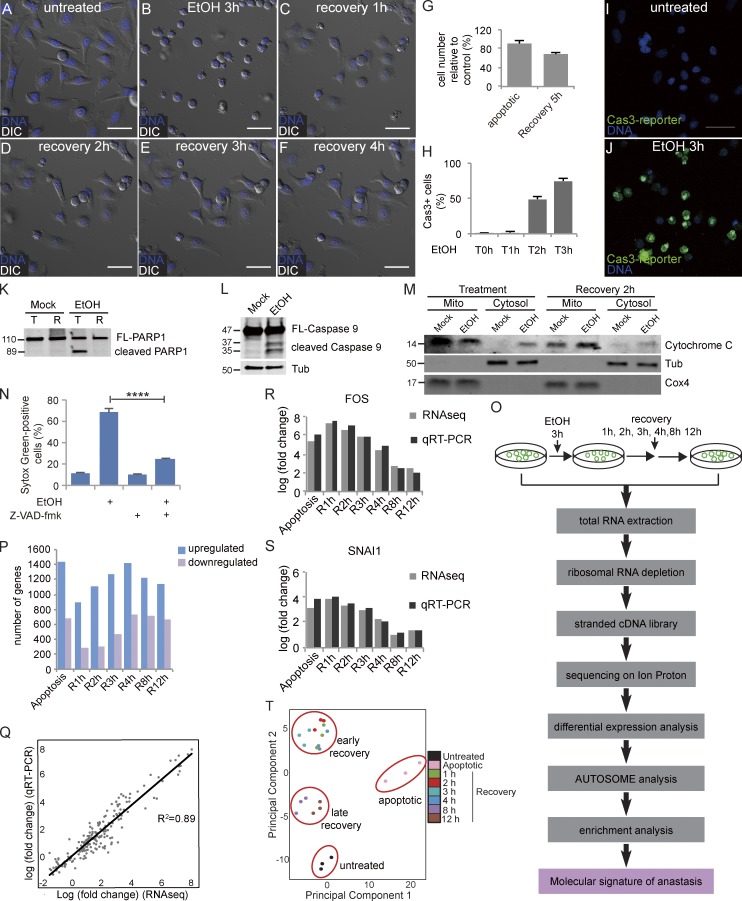
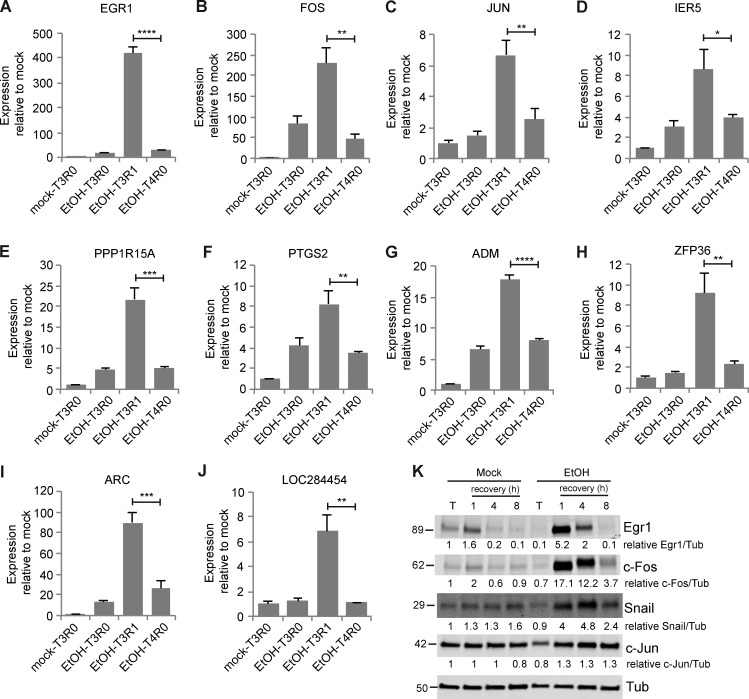
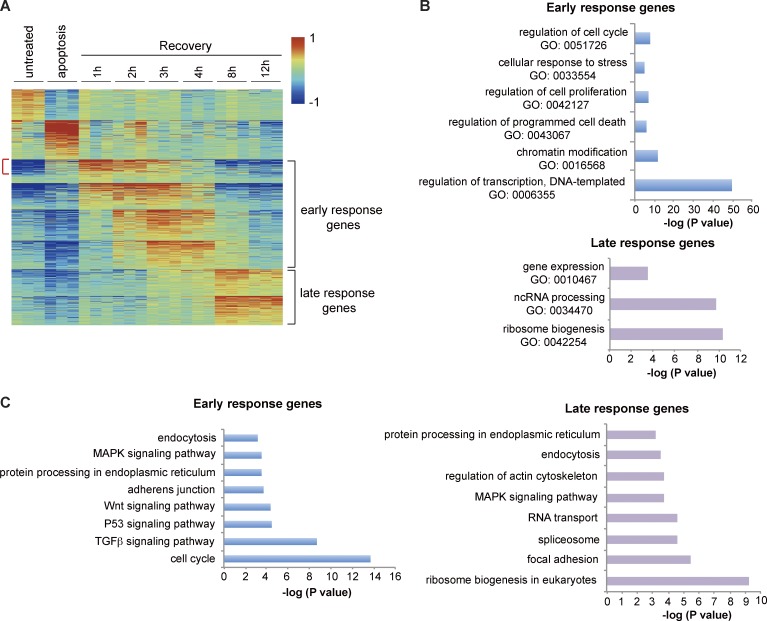
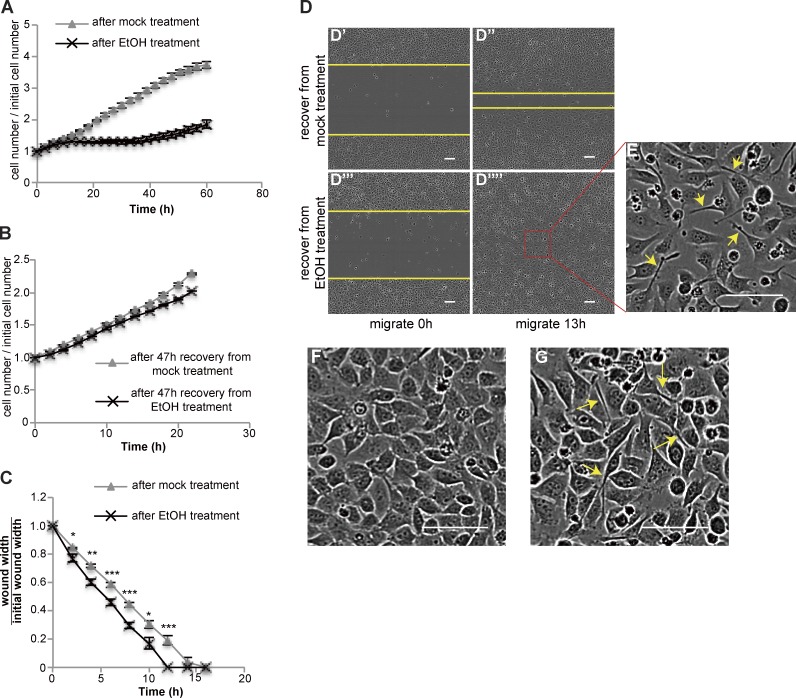
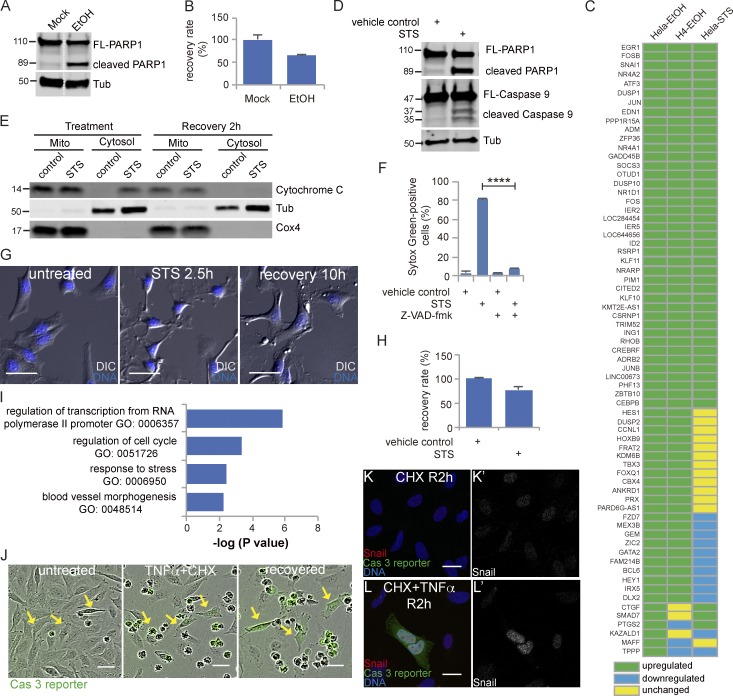
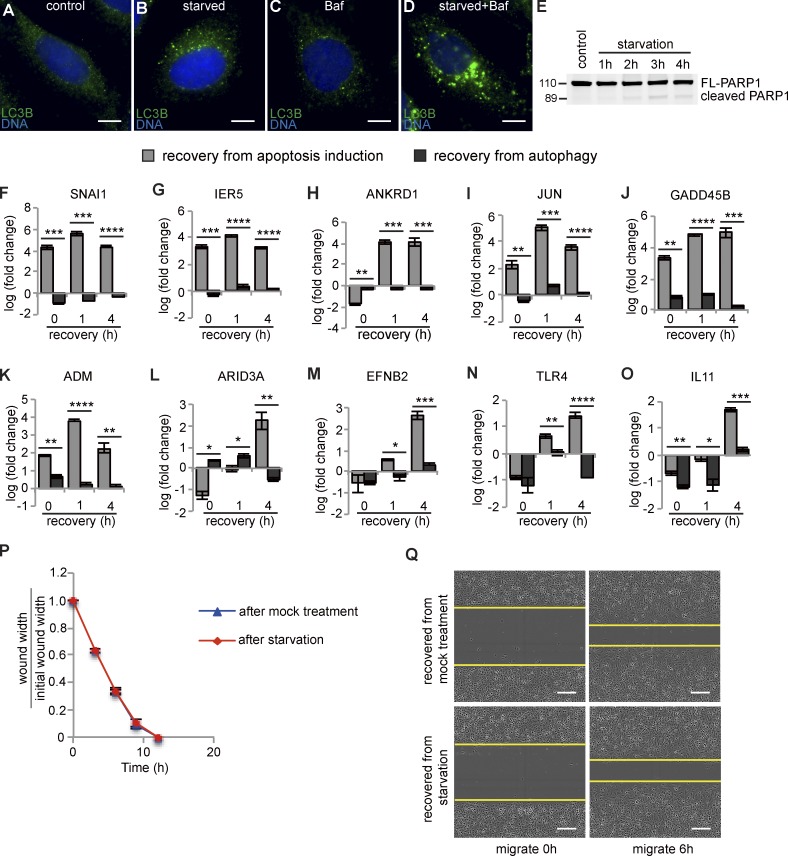
During apoptosis, executioner caspase activity has been considered a point of no return. However, recent studies show that cells can survive caspase activation following transient apoptotic stimuli, a process called anastasis. To identify a molecular signature, we performed whole-transcriptome RNA sequencing of untreated, apoptotic, and recovering HeLa cells. We found that anastasis is an active, two-stage program. During the early stage, cells transition from growth-arrested to growing. In the late stage, HeLa cells change from proliferating to migratory. Recovering cells also exhibited prolonged elevation of proangiogenic factors. Strikingly, some early-recovery mRNAs, including Snail, were elevated first during apoptosis, implying that dying cells poise to recover, even while under apoptotic stress. Snail was also required for recovery. This study reveals similarities in the anastasis genes, pathways, and cell behaviors to those activated in wound healing and identifies a repertoire of potential targets for therapeutic manipulation.
在细胞凋亡过程中,执行性半胱天冬酶活性被认为是不可逆转的关键点。然而,最近的研究表明,细胞在短暂的凋亡刺激后可在半胱天冬酶激活后存活,这一过程称为复苏。为了确定分子特征,我们对未处理的、凋亡的和正在恢复的HeLa细胞进行了全转录组RNA测序。我们发现复苏是一个活跃的两阶段程序。在早期阶段,细胞从生长停滞转变为生长状态。在后期阶段,HeLa细胞从增殖转变为迁移。正在恢复的细胞还表现出促血管生成因子的持续升高。引人注目的是,一些早期恢复的mRNA,包括Snail,在凋亡过程中首先升高,这意味着即使处于凋亡应激下,垂死的细胞也准备好恢复。Snail也是恢复所必需的。这项研究揭示了复苏基因、途径和细胞行为与伤口愈合中激活的那些的相似性,并确定了一系列潜在的治疗操作靶点。