Sun Xiaochuan, Wang Yan, Xu Liang, Li Chao, Zhang Wei, Luo Xiaobo, Jiang Haiyan, Liu Liwang
National Key Laboratory of Crop Genetics and Germplasm Enhancement, College of Horticulture, Nanjing Agricultural UniversityNanjing, China.
School of Life Science and Food Engineering, Huaiyin Institute of TechnologyHuai'an, China.
Front Plant Sci. 2017 Jul 14;8:1192. doi: 10.3389/fpls.2017.01192. eCollection 2017.
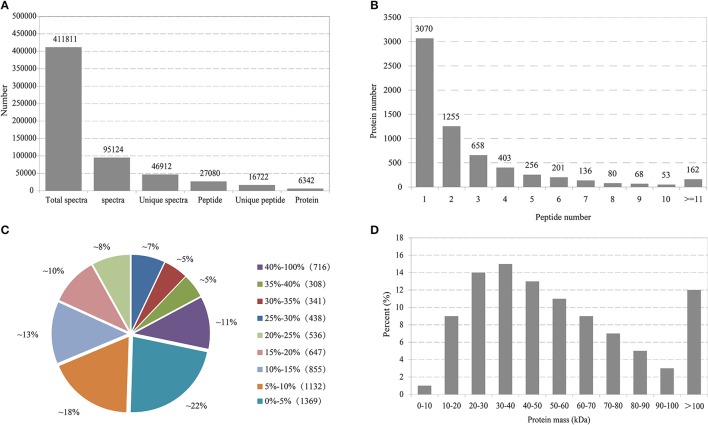
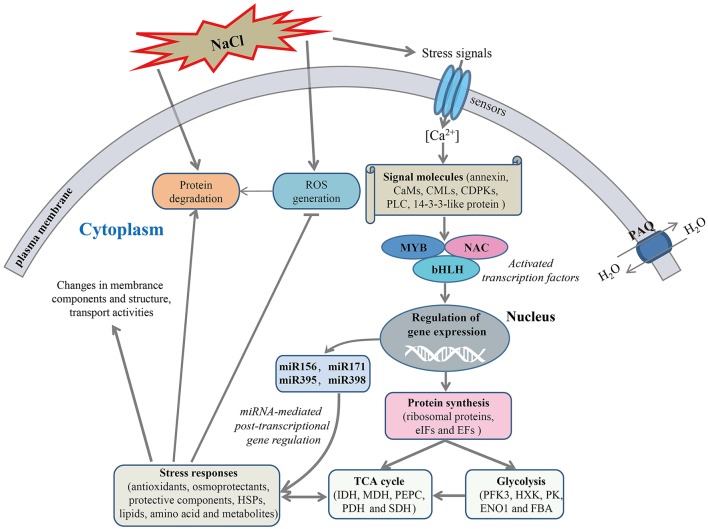
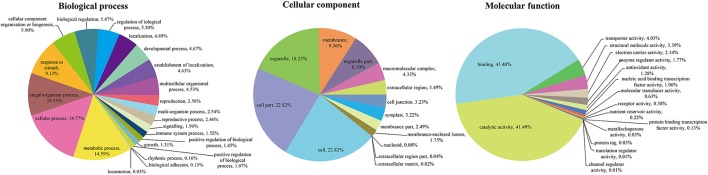
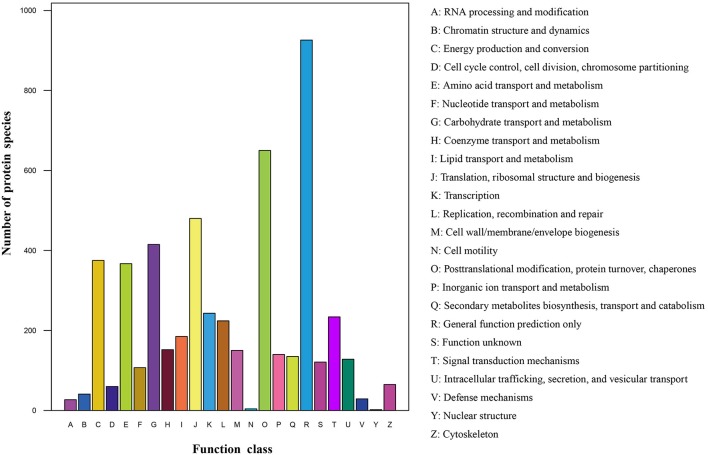
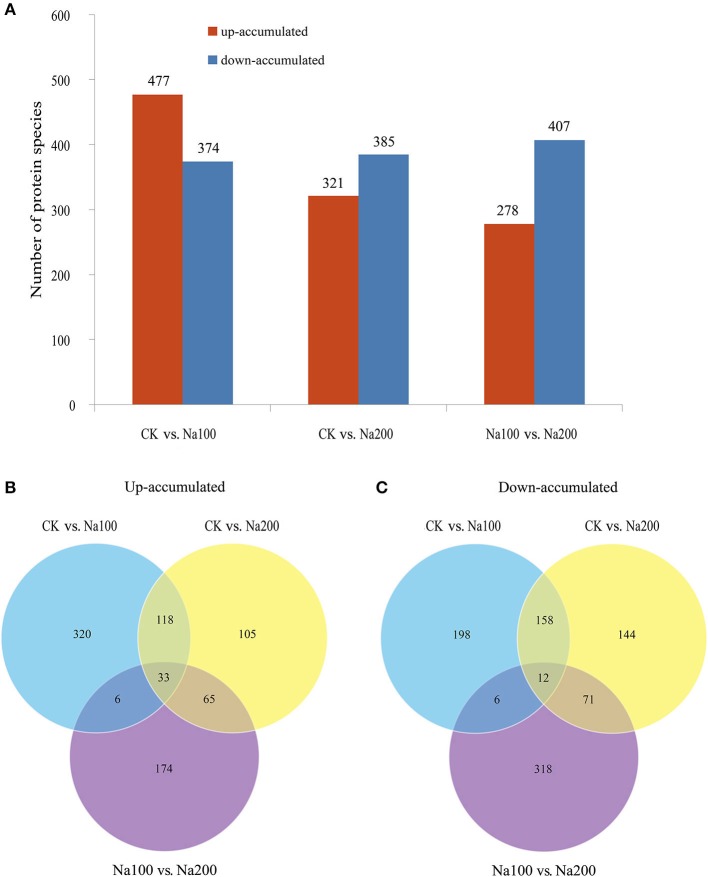
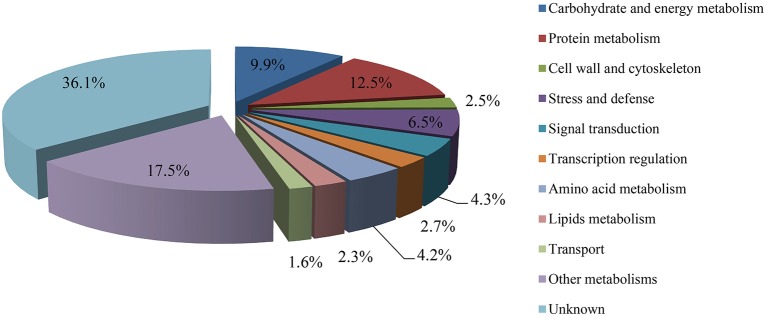
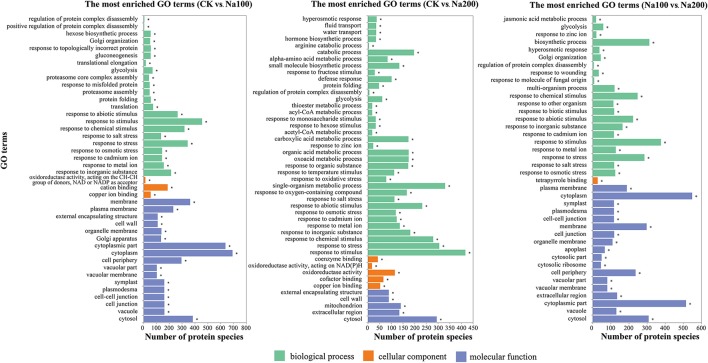
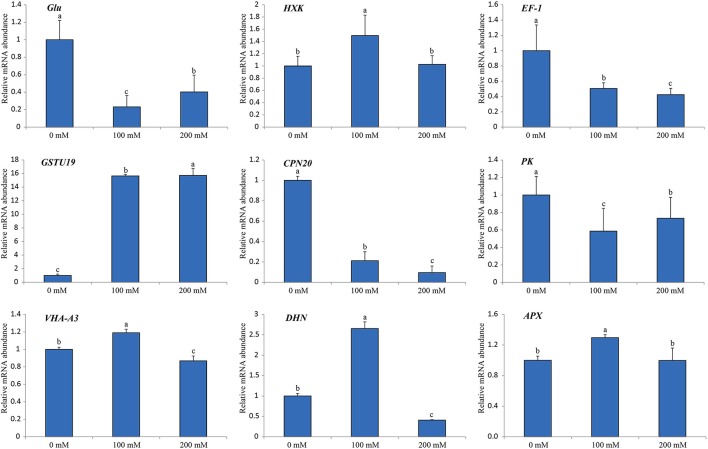
To understand the molecular mechanism underlying salt stress response in radish, iTRAQ-based proteomic analysis was conducted to investigate the differences in protein species abundance under different salt treatments. In total, 851, 706, and 685 differential abundance protein species (DAPS) were identified between CK vs. Na100, CK vs. Na200, and Na100 vs. Na200, respectively. Functional annotation analysis revealed that salt stress elicited complex proteomic alterations in radish roots involved in carbohydrate and energy metabolism, protein metabolism, signal transduction, transcription regulation, stress and defense and transport. Additionally, the expression levels of nine genes encoding DAPS were further verified using RT-qPCR. The integrative analysis of transcriptomic and proteomic data in conjunction with miRNAs was further performed to strengthen the understanding of radish response to salinity. The genes responsible for signal transduction, ROS scavenging and transport activities as well as several key miRNAs including miR171, miR395, and miR398 played crucial roles in salt stress response in radish. Based on these findings, a schematic genetic regulatory network of salt stress response was proposed. This study provided valuable insights into the molecular mechanism underlying salt stress response in radish roots and would facilitate developing effective strategies toward genetically engineered salt-tolerant radish and other root vegetable crops.
为了解萝卜盐胁迫响应的分子机制,开展了基于iTRAQ的蛋白质组学分析,以研究不同盐处理下蛋白质种类丰度的差异。在CK与Na100、CK与Na200以及Na100与Na200之间,分别鉴定出851、706和685种差异丰度蛋白质种类(DAPS)。功能注释分析表明,盐胁迫引发了萝卜根中复杂的蛋白质组变化,这些变化涉及碳水化合物和能量代谢、蛋白质代谢、信号转导、转录调控、应激和防御以及运输。此外,使用RT-qPCR进一步验证了九个编码DAPS的基因的表达水平。进一步结合miRNA对转录组和蛋白质组数据进行综合分析,以加深对萝卜盐胁迫响应的理解。负责信号转导、活性氧清除和运输活动的基因以及包括miR171、miR395和miR398在内的几个关键miRNA在萝卜盐胁迫响应中发挥了关键作用。基于这些发现,提出了盐胁迫响应的示意性遗传调控网络。本研究为萝卜根盐胁迫响应的分子机制提供了有价值的见解,并将有助于制定针对转基因耐盐萝卜和其他根菜类作物的有效策略。