• 文献检索
  • 文档翻译
  • 深度研究
  • 学术资讯
  • Suppr Zotero 插件Zotero 插件
  • 邀请有礼
  • 套餐&价格
  • 历史记录
应用&插件
Suppr Zotero 插件Zotero 插件浏览器插件Mac 客户端Windows 客户端微信小程序
定价
高级版会员购买积分包购买API积分包
服务
文献检索文档翻译深度研究API 文档MCP 服务
关于我们
关于 Suppr公司介绍联系我们用户协议隐私条款
关注我们

Suppr 超能文献

核心技术专利:CN118964589B侵权必究
粤ICP备2023148730 号-1Suppr @ 2026

文献检索

告别复杂PubMed语法,用中文像聊天一样搜索,搜遍4000万医学文献。AI智能推荐,让科研检索更轻松。

立即免费搜索

文件翻译

保留排版,准确专业,支持PDF/Word/PPT等文件格式,支持 12+语言互译。

免费翻译文档

深度研究

AI帮你快速写综述,25分钟生成高质量综述,智能提取关键信息,辅助科研写作。

立即免费体验

火星甲烷渗漏:何处寻找及原因。

Methane Seepage on Mars: Where to Look and Why.

机构信息

1 Planetary Science Institute , Tucson, Arizona, USA.

2 Istituto Nazionale di Geofisica e Vulcanologia, Sezione Roma 2, Roma, Italy, and Faculty of Environmental Science and Engineering, Babes-Bolyai University , Cluj-Napoca, Romania .

出版信息

Astrobiology. 2017 Dec;17(12):1233-1264. doi: 10.1089/ast.2017.1657. Epub 2017 Aug 3.

DOI:10.1089/ast.2017.1657
PMID:28771029
原文链接:https://pmc.ncbi.nlm.nih.gov/articles/PMC5730060/
Abstract

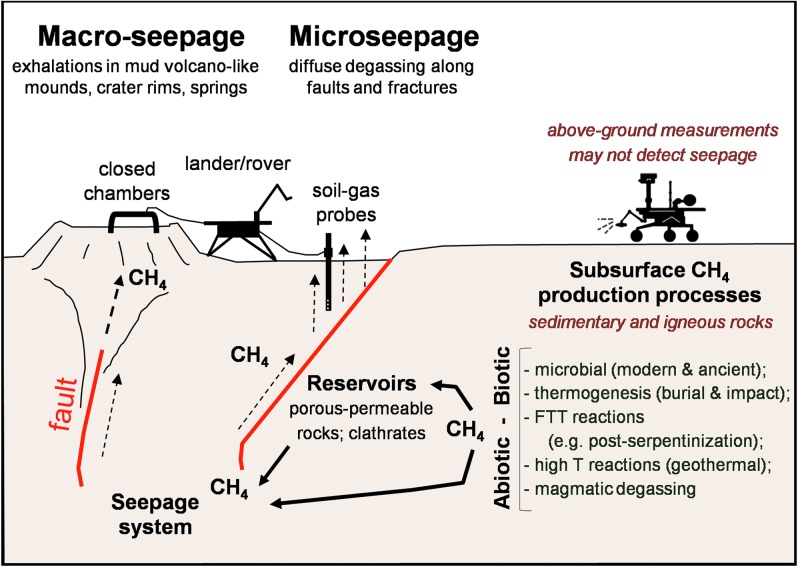
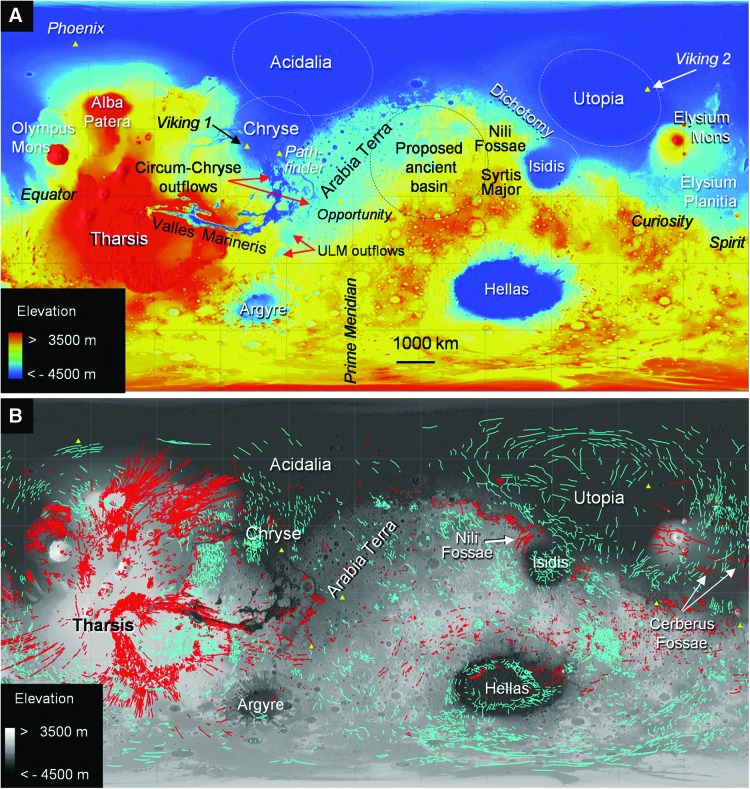
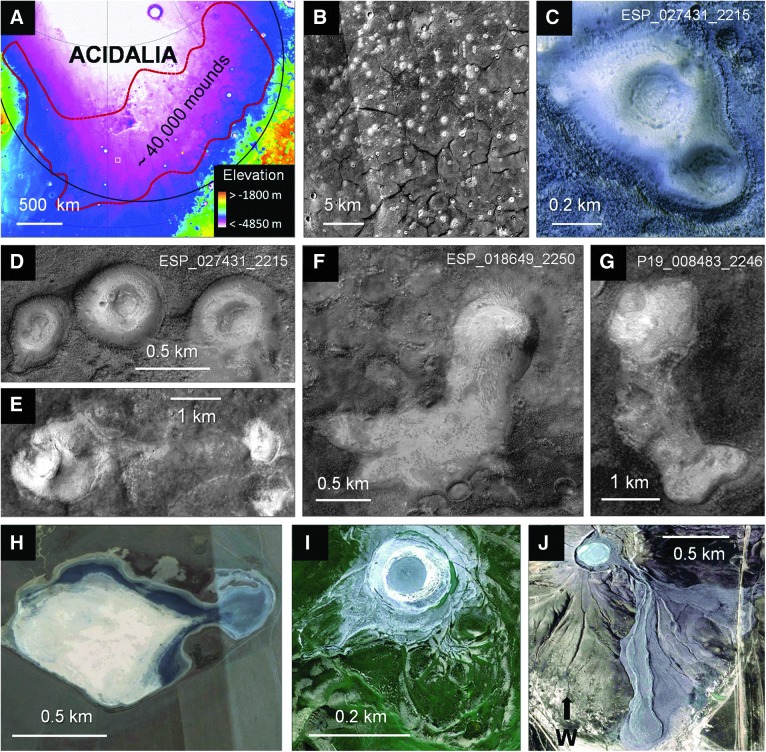
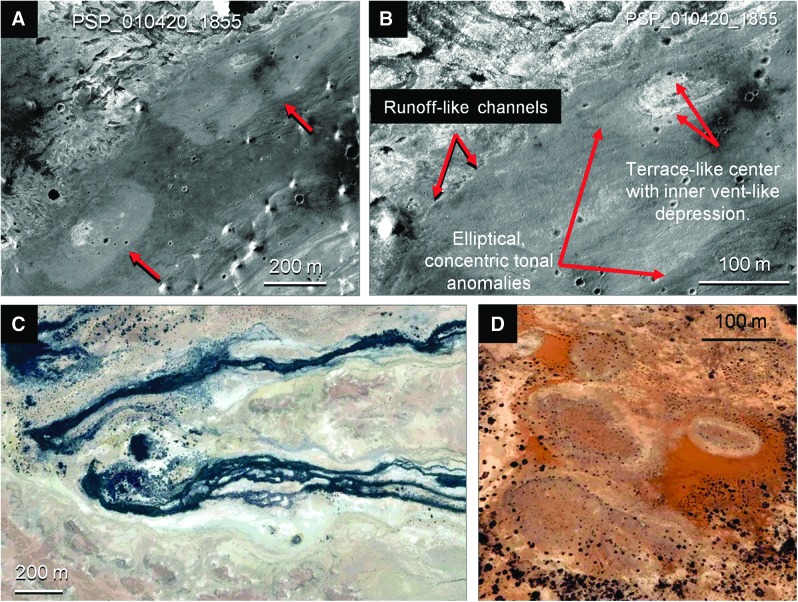
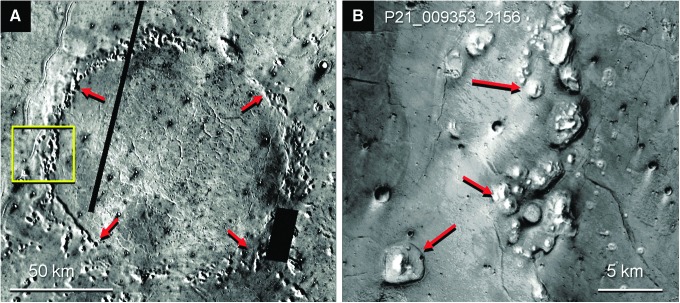
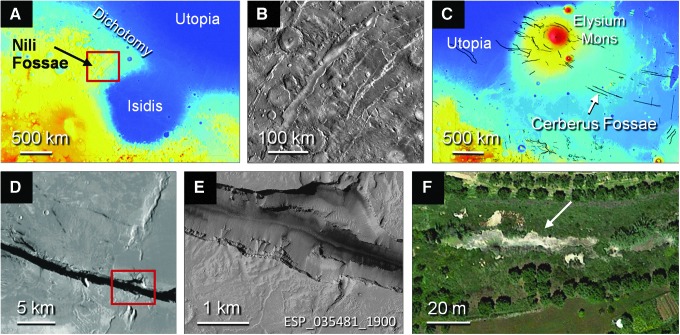
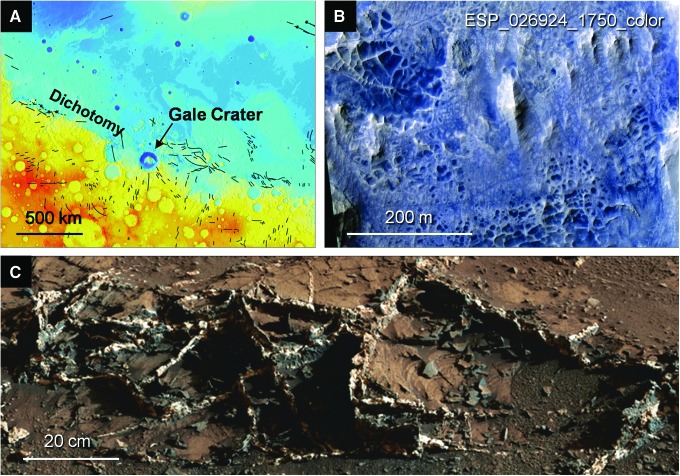
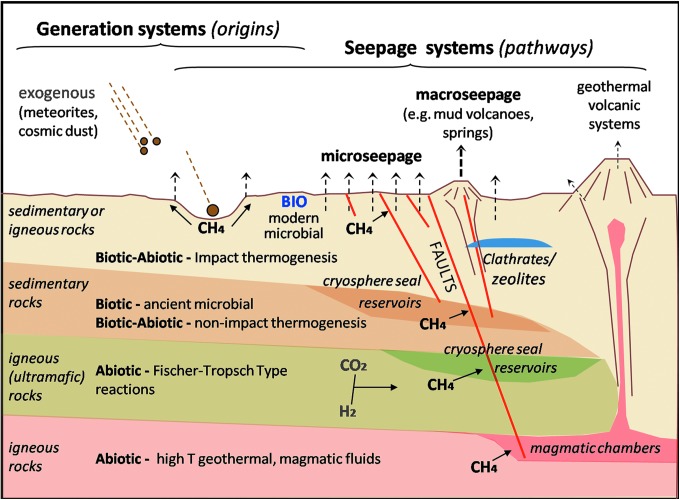
Methane on Mars is a topic of special interest because of its potential association with microbial life. The variable detections of methane by the Curiosity rover, orbiters, and terrestrial telescopes, coupled with methane's short lifetime in the martian atmosphere, may imply an active gas source in the planet's subsurface, with migration and surface emission processes similar to those known on Earth as "gas seepage." Here, we review the variety of subsurface processes that could result in methane seepage on Mars. Such methane could originate from abiotic chemical reactions, thermogenic alteration of abiotic or biotic organic matter, and ancient or extant microbial metabolism. These processes can occur over a wide range of temperatures, in both sedimentary and igneous rocks, and together they enhance the possibility that significant amounts of methane could have formed on early Mars. Methane seepage to the surface would occur preferentially along faults and fractures, through focused macro-seeps and/or diffuse microseepage exhalations. Our work highlights the types of features on Mars that could be associated with methane release, including mud-volcano-like mounds in Acidalia or Utopia; proposed ancient springs in Gusev Crater, Arabia Terra, and Valles Marineris; and rims of large impact craters. These could have been locations of past macro-seeps and may still emit methane today. Microseepage could occur through faults along the dichotomy or fractures such as those at Nili Fossae, Cerberus Fossae, the Argyre impact, and those produced in serpentinized rocks. Martian microseepage would be extremely difficult to detect remotely yet could constitute a significant gas source. We emphasize that the most definitive detection of methane seepage from different release candidates would be best provided by measurements performed in the ground or at the ground-atmosphere interface by landers or rovers and that the technology for such detection is currently available. Key Words: Mars-Methane-Seepage-Clathrate-Fischer-Tropsch-Serpentinization. Astrobiology 17, 1233-1264.

摘要

火星上的甲烷是一个特别引人关注的话题,因为它可能与微生物生命有关。好奇号火星车、轨道飞行器和地面望远镜对甲烷的可变探测,加上甲烷在火星大气中的短寿命,可能意味着火星地下存在一个活跃的气源,其迁移和表面排放过程类似于地球上已知的“气体渗漏”。在这里,我们回顾了可能导致火星甲烷渗漏的各种地下过程。这种甲烷可能源自非生物化学反应、非生物或生物有机质的热成因改变,以及古代或现存微生物代谢。这些过程可以在很宽的温度范围内发生,既存在于沉积岩中,也存在于火成岩中,它们共同增加了大量甲烷在早期火星上形成的可能性。甲烷沿断层和裂缝向地表渗漏,通过集中的宏观渗漏和/或弥散的微渗漏排放。我们的工作强调了火星上可能与甲烷释放有关的特征类型,包括 Acidalia 或 Utopia 中的泥火山状土丘;Gusev 陨石坑、Arabia Terra 和 Valles Marineris 中提出的古代泉水;以及大型撞击坑的边缘。这些地方可能曾经是宏观渗漏的地点,现在可能仍在排放甲烷。微渗漏可能通过二分体沿线的断层或裂缝发生,例如 Nili Fossae、Cerberus Fossae、Argyre 撞击和蛇纹石化岩石中产生的裂缝。火星微渗漏将极难远程探测到,但可能构成重要的气源。我们强调,从不同释放候选物中探测甲烷渗漏的最明确方法是由着陆器或火星车在地面或地面-大气界面进行的测量提供,并且目前已经有了用于这种探测的技术。关键词:火星-甲烷-渗漏-包合物-费歇尔-托普施-蛇纹石化。天体生物学 17,1233-1264。
https://cdn.ncbi.nlm.nih.gov/pmc/blobs/e53b/5730060/a7c10a166fa1/fig-13.jpg
https://cdn.ncbi.nlm.nih.gov/pmc/blobs/e53b/5730060/70e889c890e6/fig-1.jpg
https://cdn.ncbi.nlm.nih.gov/pmc/blobs/e53b/5730060/ce7097099bb5/fig-2.jpg
https://cdn.ncbi.nlm.nih.gov/pmc/blobs/e53b/5730060/2e4d4ed5bd13/fig-3.jpg
https://cdn.ncbi.nlm.nih.gov/pmc/blobs/e53b/5730060/cb0482dcded0/fig-4.jpg
https://cdn.ncbi.nlm.nih.gov/pmc/blobs/e53b/5730060/113c725fce93/fig-5.jpg
https://cdn.ncbi.nlm.nih.gov/pmc/blobs/e53b/5730060/b4af36abd091/fig-6.jpg
https://cdn.ncbi.nlm.nih.gov/pmc/blobs/e53b/5730060/7835ffa93606/fig-7.jpg
https://cdn.ncbi.nlm.nih.gov/pmc/blobs/e53b/5730060/f80900ff66e7/fig-8.jpg
https://cdn.ncbi.nlm.nih.gov/pmc/blobs/e53b/5730060/aa7b3766561e/fig-9.jpg
https://cdn.ncbi.nlm.nih.gov/pmc/blobs/e53b/5730060/b7577fe594ff/fig-10.jpg
https://cdn.ncbi.nlm.nih.gov/pmc/blobs/e53b/5730060/edf2db47bb52/fig-11.jpg
https://cdn.ncbi.nlm.nih.gov/pmc/blobs/e53b/5730060/4e4f38ae670f/fig-12.jpg
https://cdn.ncbi.nlm.nih.gov/pmc/blobs/e53b/5730060/a7c10a166fa1/fig-13.jpg
https://cdn.ncbi.nlm.nih.gov/pmc/blobs/e53b/5730060/70e889c890e6/fig-1.jpg
https://cdn.ncbi.nlm.nih.gov/pmc/blobs/e53b/5730060/ce7097099bb5/fig-2.jpg
https://cdn.ncbi.nlm.nih.gov/pmc/blobs/e53b/5730060/2e4d4ed5bd13/fig-3.jpg
https://cdn.ncbi.nlm.nih.gov/pmc/blobs/e53b/5730060/cb0482dcded0/fig-4.jpg
https://cdn.ncbi.nlm.nih.gov/pmc/blobs/e53b/5730060/113c725fce93/fig-5.jpg
https://cdn.ncbi.nlm.nih.gov/pmc/blobs/e53b/5730060/b4af36abd091/fig-6.jpg
https://cdn.ncbi.nlm.nih.gov/pmc/blobs/e53b/5730060/7835ffa93606/fig-7.jpg
https://cdn.ncbi.nlm.nih.gov/pmc/blobs/e53b/5730060/f80900ff66e7/fig-8.jpg
https://cdn.ncbi.nlm.nih.gov/pmc/blobs/e53b/5730060/aa7b3766561e/fig-9.jpg
https://cdn.ncbi.nlm.nih.gov/pmc/blobs/e53b/5730060/b7577fe594ff/fig-10.jpg
https://cdn.ncbi.nlm.nih.gov/pmc/blobs/e53b/5730060/edf2db47bb52/fig-11.jpg
https://cdn.ncbi.nlm.nih.gov/pmc/blobs/e53b/5730060/4e4f38ae670f/fig-12.jpg
https://cdn.ncbi.nlm.nih.gov/pmc/blobs/e53b/5730060/a7c10a166fa1/fig-13.jpg

相似文献

1
Methane Seepage on Mars: Where to Look and Why.火星甲烷渗漏:何处寻找及原因。
Astrobiology. 2017 Dec;17(12):1233-1264. doi: 10.1089/ast.2017.1657. Epub 2017 Aug 3.
2
Hypotheses for Near-Surface Exchange of Methane on Mars.火星甲烷近地表交换的假设。
Astrobiology. 2016 Jul;16(7):539-50. doi: 10.1089/ast.2015.1410. Epub 2016 Jun 17.
3
Ultraviolet-radiation-induced methane emissions from meteorites and the Martian atmosphere.陨石和火星大气中紫外线辐射引发的甲烷排放。
Nature. 2012 May 30;486(7401):93-6. doi: 10.1038/nature11203.
4
Ancient Siliciclastic-Evaporites as Seen by Remote Sensing Instrumentation with Implications for the Rover-Scale Exploration of Sedimentary Environments on Mars.基于遥感仪器的古代硅质碎屑-蒸发岩研究及其对火星沉积环境的巡视器尺度探测的启示。
Astrobiology. 2023 May;23(5):477-495. doi: 10.1089/ast.2022.0103. Epub 2023 Mar 21.
5
Evidence for methane in Martian meteorites.火星陨石中存在甲烷的证据。
Nat Commun. 2015 Jun 16;6:7399. doi: 10.1038/ncomms8399.
6
The Lost City Hydrothermal Field: A Spectroscopic and Astrobiological Analogue for Nili Fossae, Mars.失落之城热液场:火星尼利福萨地区的光谱和天体生物学模拟
Astrobiology. 2017 Nov;17(11):1138-1160. doi: 10.1089/ast.2016.1606. Epub 2017 Sep 14.
7
Observed variations of methane on Mars unexplained by known atmospheric chemistry and physics.火星上观测到的甲烷变化无法用已知的大气化学和物理学来解释。
Nature. 2009 Aug 6;460(7256):720-3. doi: 10.1038/nature08228.
8
Methane on Mars and Habitability: Challenges and Responses.火星上的甲烷与可居住性:挑战与应对。
Astrobiology. 2018 Oct;18(10):1221-1242. doi: 10.1089/ast.2018.1917. Epub 2018 Sep 19.
9
A Maximum Subsurface Biomass on Mars from Untapped Free Energy: CO and H as Potential Antibiosignatures.从未开发的自由能中获取火星上最大的地下生物量:CO 和 H 作为潜在的抗生物特征。
Astrobiology. 2019 May;19(5):655-668. doi: 10.1089/ast.2018.1835. Epub 2019 Apr 5.
10
The martian surface.火星表面。
Science. 1966 Jul 15;153(3733):255-65. doi: 10.1126/science.153.3733.255.

引用本文的文献

1
Characterization of methane microseepage from natural gas reservoirs in mild climate: A case study of Xinchang gas field.温和气候条件下天然气藏甲烷微渗漏特征:以新场气田为例
PLoS One. 2025 Feb 24;20(2):e0315973. doi: 10.1371/journal.pone.0315973. eCollection 2025.
2
Rapid High-Sensitivity Analysis of Methane Clumped Isotopes (ΔCHD and ΔCHD) Using Mid-Infrared Laser Spectroscopy.使用中红外激光光谱法对甲烷团簇同位素(ΔCHD和ΔCHD)进行快速高灵敏度分析。
Anal Chem. 2025 Jan 21;97(2):1291-1299. doi: 10.1021/acs.analchem.4c05406. Epub 2025 Jan 8.
3
Mineral Indicators of Geologically Recent Past Habitability on Mars.

本文引用的文献

1
Silica deposits on Mars with features resembling hot spring biosignatures at El Tatio in Chile.火星上的硅沉积物具有类似于智利埃尔塔蒂奥温泉生物特征的特征。
Nat Commun. 2016 Nov 17;7:13554. doi: 10.1038/ncomms13554.
2
Perchlorate formation on Mars through surface radiolysis-initiated atmospheric chemistry: A potential mechanism.火星上通过表面辐射分解引发的大气化学反应形成高氯酸盐:一种潜在机制。
J Geophys Res Planets. 2016 Aug;121(8):1472-1487. doi: 10.1002/2016JE005078. Epub 2016 Aug 25.
3
Hypotheses for Near-Surface Exchange of Methane on Mars.
火星近期地质历史宜居性的矿物指标。
Life (Basel). 2023 Dec 15;13(12):2349. doi: 10.3390/life13122349.
4
Intact polar lipidome and membrane adaptations of microbial communities inhabiting serpentinite-hosted fluids.栖息于蛇纹岩流体中的微生物群落完整的极性脂质组和膜适应性
Front Microbiol. 2023 Nov 10;14:1198786. doi: 10.3389/fmicb.2023.1198786. eCollection 2023.
5
Mars Methane Sources in Northwestern Gale Crater Inferred From Back Trajectory Modeling.基于反向轨迹模型推断盖尔陨石坑西北部的火星甲烷来源
Earth Space Sci. 2021 Nov;8(11):e2021EA001915. doi: 10.1029/2021EA001915. Epub 2021 Nov 15.
6
Active lithoautotrophic and methane-oxidizing microbial community in an anoxic, sub-zero, and hypersaline High Arctic spring.缺氧、零下和高盐度北极春季中活跃的岩石自养和甲烷氧化微生物群落。
ISME J. 2022 Jul;16(7):1798-1808. doi: 10.1038/s41396-022-01233-8. Epub 2022 Apr 8.
7
Transcriptional response to prolonged perchlorate exposure in the methanogen Methanosarcina barkeri and implications for Martian habitability.长期暴露于高氯酸盐下对产甲烷菌巴氏甲烷八叠球菌的转录反应及对火星可居住性的影响。
Sci Rep. 2021 Jun 11;11(1):12336. doi: 10.1038/s41598-021-91882-0.
8
Influence of tectonics on global scale distribution of geological methane emissions.构造运动对地质甲烷排放全球尺度分布的影响。
Nat Commun. 2020 May 8;11(1):2305. doi: 10.1038/s41467-020-16229-1.
9
Aeolian abrasion of rocks as a mechanism to produce methane in the Martian atmosphere.风蚀岩石是火星大气中产生甲烷的一种机制。
Sci Rep. 2019 Jun 3;9(1):8229. doi: 10.1038/s41598-019-44616-2.
10
Methane on Mars and Habitability: Challenges and Responses.火星上的甲烷与可居住性:挑战与应对。
Astrobiology. 2018 Oct;18(10):1221-1242. doi: 10.1089/ast.2018.1917. Epub 2018 Sep 19.
火星甲烷近地表交换的假设。
Astrobiology. 2016 Jul;16(7):539-50. doi: 10.1089/ast.2015.1410. Epub 2016 Jun 17.
4
Serpentinization and the Formation of H2 and CH4 on Celestial Bodies (Planets, Moons, Comets).蛇纹石化作用与天体(行星、卫星、彗星)上氢气和甲烷的形成
Astrobiology. 2015 Jul;15(7):587-600. doi: 10.1089/ast.2014.1188. Epub 2015 Jul 8.
5
Evidence for methane in Martian meteorites.火星陨石中存在甲烷的证据。
Nat Commun. 2015 Jun 16;6:7399. doi: 10.1038/ncomms8399.
6
Methanogenic archaea database containing physiological and biochemical characteristics.包含生理和生化特征的产甲烷古菌数据库。
Int J Syst Evol Microbiol. 2015 Apr;65(Pt 4):1360-1368. doi: 10.1099/ijs.0.000065. Epub 2015 Jan 20.
7
Mars atmosphere. Mars methane detection and variability at Gale crater.火星大气。盖尔陨石坑的火星甲烷探测及其可变性。
Science. 2015 Jan 23;347(6220):415-7. doi: 10.1126/science.1261713. Epub 2014 Dec 16.
8
Effect of permafrost properties on gas hydrate petroleum system in the Qilian Mountains, Qinghai, Northwest China.中国西北青海祁连山多年冻土特性对天然气水合物石油系统的影响。
Environ Sci Process Impacts. 2014 Dec;16(12):2711-20. doi: 10.1039/c4em00482e.
9
Mars' surface radiation environment measured with the Mars Science Laboratory's Curiosity rover.用火星科学实验室好奇号漫游车测量火星表面辐射环境。
Science. 2014 Jan 24;343(6169):1244797. doi: 10.1126/science.1244797. Epub 2013 Dec 9.
10
A habitable fluvio-lacustrine environment at Yellowknife Bay, Gale crater, Mars.火星盖尔陨石坑耶洛奈夫湾的可居住河湖环境。
Science. 2014 Jan 24;343(6169):1242777. doi: 10.1126/science.1242777. Epub 2013 Dec 9.