Lee Hyun, Jang Tae-Sik, Song Juha, Kim Hyoun-Ee, Jung Hyun-Do
Department of Materials Science and Engineering, Seoul National University, Seoul 151-744, Korea.
School of Chemical and Biomedical Engineering, Nanyang Technological University, 70 Nanyang Drive, Singapore 637457, Singapore.
Materials (Basel). 2017 Mar 31;10(4):367. doi: 10.3390/ma10040367.
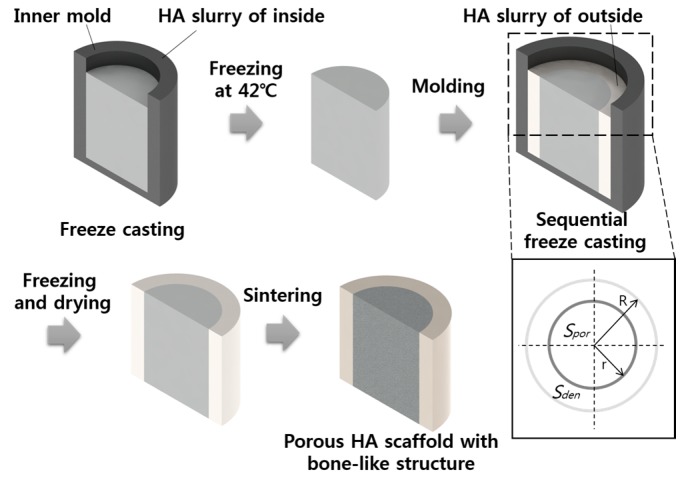
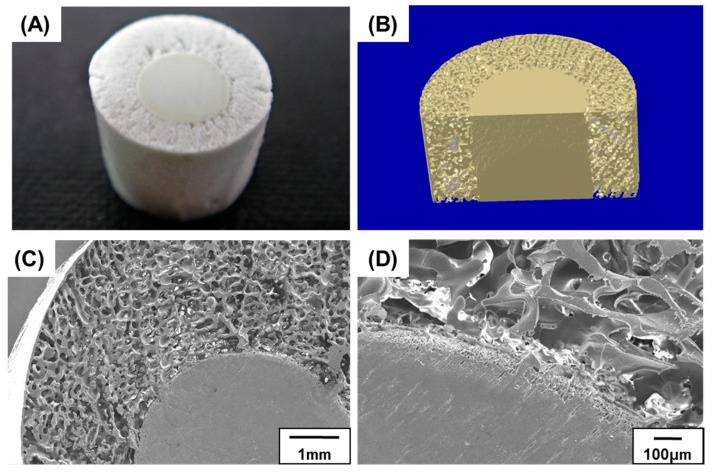
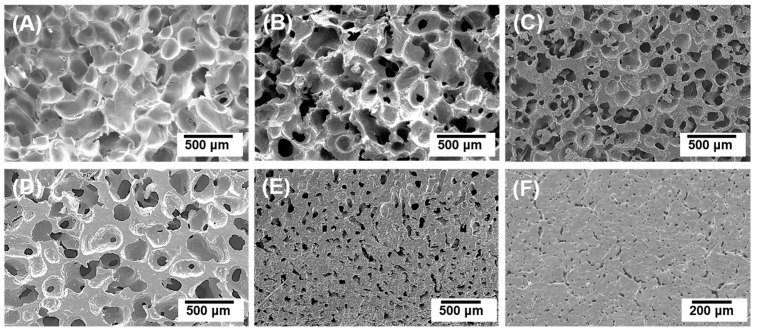
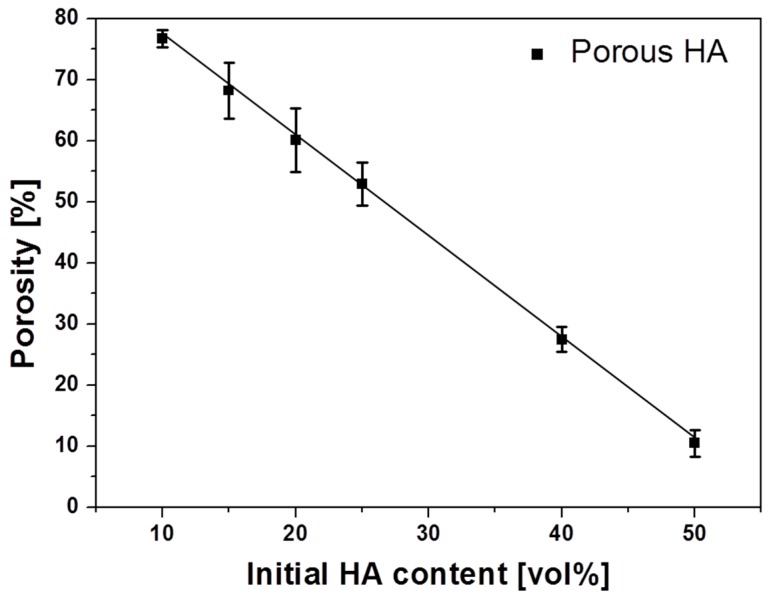
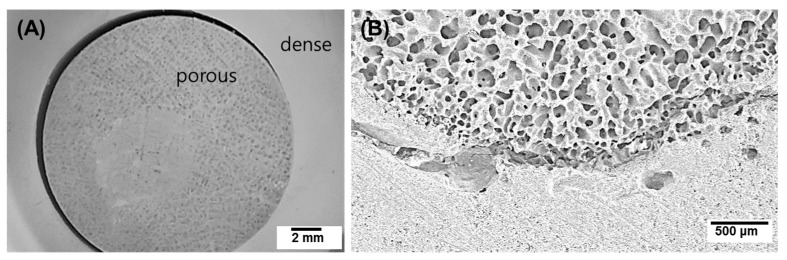
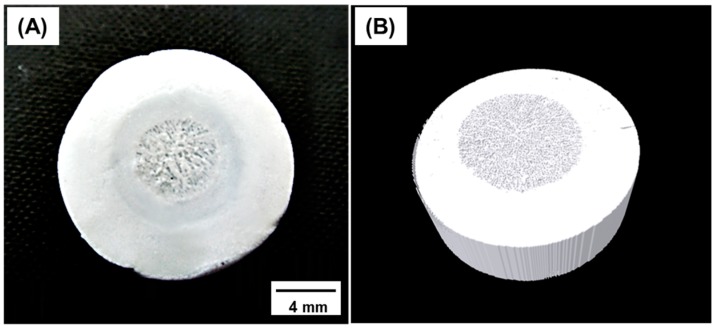
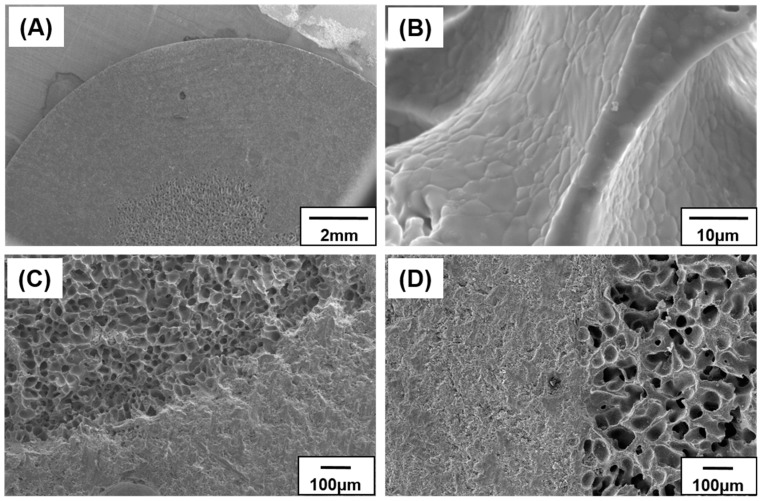
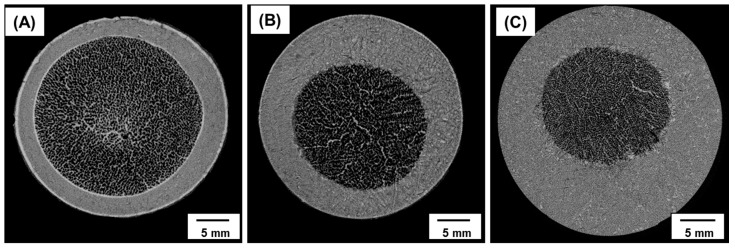
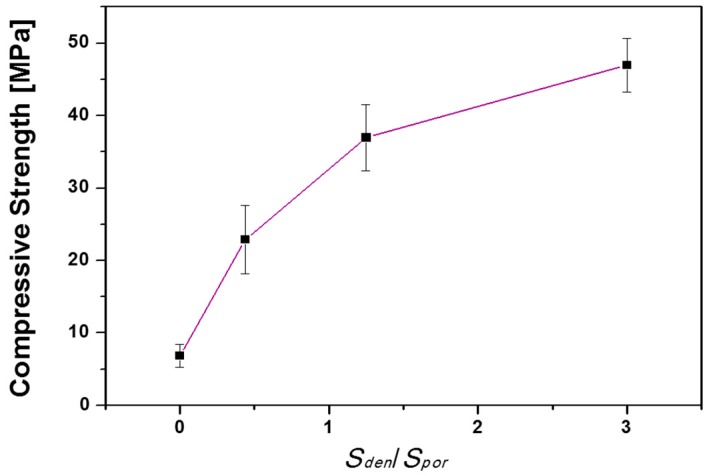
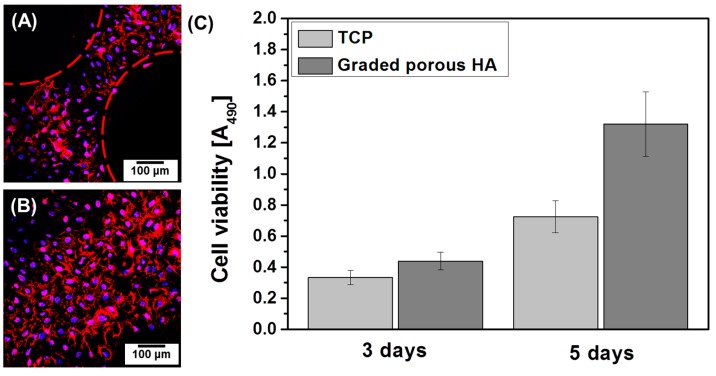
Porous hydroxyapatite (HA) scaffolds with porosity-graded structures were fabricated by sequential freeze-casting. The pore structures, compressive strengths, and biocompatibilities of the fabricated porous HA scaffolds were evaluated. The porosities of the inner and outer layers of the graded HA scaffolds were controlled by adjusting the initial HA contents of the casting slurries. The interface between the dense and porous parts was compact and tightly adherent. The porosity and compressive strengths of the scaffold were controlled by the relative thicknesses of the dense/porous parts. In addition, the porous HA scaffolds showed good biocompatibility in terms of preosteoblast cell attachment and proliferation. The results suggest that porous HA scaffolds with load-bearing parts have potential as bone grafts in hard-tissue engineering.
通过连续冷冻铸造制备了具有孔隙率梯度结构的多孔羟基磷灰石(HA)支架。对制备的多孔HA支架的孔隙结构、抗压强度和生物相容性进行了评估。通过调整铸浆的初始HA含量来控制梯度HA支架内层和外层的孔隙率。致密部分和多孔部分之间的界面紧密且牢固地粘附在一起。支架的孔隙率和抗压强度由致密/多孔部分的相对厚度控制。此外,多孔HA支架在成骨前体细胞附着和增殖方面表现出良好的生物相容性。结果表明,具有承重部分的多孔HA支架在硬组织工程中作为骨移植材料具有潜力。