Sharma Greeshma, Kaushal Yash, Chandra Sushil, Singh Vijander, Mittal Alok P, Dutt Varun
Department of Biomedical Engineering, Institute of Nuclear Medicine and Allied SciencesNew Delhi, India.
Cluster Innovation CentreNew Delhi, India.
Front Psychol. 2017 Jul 20;8:1220. doi: 10.3389/fpsyg.2017.01220. eCollection 2017.
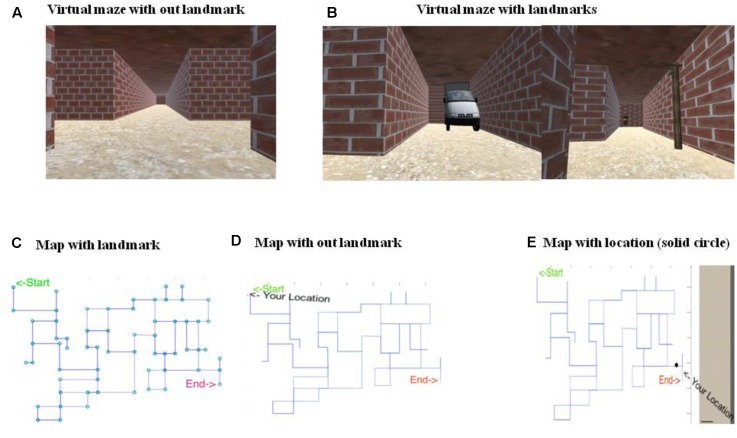
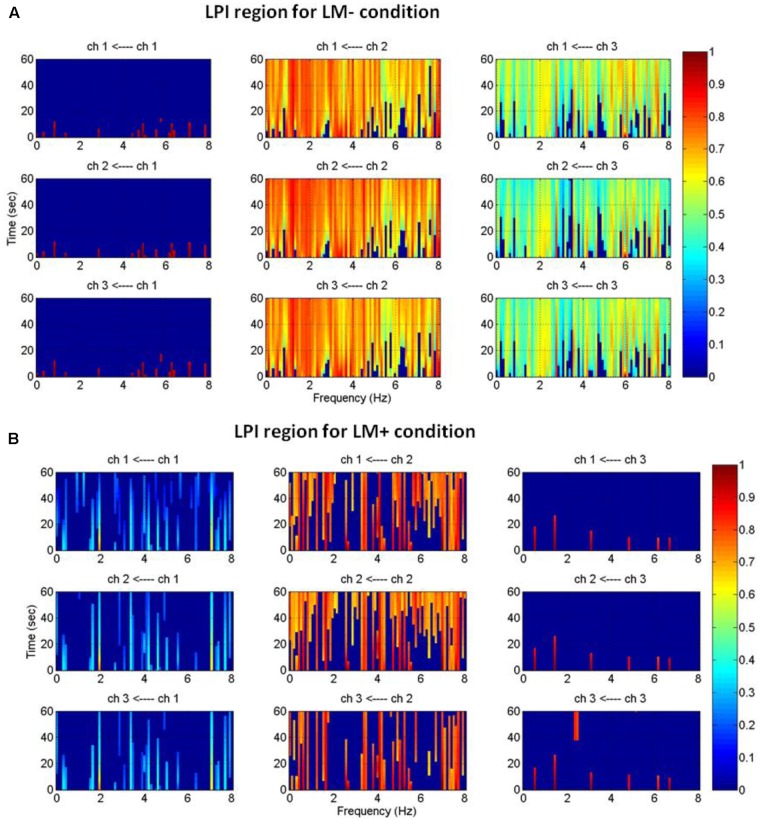
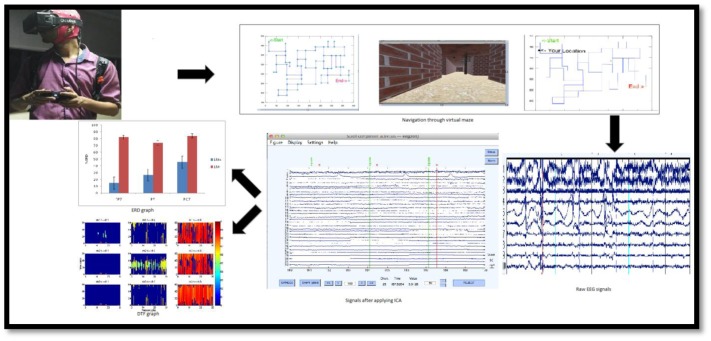
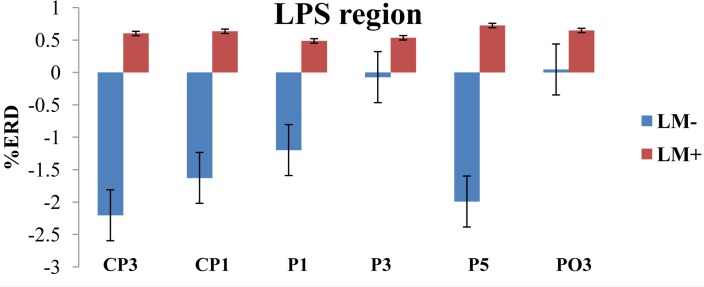
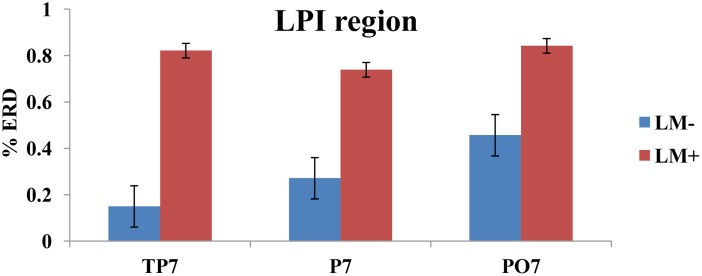
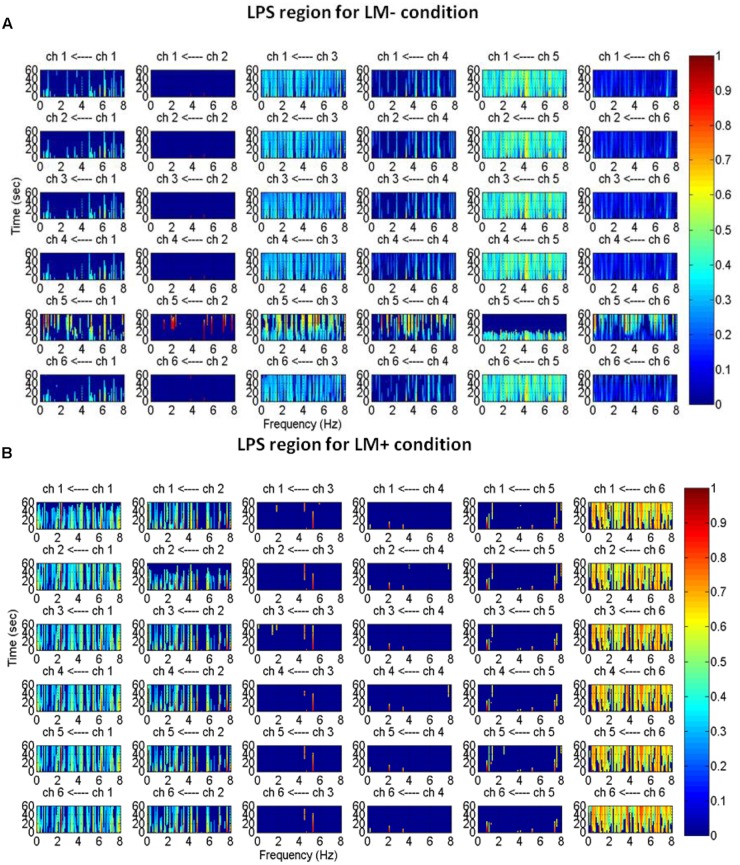
Spatial navigation is influenced by landmarks, which are prominent visual features in the environment. Although previous research has focused on finding advantages of landmarks on wayfinding via experimentation; however, less attention has been given to identifying the key attributes of landmarks that facilitate wayfinding, including the study of neural correlates (involving electroencephalogram, EEG analyses). In this paper, we combine behavioral measures, virtual environment, and EEG signal-processing to provide a holistic investigation about the influence of landmarks on performance during navigation in a maze-like environment. In an experiment, participants were randomly divided into two conditions, Landmark-enriched (LM+; = 17) and Landmark-devoid (LM-; = 18), and asked to navigate from an initial location to a goal location in a maze. In the LM+ condition, there were landmarks placed at certain locations, which participants could use for wayfinding in the maze. However, in the LM- condition, such landmarks were not present. Beyond behavioral analyses of data, analyses were carried out of the EEG data collected using a 64-channel device. Results revealed that participants took less time and committed fewer errors in navigating the maze in the LM+ condition compared to the LM- condition. EEG analyses of the data revealed that the left-hemispheric activation was more prominent in the LM+ condition compared to the LM- condition. The event-related desynchronization/synchronization (ERD/ERS) of the theta frequency band, revealed activation in the left posterior inferior and superior regions in the LM+ condition compared to the LM- condition, suggesting an occurrence of an object-location binding in the LM+ condition along with spatial transformation between representations. Moreover, directed transfer function method, which measures information flow between two regions, showed a higher number of active channels in the LM- condition compared to the LM+ condition, exhibiting additional wiring cost associated with the cognitive demands when no landmark was available. These findings reveal pivotal role of the left-hemispheric region (especially, parietal cortex), which indicates the integration of available sensory cues and current memory requirements to encode contextual information of landmarks. Overall, this research helps to understand the role of brain regions and processes that are utilized when people use landmarks in navigating maze-like environments.
空间导航受地标影响,地标是环境中突出的视觉特征。尽管先前的研究侧重于通过实验来发现地标在寻路方面的优势;然而,对于识别有助于寻路的地标关键属性,包括神经关联(涉及脑电图,EEG分析)的研究却较少受到关注。在本文中,我们结合行为测量、虚拟环境和EEG信号处理,对地标在类似迷宫环境中导航时对表现的影响进行全面研究。在一项实验中,参与者被随机分为两种条件,丰富地标条件(LM+;n = 17)和无地标条件(LM-;n = 18),并被要求在迷宫中从初始位置导航到目标位置。在LM+条件下,在某些位置放置了地标,参与者可以利用这些地标在迷宫中寻路。然而,在LM-条件下,不存在此类地标。除了对数据进行行为分析外,还对使用64通道设备收集的EEG数据进行了分析。结果显示,与LM-条件相比,参与者在LM+条件下在迷宫中导航花费的时间更少,犯错也更少。对数据的EEG分析表明,与LM-条件相比,LM+条件下左半球激活更为显著。θ频段的事件相关去同步化/同步化(ERD/ERS)显示,与LM-条件相比,LM+条件下左后下和上区域有激活,这表明在LM+条件下发生了物体-位置绑定以及表征之间的空间转换。此外,测量两个区域之间信息流的定向传递函数方法显示,与LM+条件相比,LM-条件下有更多的活跃通道,这表明在没有地标的情况下,与认知需求相关的额外布线成本。这些发现揭示了左半球区域(特别是顶叶皮层)起的关键作用,这表明整合可用的感官线索和当前的记忆需求以编码地标的上下文信息。总体而言,这项研究有助于理解人们在类似迷宫环境中使用地标进行导航时所利用的脑区和过程的作用。