Rounds James D, Cruz-Garza Jesus Gabriel, Kalantari Saleh
Human Development, Cornell University, Ithaca, NY, United States.
Department of Design and Environmental Analysis, Cornell University, Ithaca, NY, United States.
Front Hum Neurosci. 2020 Dec 11;14:584385. doi: 10.3389/fnhum.2020.584385. eCollection 2020.
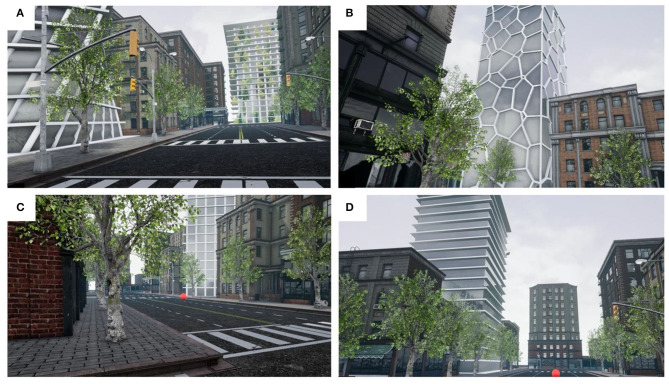
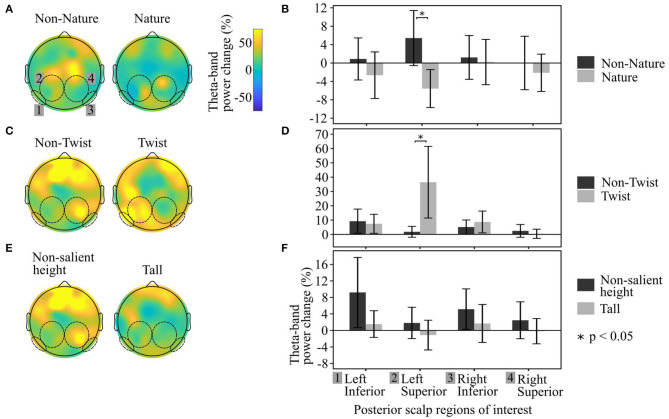
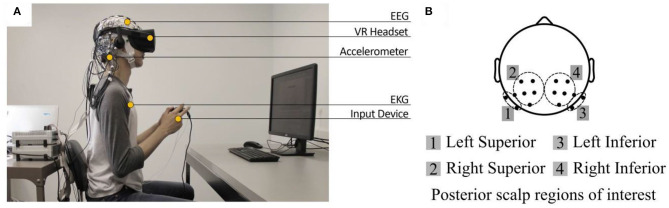
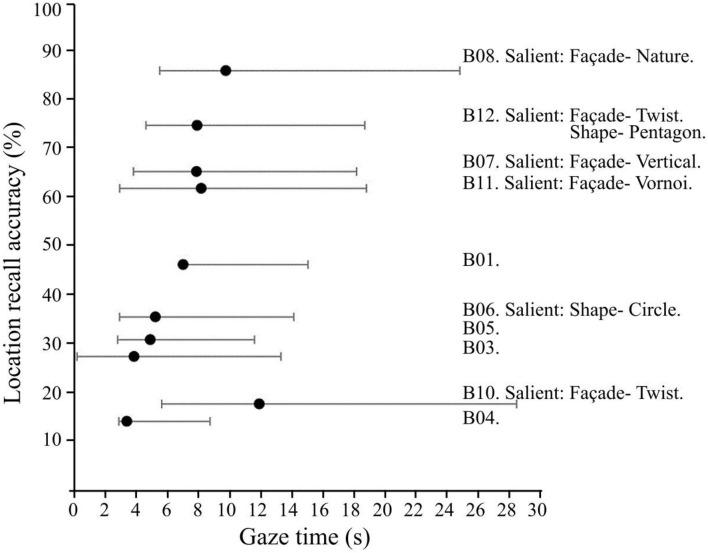
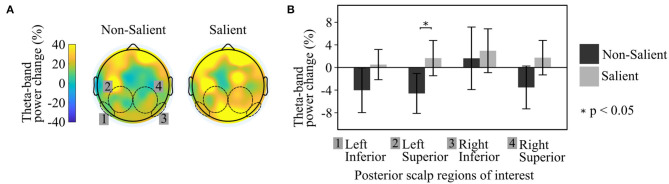
The process of urban landmark-based navigation has proven to be difficult to study in a rigorous fashion, primarily due to confounding variables and the problem of obtaining reliable data in real-world contexts. The development of high-resolution, immersive virtual reality technologies has opened exciting new possibilities for gathering data on human wayfinding that could not otherwise be readily obtained. We developed a research platform using a virtual environment and electroencephalography (EEG) to better understand the neural processes associated with landmark usage and recognition during urban navigation tasks. By adjusting the architectural parameters of different buildings in this virtual environment, we isolated and tested specific design features to determine whether or not they served as a target for landmarking. EEG theta band (4-7 Hz) event-related synchronization/desynchronization over posterior scalp areas was evaluated at the time when participants observed each target building along a predetermined self-paced route. A multi-level linear model was used to investigate the effects of salient architectural features on posterior scalp areas. Our results support the conclusion that highly salient architectural features-those that contrast sharply with the surrounding environment-are more likely to attract visual attention, remain in short-term memory, and activate brain regions associated with wayfinding compared with non-salient buildings. After establishing this main aggregate effect, we evaluated specific salient architectural features and neural correlates of navigation processing. The buildings that most strongly associated extended gaze time, location recall accuracy, and changes in theta-band neural patterns with landmarking in our study were those that incorporated rotational twist designs and natural elements such as trees and gardens. Other building features, such as unusual façade patterns or building heights, were to a lesser extent also associated with landmarking.
事实证明,以严谨的方式研究基于城市地标的导航过程非常困难,主要原因是存在混杂变量以及在现实环境中获取可靠数据的问题。高分辨率、沉浸式虚拟现实技术的发展为收集有关人类寻路的数据开辟了令人兴奋的新可能性,而这些数据在其他情况下很难轻易获得。我们开发了一个使用虚拟环境和脑电图(EEG)的研究平台,以更好地理解在城市导航任务中与地标使用和识别相关的神经过程。通过调整这个虚拟环境中不同建筑的建筑参数,我们分离并测试了特定的设计特征,以确定它们是否作为地标的目标。在参与者沿着预定的自定节奏路线观察每个目标建筑时,评估后头皮区域的脑电图θ波段(4 - 7赫兹)事件相关同步/去同步情况。使用多层次线性模型来研究显著建筑特征对后头皮区域的影响。我们的结果支持这样的结论:与不显著的建筑相比,高度显著的建筑特征——那些与周围环境形成鲜明对比的特征——更有可能吸引视觉注意力、保留在短期记忆中,并激活与寻路相关的脑区。在确定了这个主要的总体效应之后,我们评估了特定的显著建筑特征以及导航处理的神经相关性。在我们的研究中,与地标性关联最紧密的建筑是那些采用旋转扭曲设计以及包含树木和花园等自然元素的建筑,它们延长了注视时间、提高了位置召回准确率,并与θ波段神经模式的变化相关。其他建筑特征,如不寻常的立面图案或建筑高度,在较小程度上也与地标性有关。