Ziegler Verena, Henninger Christian, Simiantonakis Ioannis, Buchholzer Marcel, Ahmadian Mohammad Reza, Budach Wilfried, Fritz Gerhard
Institute of Toxicology, Medical Faculty, Heinrich Heine University Duesseldorf, Moorenstrasse 5, Duesseldorf, Germany.
Department of Radiotherapy and Radiation Oncology, University Hospital Duesseldorf, Moorenstraße 5, Duesseldorf, Germany.
Cell Death Dis. 2017 Aug 10;8(8):e2978. doi: 10.1038/cddis.2017.372.
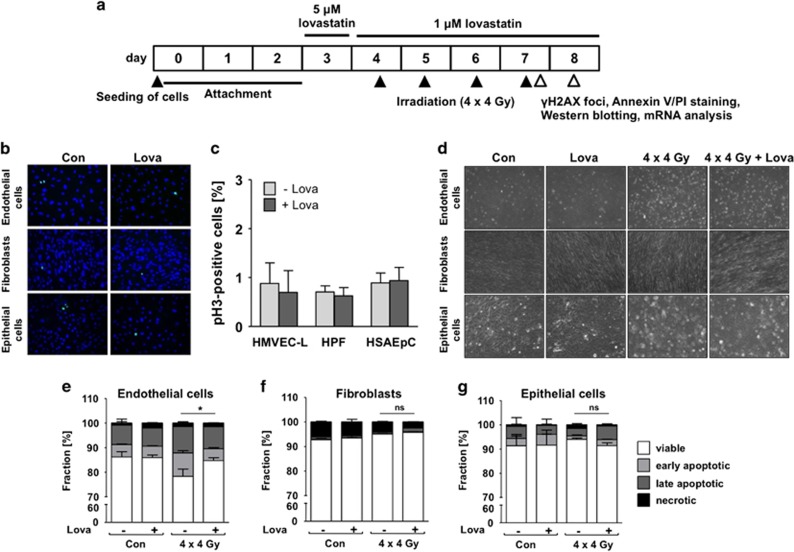
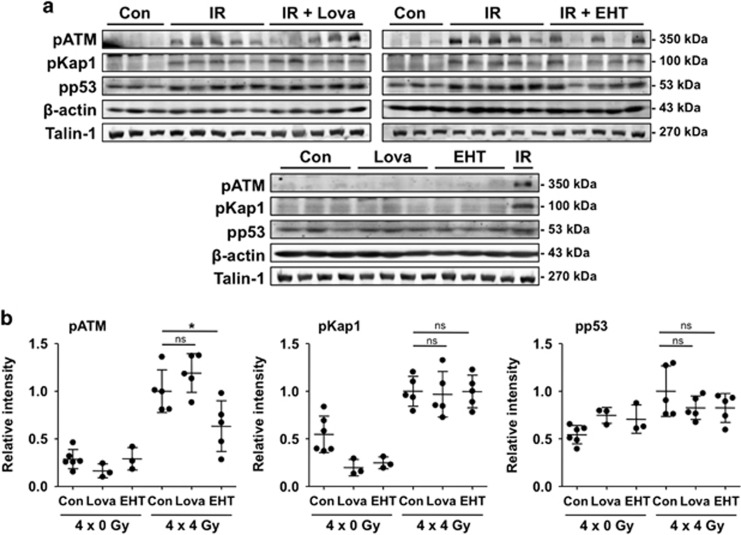
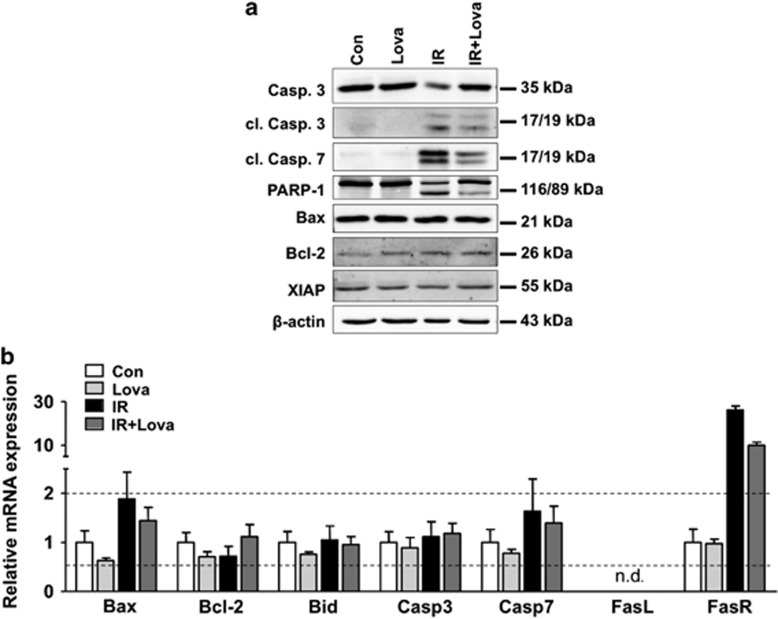
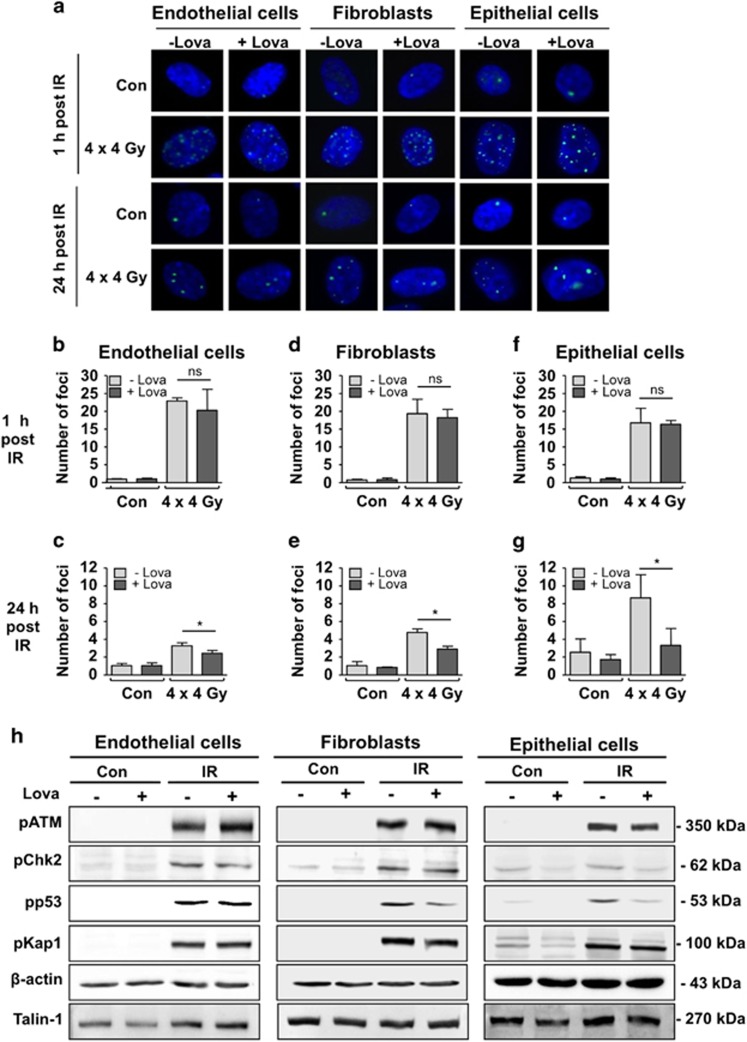
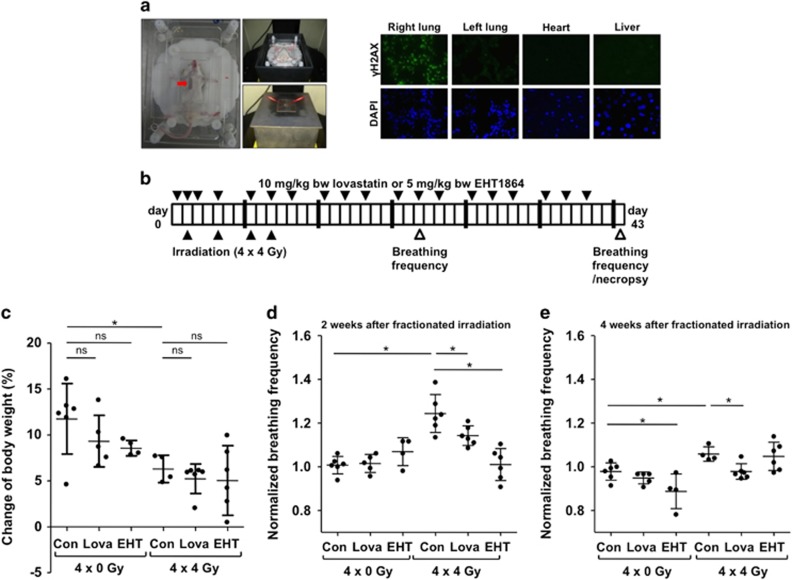
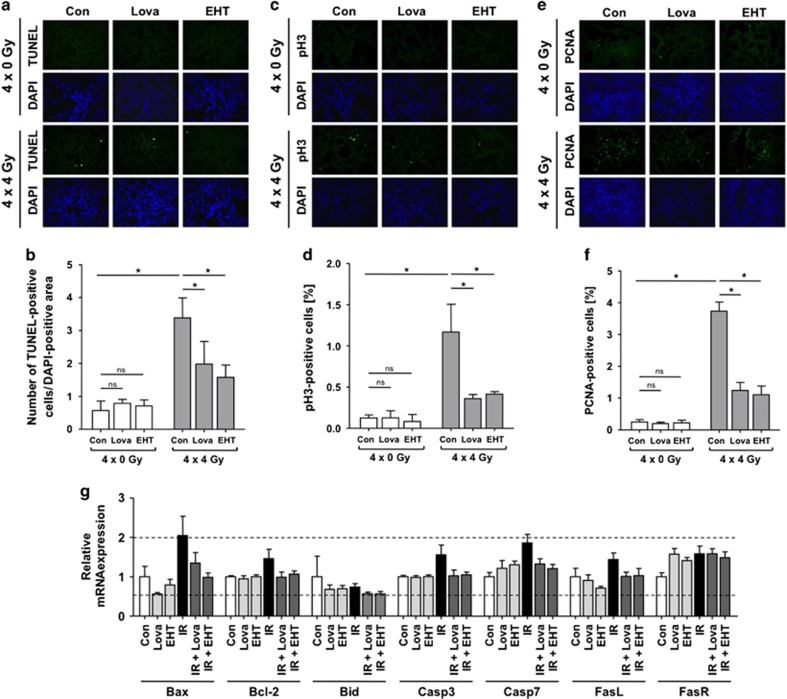
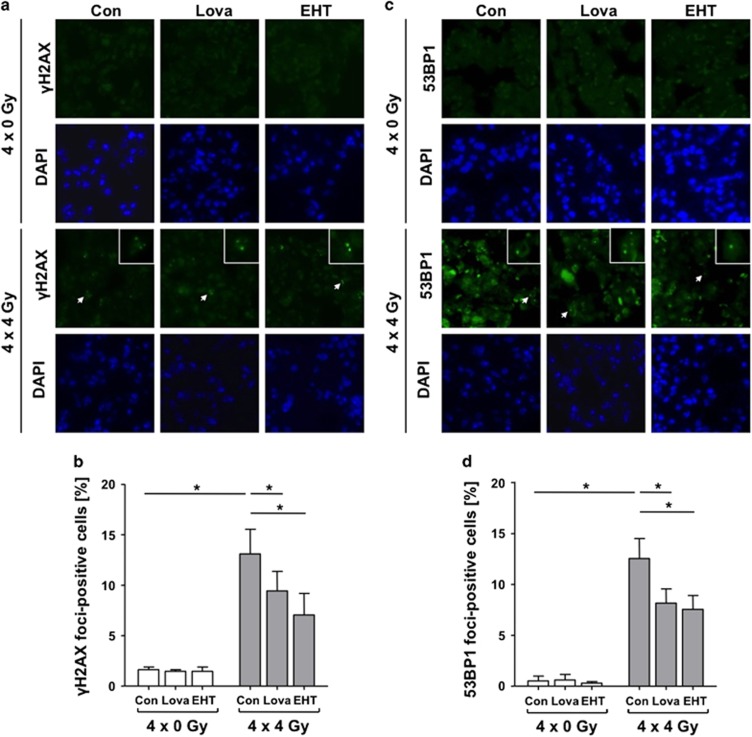
Thoracic radiotherapy causes damage of normal lung tissue, which limits the cumulative radiation dose and, hence, confines the anticancer efficacy of radiotherapy and impacts the quality of life of tumor patients. Ras-homologous (Rho) small GTPases regulate multiple stress responses and cell death. Therefore, we investigated whether pharmacological targeting of Rho signaling by the HMG-CoA-reductase inhibitor lovastatin influences ionizing radiation (IR)-induced toxicity in primary human lung fibroblasts, lung epithelial and lung microvascular endothelial cells in vitro and subchronic mouse lung tissue damage following hypo-fractionated irradiation (4x4 Gy). The statin improved the repair of radiation-induced DNA double-strand breaks (DSBs) in all cell types and, moreover, protected lung endothelial cells from IR-induced caspase-dependent apoptosis, likely involving p53-regulated mechanisms. Under the in vivo situation, treatment with lovastatin or the Rac1-specific small molecule inhibitor EHT1864 attenuated the IR-induced increase in breathing frequency and reduced the percentage of γH2AX and 53BP1-positive cells. This indicates that inhibition of Rac1 signaling lowers IR-induced residual DNA damage by promoting DNA repair. Moreover, lovastatin and EHT1864 protected lung tissue from IR-triggered apoptosis and mitigated the IR-stimulated increase in regenerative proliferation. Our data document beneficial anti-apoptotic and genoprotective effects of pharmacological targeting of Rho signaling following hypo-fractionated irradiation of lung cells in vitro and in vivo. Rac1-targeting drugs might be particular useful for supportive care in radiation oncology and, moreover, applicable to improve the anticancer efficacy of radiotherapy by widening the therapeutic window of thoracic radiation exposure.
胸部放疗会损伤正常肺组织,这限制了累积辐射剂量,进而限制了放疗的抗癌疗效,并影响肿瘤患者的生活质量。Ras同源(Rho)小GTP酶调节多种应激反应和细胞死亡。因此,我们研究了HMG-CoA还原酶抑制剂洛伐他汀对Rho信号通路的药理学靶向作用是否会影响体外原代人肺成纤维细胞、肺上皮细胞和肺微血管内皮细胞中电离辐射(IR)诱导的毒性,以及在低分割照射(4×4 Gy)后对小鼠肺组织的亚慢性损伤。他汀类药物改善了所有细胞类型中辐射诱导的DNA双链断裂(DSB)的修复,此外,还保护肺内皮细胞免受IR诱导的半胱天冬酶依赖性凋亡,这可能涉及p53调节机制。在体内情况下,用洛伐他汀或Rac1特异性小分子抑制剂EHT1864治疗可减轻IR诱导的呼吸频率增加,并降低γH2AX和53BP1阳性细胞的百分比。这表明抑制Rac1信号通路可通过促进DNA修复降低IR诱导的残留DNA损伤。此外,洛伐他汀和EHT1864保护肺组织免受IR触发的凋亡,并减轻IR刺激的再生增殖增加。我们的数据证明了在体外和体内对肺细胞进行低分割照射后,对Rho信号通路进行药理学靶向具有有益的抗凋亡和基因保护作用。靶向Rac1的药物可能对放射肿瘤学的支持治疗特别有用,此外,还可通过扩大胸部放疗的治疗窗口来提高放疗的抗癌疗效。