Thomson Sarah, Hamilton Carly A, Hope Jayne C, Katzer Frank, Mabbott Neil A, Morrison Liam J, Innes Elisabeth A
Moredun Research Institute, Pentlands Science Park, Bush Loan, Edinburgh, EH26 0PZ, Scotland, UK.
The Roslin Institute & Royal (Dick) School of Veterinary Sciences, University of Edinburgh, Easter Bush, Midlothian, EH25 9RG, UK.
Vet Res. 2017 Aug 11;48(1):42. doi: 10.1186/s13567-017-0447-0.
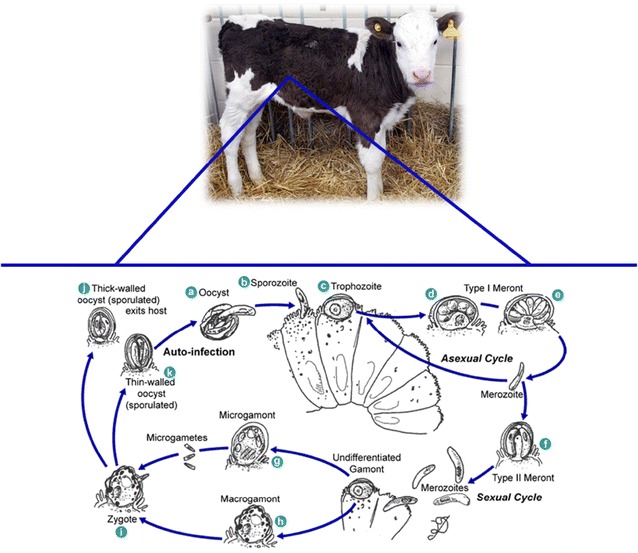
Gastrointestinal disease caused by the apicomplexan parasite Cryptosporidium parvum is one of the most important diseases of young ruminant livestock, particularly neonatal calves. Infected animals may suffer from profuse watery diarrhoea, dehydration and in severe cases death can occur. At present, effective therapeutic and preventative measures are not available and a better understanding of the host-pathogen interactions is required. Cryptosporidium parvum is also an important zoonotic pathogen causing severe disease in people, with young children being particularly vulnerable. Our knowledge of the immune responses induced by Cryptosporidium parasites in clinically relevant hosts is very limited. This review discusses the impact of bovine cryptosporidiosis and describes how a thorough understanding of the host-pathogen interactions may help to identify novel prevention and control strategies.
由顶复门寄生虫微小隐孢子虫引起的胃肠道疾病是幼龄反刍家畜,尤其是新生犊牛最重要的疾病之一。受感染的动物可能会出现大量水样腹泻、脱水,严重时会导致死亡。目前,尚无有效的治疗和预防措施,需要更好地了解宿主与病原体之间的相互作用。微小隐孢子虫也是一种重要的人畜共患病原体,可导致人类严重疾病,幼儿尤其易受影响。我们对隐孢子虫在临床相关宿主中诱导的免疫反应的了解非常有限。本综述讨论了牛隐孢子虫病的影响,并描述了对宿主与病原体相互作用的深入理解如何有助于确定新的预防和控制策略。