Department of Cardiology, Ruijin Hospital, Shanghai Jiaotong University School of Medicine, 197, Ruijin Er Road, Shanghai, 200025, China
Department of Cardiology, Ruijin Hospital, Shanghai Jiaotong University School of Medicine, 197, Ruijin Er Road, Shanghai, 200025, China.
Dis Model Mech. 2017 Oct 1;10(10):1217-1227. doi: 10.1242/dmm.026781. Epub 2017 Aug 11.
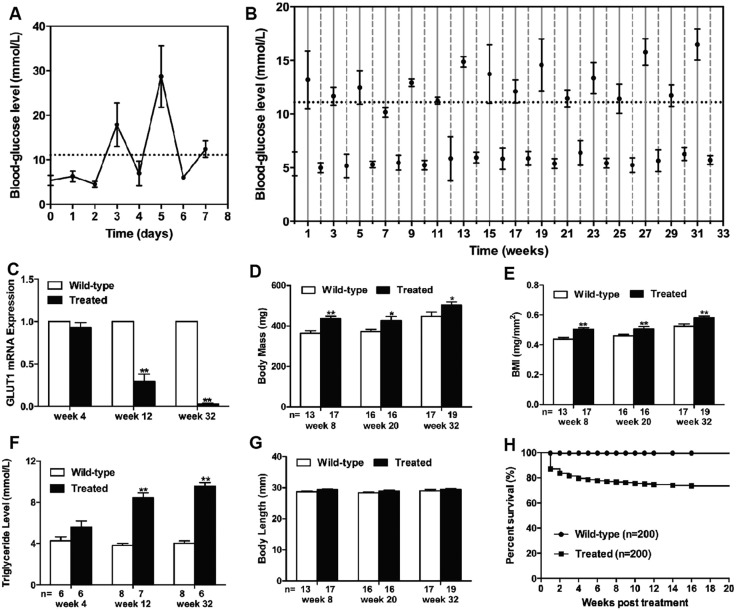
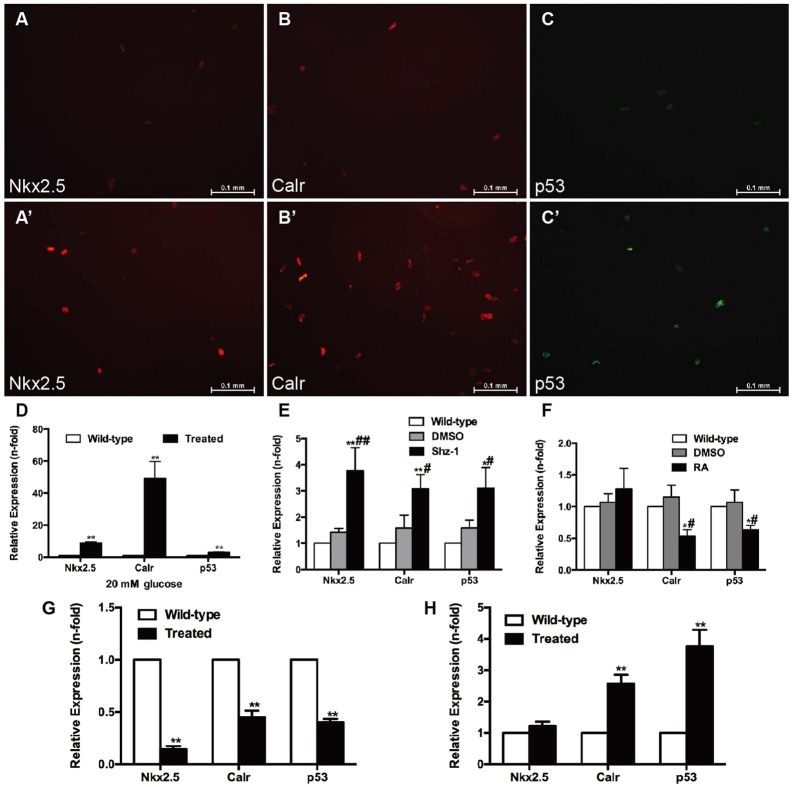
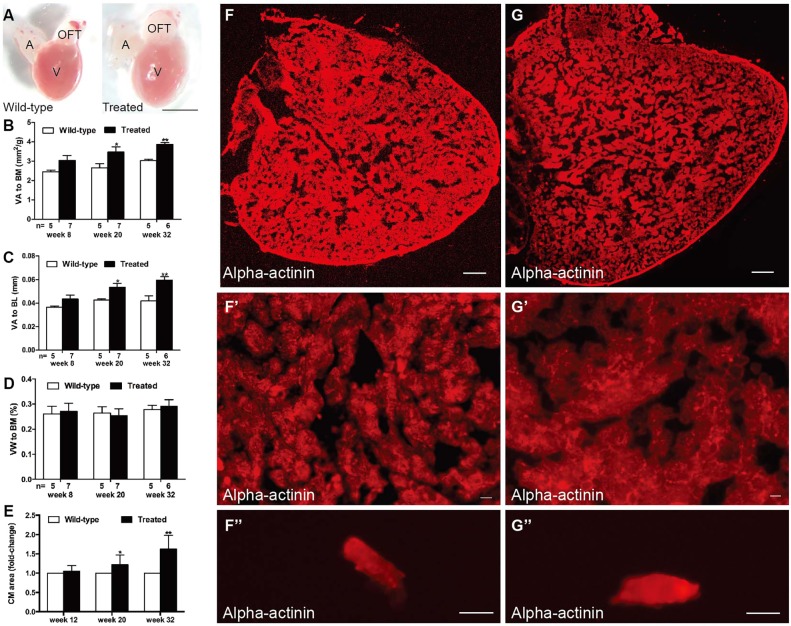
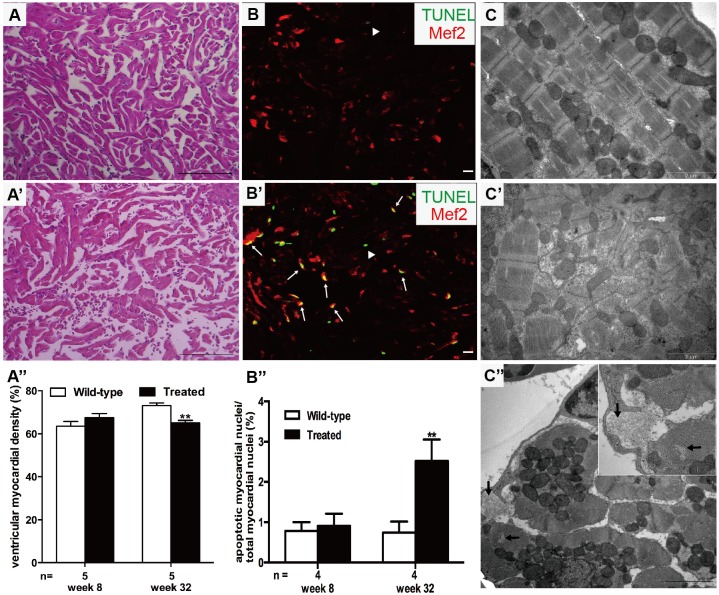
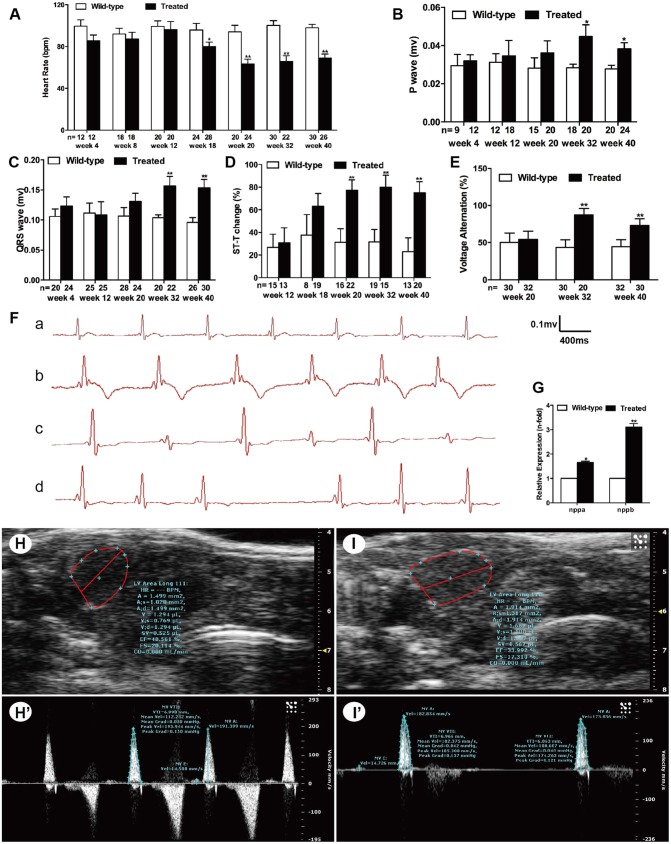
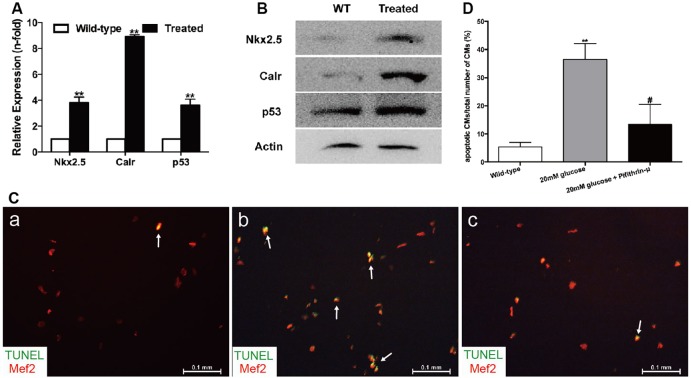
Hyperglycemia is an independent risk factor for diabetic cardiomyopathy in humans; however, the underlying mechanisms have not been thoroughly elucidated. Zebrafish () was used in this study as a novel vertebrate model to explore the signaling pathways of human adult cardiomyopathy. Hyperglycemia was induced by alternately immersing adult zebrafish in a glucose solution or water. The hyperglycemic fish gradually exhibited some hallmarks of cardiomyopathy such as myocardial hypertrophy and apoptosis, myofibril loss, fetal gene reactivation, and severe arrhythmia. Echocardiography of the glucose-treated fish demonstrated diastolic dysfunction at an early stage and systolic dysfunction at a later stage, consistent with what is observed in diabetic patients. Enlarged hearts with decreased myocardial density, accompanied by decompensated cardiac function, indicated that apoptosis was critical in the pathological process. Significant upregulation of the expression of and its downstream targets calreticulin () and was noted in the glucose-treated fish. High-glucose stimulation evoked marked apoptosis of primary cardiomyocytes, which was rescued by the p53 inhibitor pifithrin-μ. experiments were performed using compound treatment and genetically via cell infection. Genetically, knockout of induced decreased expression of , and Upregulation of resulted in increased expression, whereas the level of remained unchanged. An adult zebrafish model of hyperglycemia-induced cardiomyopathy was successfully established. Hyperglycemia-induced myocardial apoptosis was mediated, at least in part, by activation of the -- pathway , resulting in cardiac dysfunction and hyperglycemia-induced cardiomyopathy.
高血糖是人类糖尿病心肌病的独立危险因素;然而,其潜在机制尚未被彻底阐明。本研究中使用斑马鱼()作为一种新型脊椎动物模型来探索人类成人心肌病的信号通路。通过交替将成年斑马鱼浸入葡萄糖溶液或水中来诱导高血糖。高血糖鱼逐渐表现出一些心肌病的特征,如心肌肥大和细胞凋亡、肌原纤维丧失、胎儿基因重新激活和严重心律失常。葡萄糖处理鱼的超声心动图显示舒张功能障碍在早期,收缩功能障碍在后期,与糖尿病患者观察到的一致。心脏增大伴心肌密度降低,伴有代偿性心脏功能障碍,表明细胞凋亡在病理过程中至关重要。在葡萄糖处理的鱼中,显著上调了和其下游靶标钙网织蛋白()和的表达。高葡萄糖刺激原代心肌细胞引发明显的细胞凋亡,而 p53 抑制剂 pifithrin-μ可挽救该凋亡。通过化合物处理和细胞感染进行了基因实验。基因上,敲除导致、和表达下调。上调导致表达增加,而水平保持不变。成功建立了高血糖诱导的斑马鱼心肌病模型。高血糖诱导的心肌细胞凋亡至少部分是通过激活 -- 通路介导的,导致心脏功能障碍和高血糖诱导的心肌病。