Department of Applied Physics, University of Eastern Finland, FI-70211, Kuopio, Finland.
Department of Chemistry, School of Chemical Technology, Aalto University, FI-00076, Aalto, Finland.
Sci Rep. 2017 Aug 11;7(1):7880. doi: 10.1038/s41598-017-08285-3.
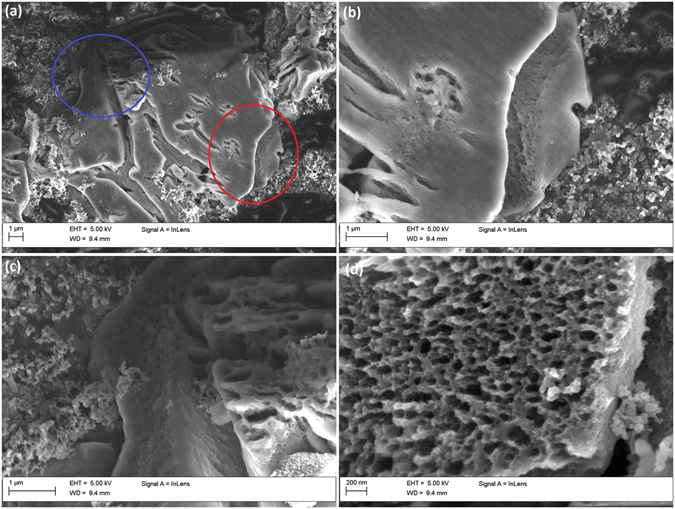
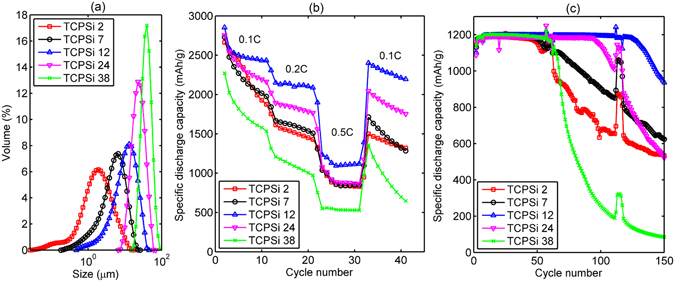
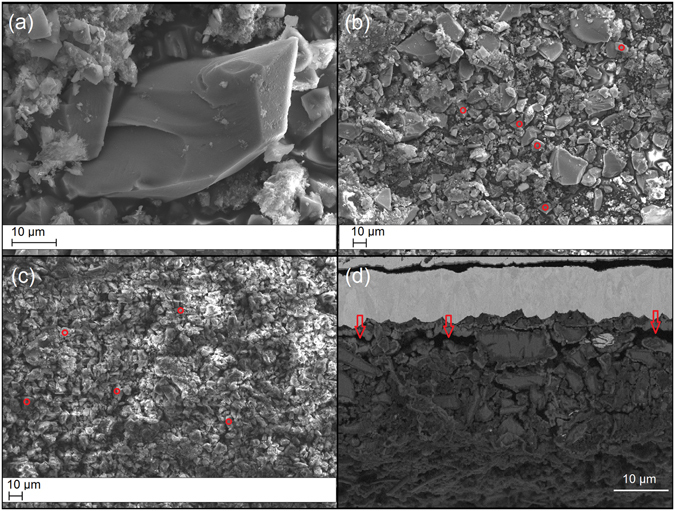
Silicon is being increasingly studied as the next-generation anode material for Li-ion batteries because of its ten times higher gravimetric capacity compared with the widely-used graphite. While nanoparticles and other nanostructured silicon materials often exhibit good cyclability, their volumetric capacity tends to be worse or similar than that of graphite. Furthermore, these materials are commonly complicated and expensive to produce. An effortless way to produce nanostructured silicon is electrochemical anodization. However, there is no systematic study how various material properties affect its performance in LIBs. In the present study, the effects of particle size, surface passivation and boron doping degree were evaluated for the mesoporous silicon with relatively low porosity of 50%. This porosity value was estimated to be the lowest value for the silicon material that still can accommodate the substantial volume change during the charge/discharge cycling. The optimal particle size was between 10-20 µm, the carbide layer enhanced the rate capability by improving the lithiation kinetics, and higher levels of boron doping were beneficial for obtaining higher specific capacity at lower rates. Comparison of pristine and cycled electrodes revealed the loss of electrical contact and electrolyte decay to be the major contributors to the capacity decay.
硅作为下一代锂离子电池的阳极材料,正受到越来越多的研究,因为其比广泛使用的石墨的重量容量高十倍。虽然纳米颗粒和其他纳米结构硅材料通常表现出良好的循环性能,但它们的体积容量往往比石墨差或相似。此外,这些材料通常复杂且昂贵。电化学阳极氧化是生产纳米结构硅的一种简单方法。然而,目前还没有系统的研究表明各种材料特性如何影响其在 LIBs 中的性能。在本研究中,评估了粒径、表面钝化和硼掺杂程度对具有相对低孔隙率 50%的中孔硅的影响。这个孔隙率值被估计为硅材料的最低值,在充电/放电循环过程中,硅材料仍然可以容纳大量的体积变化。最佳粒径在 10-20µm 之间,碳化硅层通过改善嵌锂动力学提高了倍率性能,而更高水平的硼掺杂有利于在较低倍率下获得更高的比容量。对原始和循环电极的比较表明,电接触的损失和电解质的衰减是容量衰减的主要原因。