Statovci Donjete, Aguilera Mònica, MacSharry John, Melgar Silvia
APC Microbiome Institute, University College Cork, Cork, Ireland.
School of Microbiology, University College Cork, Cork, Ireland.
Front Immunol. 2017 Jul 28;8:838. doi: 10.3389/fimmu.2017.00838. eCollection 2017.
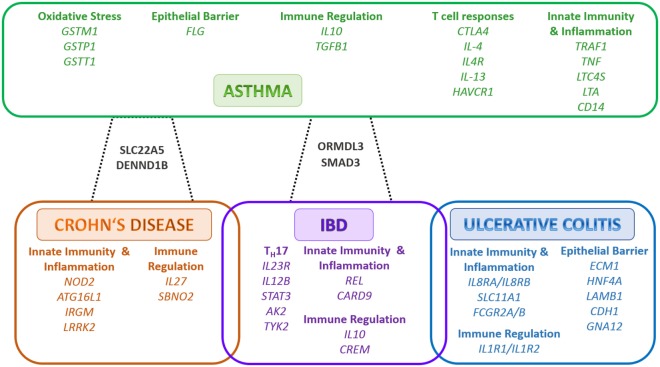
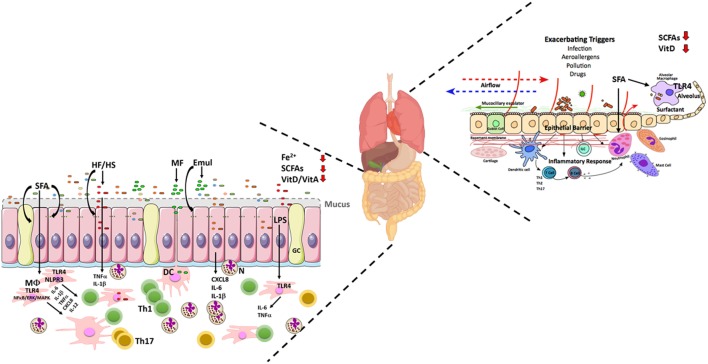
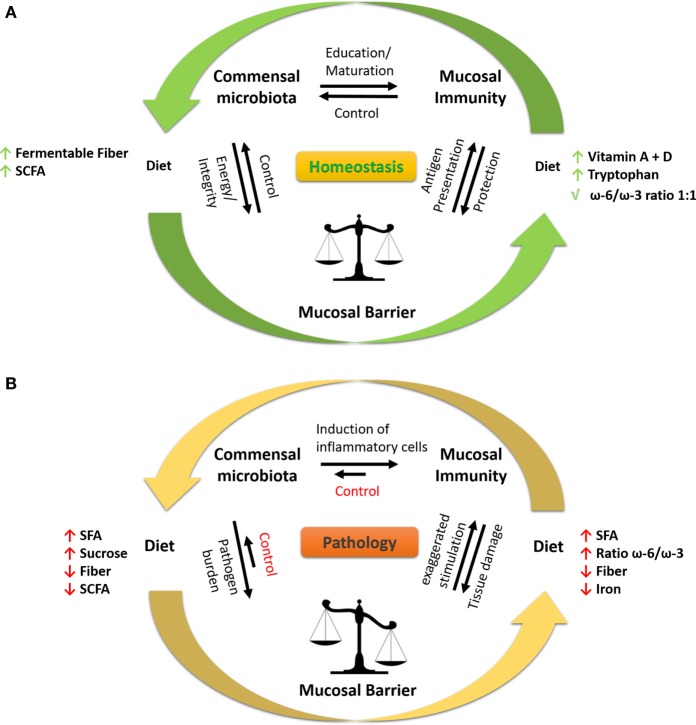
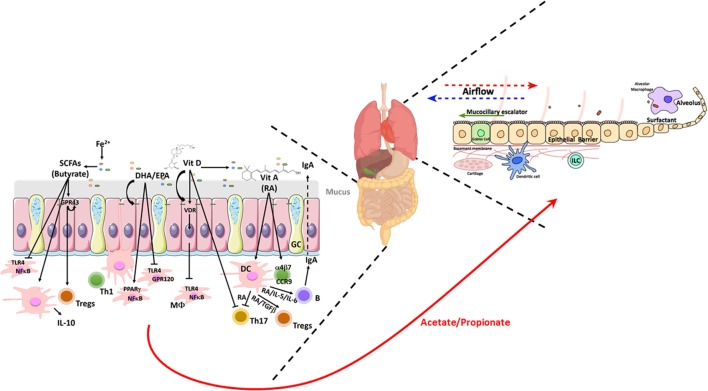
Recent findings point toward diet having a major impact on human health. Diets can either affect the gut microbiota resulting in alterations in the host's physiological responses or by directly targeting the host response. The microbial community in the mammalian gut is a complex and dynamic system crucial for the development and maturation of both systemic and mucosal immune responses. Therefore, the complex interaction between available nutrients, the microbiota, and the immune system are central regulators in maintaining homeostasis and fighting against invading pathogens at mucosal sites. Westernized diet, defined as high dietary intake of saturated fats and sucrose and low intake of fiber, represent a growing health risk contributing to the increased occurrence of metabolic diseases, e.g., diabetes and obesity in countries adapting a westernized lifestyle. Inflammatory bowel diseases (IBD) and asthma are chronic mucosal inflammatory conditions of unknown etiology with increasing prevalence worldwide. These conditions have a multifactorial etiology including genetic factors, environmental factors, and dysregulated immune responses. Their increased prevalence cannot solely be attributed to genetic considerations implying that other factors such as diet can be a major contributor. Recent reports indicate that the gut microbiota and modifications thereof, due to a consumption of a diet high in saturated fats and low in fibers, can trigger factors regulating the development and/or progression of both conditions. While asthma is a disease of the airways, increasing evidence indicates a link between the gut and airways in disease development. Herein, we provide a comprehensive review on the impact of westernized diet and associated nutrients on immune cell responses and the microbiota and how these can influence the pathology of IBD and asthma.
最近的研究结果表明,饮食对人类健康有重大影响。饮食可以通过影响肠道微生物群,导致宿主生理反应的改变,也可以直接针对宿主反应。哺乳动物肠道中的微生物群落是一个复杂而动态的系统,对全身和黏膜免疫反应的发育和成熟至关重要。因此,可利用营养素、微生物群和免疫系统之间的复杂相互作用是维持内环境稳定和抵抗黏膜部位入侵病原体的核心调节因素。西方化饮食被定义为饱和脂肪和蔗糖的高摄入量以及纤维的低摄入量,在采用西方化生活方式的国家,它正成为一种日益严重的健康风险,导致代谢性疾病(如糖尿病和肥胖症)的发病率增加。炎症性肠病(IBD)和哮喘是病因不明的慢性黏膜炎症性疾病,在全球范围内的患病率都在上升。这些疾病具有多因素病因,包括遗传因素、环境因素和免疫反应失调。它们患病率的增加不能仅仅归因于遗传因素,这意味着其他因素(如饮食)可能是主要原因。最近的报告表明,由于食用高脂肪和低纤维的饮食,肠道微生物群及其变化可能会触发调节这两种疾病发展和/或进展的因素。虽然哮喘是一种气道疾病,但越来越多的证据表明,在疾病发展过程中,肠道和气道之间存在联系。在此,我们全面综述了西方化饮食及相关营养素对免疫细胞反应和微生物群的影响,以及它们如何影响IBD和哮喘的病理。