Messele Yohannes Equar, Abdi Reta Duguma, Yalew Shimels Tikuye, Tegegne Desiye Tesfaye, Emeru Bezina Arega, Werid Gebremeskel Mamu
Ethiopian Institute of Agricultural Research, National Agricultural Biotechnology Research Center, P.O.Box 31, Holeta, Ethiopia.
College of Veterinary Medicine and Agriculture, Addis Ababa University, P.O.Box 34, Bishoftu, Ethiopia.
Ann Clin Microbiol Antimicrob. 2017 Aug 15;16(1):55. doi: 10.1186/s12941-017-0233-x.
Consumption of meat contaminated by E. coli causes a serious illness and even death to affected individuals. Recently the emerging of antibiotic resistant foodborne E. coli poses serious public health risks worldwide. However, little is known about the antibiotic resistance profile of E. coli in Ethiopia. This study aimed to determine the prevalence and Antimicrobial resistance (AMR) status of E. coli isolated from different type of meat.
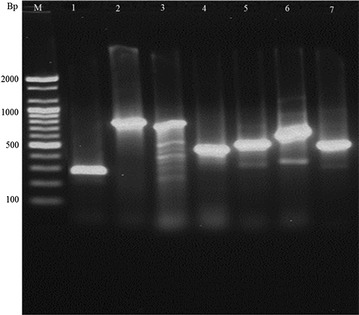
Overall 292 samples were collected from December 2015 to April 2016 from slaughterhouses to determine the prevalence and AMR of E. coli isolated from raw beef, mutton, chevon and chicken meat from Addis Ababa and Bishoftu, Ethiopia. The isolates were screened for AMR against commonly used antibiotics circulating in the Ethiopian market. Both phenotypic and genotypic approach were employed for AMR detection using disc diffusion test and PCR respectively.
The prevalence of E. coli was 63 (21.6%), indicating one sample in every five samples harbors E. coli. Among these, the highest E. coli isolates was observed in chicken meat samples (37.0%; 27), followed by mutton (23.3%; 17), chevon (20.6%; 15) and beef (5.5%; 4). Results of disk diffusion test on the 63 isolates showed that only 4.8% of them were not resistance to all antimicrobials tested. Multiple drug resistance (resistance to ≥3 drugs) was 46.0%. Significantly high resistance to ampicillin (71.4%) and tetracycline (47.6%) was observed. Identification of genes associated with AMR was also done using PCR. The prevalence of E. coli isolates harboring resistance gene responsible for tetracycline (tet(A)), beta lactams (blaCMY) and sulphanamide (sulI) antibiotics were found 65.1, 65.1 and 54.0%, respectively. Twenty-five out of the 63 (39.7% %) E. coli isolates have got antimicrobial resistance gene to three or more classes of drugs. The associations of antimicrobial resistance phenotypes and resistance genes was also determined. The detection of resistance trait against tetracycline, sulphametazole and chloramphenicol measured either phenotypically or genotypically were high.
The rising levels of resistance E. coli to multiple antimicrobial dictate the urgent need to regulate and monitor antimicrobial use in both animals and humans.
食用受大肠杆菌污染的肉类会导致受影响个体患上严重疾病甚至死亡。近年来,具有抗生素抗性的食源性大肠杆菌的出现给全球公共卫生带来了严重风险。然而,关于埃塞俄比亚大肠杆菌的抗生素抗性情况却知之甚少。本研究旨在确定从不同类型肉类中分离出的大肠杆菌的流行情况及抗菌药物耐药性(AMR)状况。
2015年12月至2016年4月期间,从埃塞俄比亚亚的斯亚贝巴和比绍夫图的屠宰场总共采集了292份样本,以确定从生牛肉、羊肉、山羊肉和鸡肉中分离出的大肠杆菌的流行情况及AMR。对分离株针对埃塞俄比亚市场上常用抗生素的AMR进行了筛查。分别采用纸片扩散法和PCR,通过表型和基因型方法进行AMR检测。
大肠杆菌的流行率为63(21.6%),这表明每五个样本中就有一个含有大肠杆菌。其中,鸡肉样本中的大肠杆菌分离株最多(37.0%;27株),其次是羊肉(23.3%;17株)、山羊肉(20.6%;15株)和牛肉(5.5%;4株)。对63株分离株进行的纸片扩散试验结果显示,其中只有4.8%对所有测试抗菌药物均无抗性。多重耐药性(对≥3种药物耐药)为46.0%。观察到对氨苄西林(71.4%)和四环素(47.6%)的耐药率显著较高。还使用PCR对与AMR相关的基因进行了鉴定。发现携带对四环素(tet(A))、β-内酰胺类(blaCMY)和磺胺类(sulI)抗生素具有抗性基因的大肠杆菌分离株的流行率分别为65.1%、65.1%和54.0%。63株大肠杆菌分离株中有25株(39.7%)对三类或更多类药物具有抗菌抗性基因。还确定了抗菌抗性表型与抗性基因之间的关联。对四环素、磺胺甲恶唑和氯霉素的抗性特征,无论是通过表型还是基因型检测,结果都很高。
大肠杆菌对多种抗菌药物的耐药水平不断上升,这表明迫切需要对动物和人类抗菌药物的使用进行监管和监测。