Tran Ulrich S, Andel Rita, Niederkrotenthaler Thomas, Till Benedikt, Ajdacic-Gross Vladeta, Voracek Martin
Department of Basic Psychological Research and Research Methods, School of Psychology, University of Vienna, Vienna, Austria.
Wiener Werkstaette for Suicide Research, Vienna, Austria.
PLoS One. 2017 Aug 16;12(8):e0183149. doi: 10.1371/journal.pone.0183149. eCollection 2017.
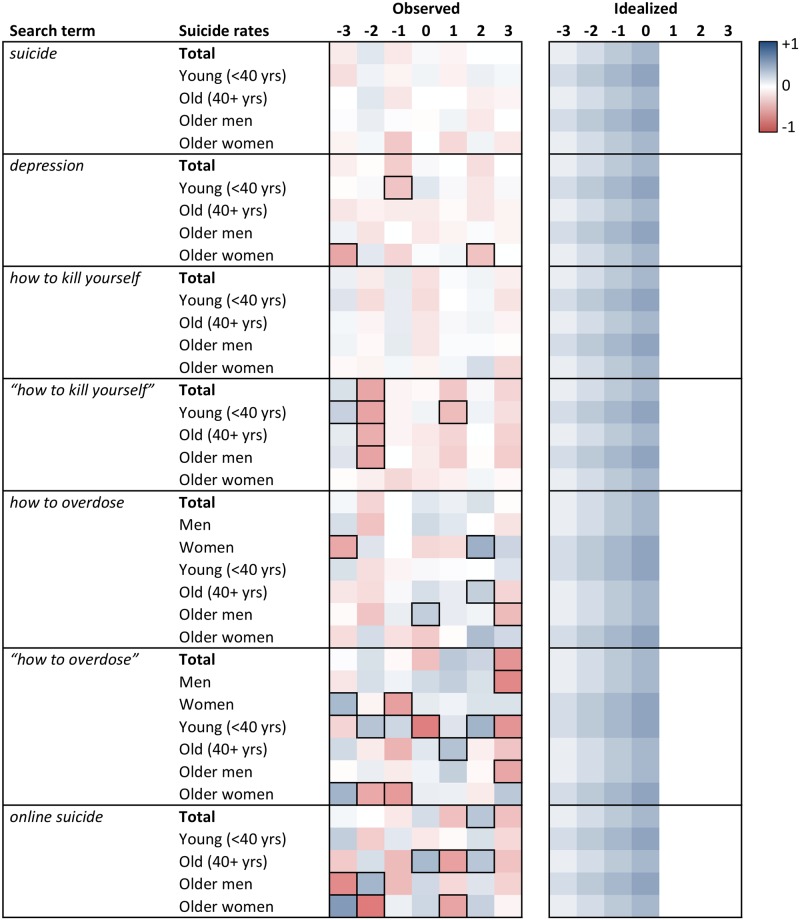
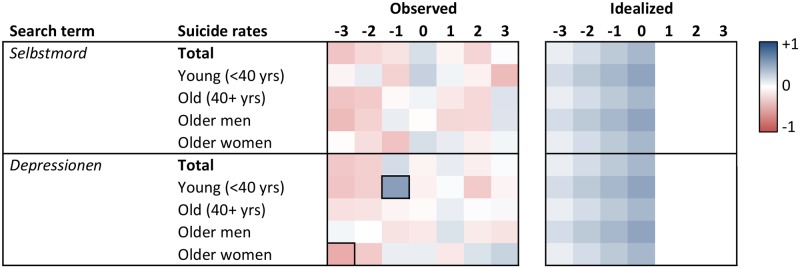
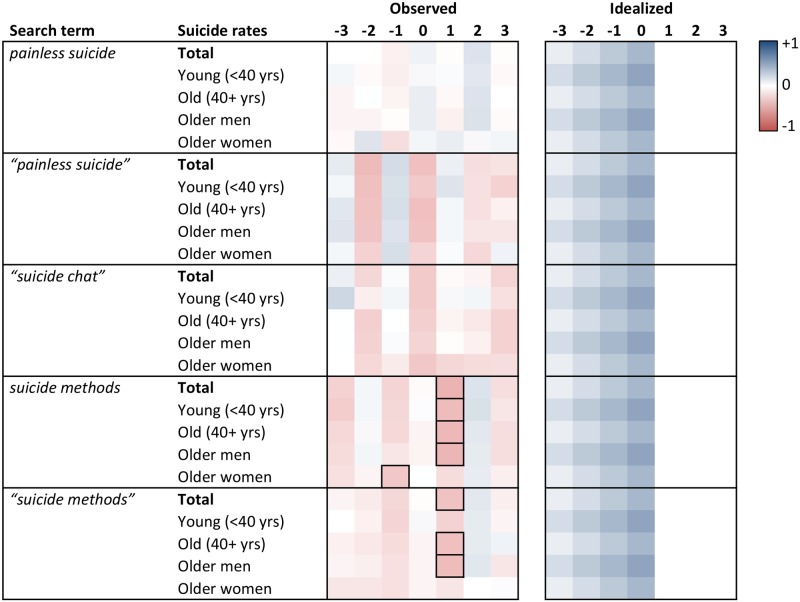
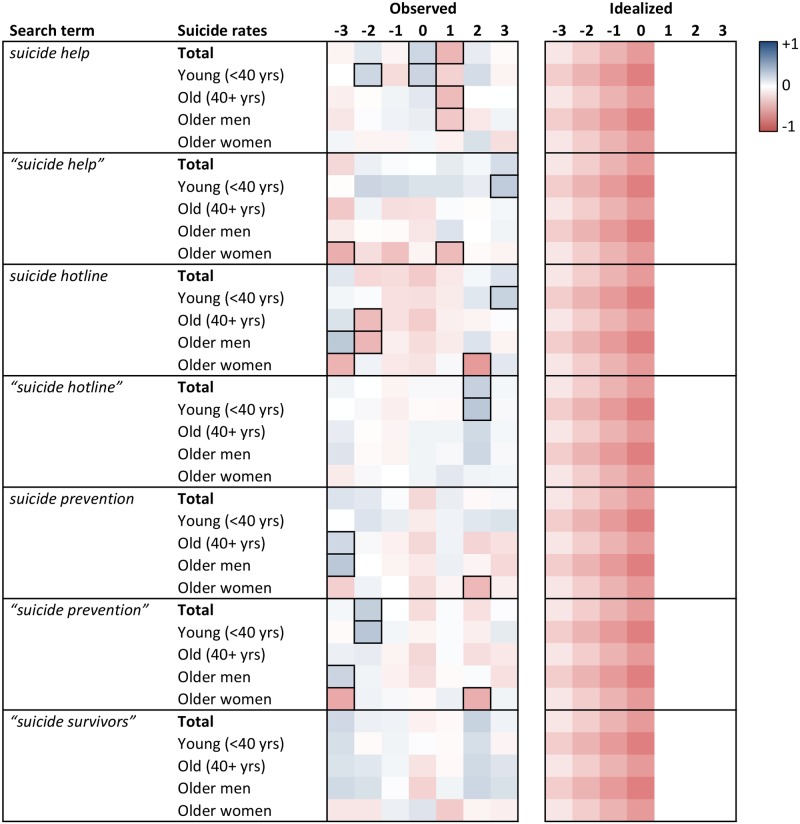
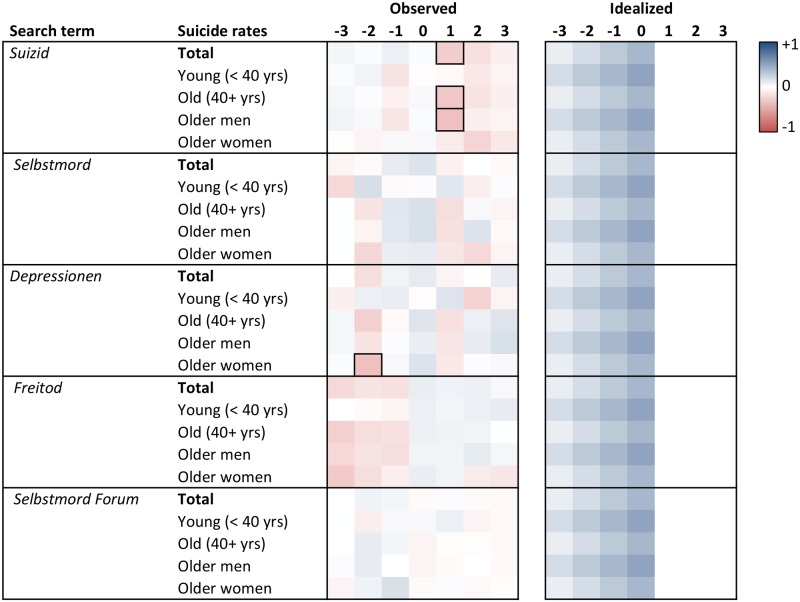
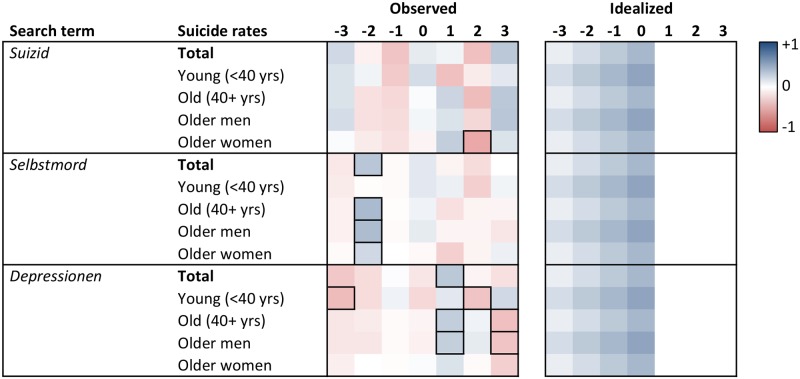
Recent research suggests that search volumes of the most popular search engine worldwide, Google, provided via Google Trends, could be associated with national suicide rates in the USA, UK, and some Asian countries. However, search volumes have mostly been studied in an ad hoc fashion, without controls for spurious associations. This study evaluated the validity and utility of Google Trends search volumes for behavioral forecasting of suicide rates in the USA, Germany, Austria, and Switzerland. Suicide-related search terms were systematically collected and respective Google Trends search volumes evaluated for availability. Time spans covered 2004 to 2010 (USA, Switzerland) and 2004 to 2012 (Germany, Austria). Temporal associations of search volumes and suicide rates were investigated with time-series analyses that rigorously controlled for spurious associations. The number and reliability of analyzable search volume data increased with country size. Search volumes showed various temporal associations with suicide rates. However, associations differed both across and within countries and mostly followed no discernable patterns. The total number of significant associations roughly matched the number of expected Type I errors. These results suggest that the validity of Google Trends search volumes for behavioral forecasting of national suicide rates is low. The utility and validity of search volumes for the forecasting of suicide rates depend on two key assumptions ("the population that conducts searches consists mostly of individuals with suicidal ideation", "suicide-related search behavior is strongly linked with suicidal behavior"). We discuss strands of evidence that these two assumptions are likely not met. Implications for future research with Google Trends in the context of suicide research are also discussed.
近期研究表明,通过谷歌趋势提供的全球最流行搜索引擎谷歌的搜索量,可能与美国、英国及一些亚洲国家的全国自杀率相关。然而,搜索量大多是以临时的方式进行研究,未对虚假关联进行控制。本研究评估了谷歌趋势搜索量在美国、德国、奥地利和瑞士自杀率行为预测方面的有效性和实用性。系统收集了与自杀相关的搜索词,并评估了相应谷歌趋势搜索量的可得性。时间跨度涵盖2004年至2010年(美国、瑞士)以及2004年至2012年(德国、奥地利)。通过严格控制虚假关联的时间序列分析,研究了搜索量与自杀率的时间关联。可分析的搜索量数据的数量和可靠性随国家规模的增大而增加。搜索量与自杀率呈现出各种时间关联。然而,这些关联在不同国家之间以及同一国家内部都存在差异,且大多没有明显的模式。显著关联的总数大致与预期的I类错误数量相符。这些结果表明,谷歌趋势搜索量在全国自杀率行为预测方面的有效性较低。搜索量在自杀率预测方面的实用性和有效性取决于两个关键假设(“进行搜索的人群主要由有自杀意念的个体组成”,“与自杀相关的搜索行为与自杀行为紧密相连”)。我们讨论了表明这两个假设可能不成立的一系列证据。还讨论了在自杀研究背景下未来使用谷歌趋势进行研究的意义。