• 文献检索
  • 文档翻译
  • 深度研究
  • 学术资讯
  • Suppr Zotero 插件Zotero 插件
  • 邀请有礼
  • 套餐&价格
  • 历史记录
应用&插件
Suppr Zotero 插件Zotero 插件浏览器插件Mac 客户端Windows 客户端微信小程序
定价
高级版会员购买积分包购买API积分包
服务
文献检索文档翻译深度研究API 文档MCP 服务
关于我们
关于 Suppr公司介绍联系我们用户协议隐私条款
关注我们

Suppr 超能文献

核心技术专利:CN118964589B侵权必究
粤ICP备2023148730 号-1Suppr @ 2026

文献检索

告别复杂PubMed语法,用中文像聊天一样搜索,搜遍4000万医学文献。AI智能推荐,让科研检索更轻松。

立即免费搜索

文件翻译

保留排版,准确专业,支持PDF/Word/PPT等文件格式,支持 12+语言互译。

免费翻译文档

深度研究

AI帮你快速写综述,25分钟生成高质量综述,智能提取关键信息,辅助科研写作。

立即免费体验

蹲伏步态个体在穿戴外骨骼行走过程中辅助扭矩与膝关节生物力学之间的关系。

Relationship between assistive torque and knee biomechanics during exoskeleton walking in individuals with crouch gait.

作者信息

Lerner Zachary F, Damiano Diane L, Bulea Thomas C

出版信息

IEEE Int Conf Rehabil Robot. 2017 Jul;2017:491-497. doi: 10.1109/ICORR.2017.8009296.

DOI:10.1109/ICORR.2017.8009296
PMID:28813868
原文链接:https://pmc.ncbi.nlm.nih.gov/articles/PMC10436701/
Abstract

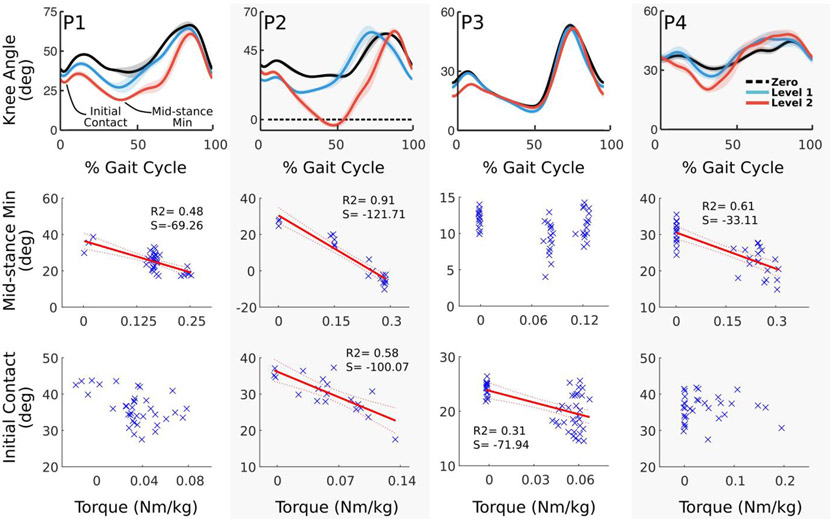
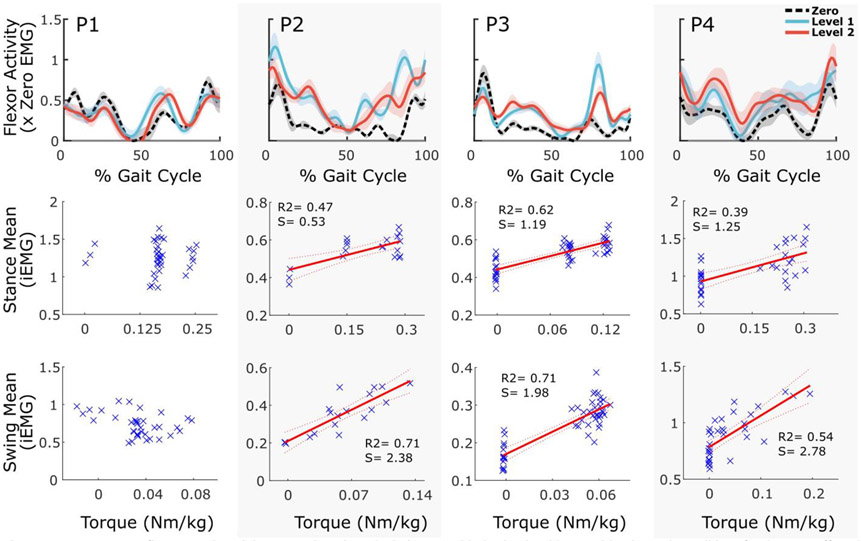
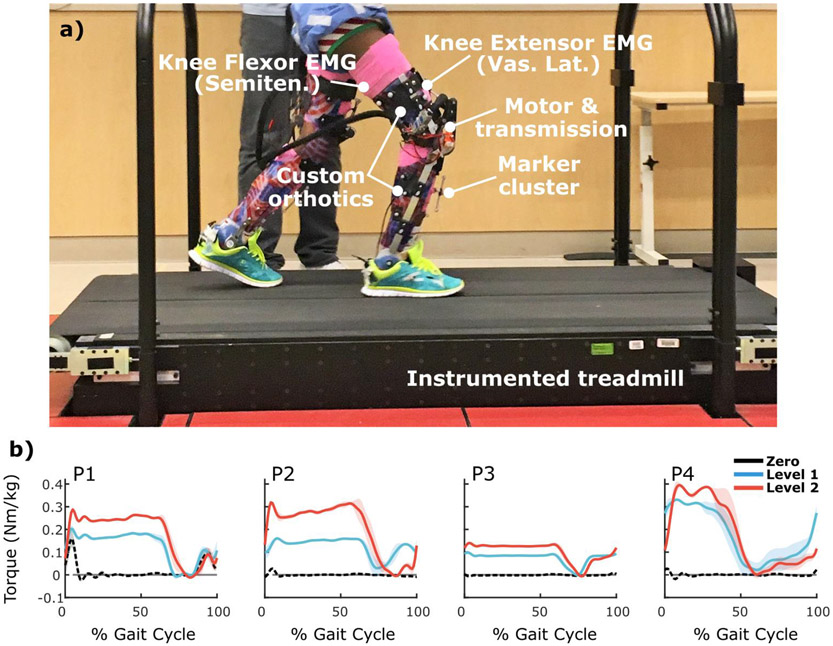
Crouch or "flexed knee" gait is a pathological gait pattern affecting many individuals with cerebral palsy. One proposed method to alleviate crouch is to provide robotic assistance to knee extension during walking. The purpose of this study was to evaluate how the magnitude of knee extensor torque affects knee kinematics, kinetics, and muscle activity. Motion capture, ground reaction force and electromyography data were collected while four participants with crouch gait from cerebral palsy walked with assistance from a novel robotic exoskeleton on an instrumented treadmill. Different magnitudes of knee extensor torque were provided during the stance (range: 0.09-0.38 Nm/kg) and swing (range: 0.09-0.29 Nm/kg) phases of the gait cycle. Using a linear regression analysis, we found that greater torque from the exoskeleton was positively associated with increased knee extension (reduction in crouch) at foot contact and mid-stance, negatively associated with the biological knee extensor moment, and positively associated with knee flexor muscle activity. Determining the relationships between exoskeleton assistance and knee kinematics and kinetics will benefit the continued investigation of robotic treatment strategies for treating crouch gait. Our findings indicate the importance of properly tuned robotic control strategies for gait rehabilitation.

摘要

蹲伏或“屈膝”步态是一种影响许多脑瘫患者的病理性步态模式。一种减轻蹲伏的方法是在行走过程中为膝关节伸展提供机器人辅助。本研究的目的是评估膝关节伸肌扭矩的大小如何影响膝关节的运动学、动力学和肌肉活动。当四名患有脑瘫蹲伏步态的参与者在装有仪器的跑步机上借助新型机器人外骨骼行走时,收集了运动捕捉、地面反作用力和肌电图数据。在步态周期的站立期(范围:0.09 - 0.38 Nm/kg)和摆动期(范围:0.09 - 0.29 Nm/kg)提供了不同大小的膝关节伸肌扭矩。通过线性回归分析,我们发现外骨骼产生的更大扭矩与足接触和站立中期膝关节伸展增加(蹲伏减少)呈正相关,与生物性膝关节伸肌力矩呈负相关,与膝关节屈肌肌肉活动呈正相关。确定外骨骼辅助与膝关节运动学和动力学之间的关系将有助于继续研究治疗蹲伏步态的机器人治疗策略。我们的研究结果表明了为步态康复正确调整机器人控制策略的重要性。
https://cdn.ncbi.nlm.nih.gov/pmc/blobs/a783/10436701/588e918469c4/nihms-1906252-f0005.jpg
https://cdn.ncbi.nlm.nih.gov/pmc/blobs/a783/10436701/bccf3562fa0e/nihms-1906252-f0001.jpg
https://cdn.ncbi.nlm.nih.gov/pmc/blobs/a783/10436701/b6df8f6819b7/nihms-1906252-f0002.jpg
https://cdn.ncbi.nlm.nih.gov/pmc/blobs/a783/10436701/f1a2c906fa14/nihms-1906252-f0003.jpg
https://cdn.ncbi.nlm.nih.gov/pmc/blobs/a783/10436701/d0000f82e8f3/nihms-1906252-f0004.jpg
https://cdn.ncbi.nlm.nih.gov/pmc/blobs/a783/10436701/588e918469c4/nihms-1906252-f0005.jpg
https://cdn.ncbi.nlm.nih.gov/pmc/blobs/a783/10436701/bccf3562fa0e/nihms-1906252-f0001.jpg
https://cdn.ncbi.nlm.nih.gov/pmc/blobs/a783/10436701/b6df8f6819b7/nihms-1906252-f0002.jpg
https://cdn.ncbi.nlm.nih.gov/pmc/blobs/a783/10436701/f1a2c906fa14/nihms-1906252-f0003.jpg
https://cdn.ncbi.nlm.nih.gov/pmc/blobs/a783/10436701/d0000f82e8f3/nihms-1906252-f0004.jpg
https://cdn.ncbi.nlm.nih.gov/pmc/blobs/a783/10436701/588e918469c4/nihms-1906252-f0005.jpg

相似文献

1
Relationship between assistive torque and knee biomechanics during exoskeleton walking in individuals with crouch gait.蹲伏步态个体在穿戴外骨骼行走过程中辅助扭矩与膝关节生物力学之间的关系。
IEEE Int Conf Rehabil Robot. 2017 Jul;2017:491-497. doi: 10.1109/ICORR.2017.8009296.
2
A robotic exoskeleton to treat crouch gait from cerebral palsy: Initial kinematic and neuromuscular evaluation.一种用于治疗脑瘫蹲伏步态的机器人外骨骼:初步运动学和神经肌肉评估。
Annu Int Conf IEEE Eng Med Biol Soc. 2016 Aug;2016:2214-2217. doi: 10.1109/EMBC.2016.7591169.
3
A Robotic Exoskeleton for Treatment of Crouch Gait in Children With Cerebral Palsy: Design and Initial Application.一种用于治疗脑瘫儿童蹲伏步态的机器人外骨骼:设计与初步应用。
IEEE Trans Neural Syst Rehabil Eng. 2017 Jun;25(6):650-659. doi: 10.1109/TNSRE.2016.2595501. Epub 2016 Jul 27.
4
Toward a hybrid exoskeleton for crouch gait in children with cerebral palsy: neuromuscular electrical stimulation for improved knee extension.为脑瘫儿童的蹲姿设计混合式外骨骼:用于改善膝关节伸展的神经肌肉电刺激。
J Neuroeng Rehabil. 2020 Sep 3;17(1):121. doi: 10.1186/s12984-020-00738-7.
5
The Effects of Exoskeleton Assisted Knee Extension on Lower-Extremity Gait Kinematics, Kinetics, and Muscle Activity in Children with Cerebral Palsy.外骨骼辅助膝关节伸展对脑瘫儿童下肢运动学、动力学和肌肉活动的影响。
Sci Rep. 2017 Oct 18;7(1):13512. doi: 10.1038/s41598-017-13554-2.
6
Computational modeling of neuromuscular response to swing-phase robotic knee extension assistance in cerebral palsy.脑瘫患者摆动相机器人膝关节伸展辅助的神经肌肉反应的计算建模。
J Biomech. 2019 Apr 18;87:142-149. doi: 10.1016/j.jbiomech.2019.02.025. Epub 2019 Mar 7.
7
Validating Model-Based Prediction Of Biological Knee Moment During Walking With An Exoskeleton in Crouch Gait: Potential Application for Exoskeleton Control.验证基于模型的外骨骼蹲伏步态行走时生物膝关节力矩预测:在外骨骼控制中的潜在应用
IEEE Int Conf Rehabil Robot. 2019 Jun;2019:778-783. doi: 10.1109/ICORR.2019.8779513.
8
Mitigating Crouch Gait With an Autonomous Pediatric Knee Exoskeleton in the Neurologically Impaired.神经损伤儿童用自主式儿科膝关节矫形器缓解蹲伏步态
J Biomech Eng. 2024 Dec 1;146(12). doi: 10.1115/1.4066370.
9
Estimating the Mechanical Behavior of the Knee Joint During Crouch Gait: Implications for Real-Time Motor Control of Robotic Knee Orthoses.估算蹲伏步态期间膝关节的力学行为:对机器人膝关节矫形器实时运动控制的启示。
IEEE Trans Neural Syst Rehabil Eng. 2016 Jun;24(6):621-9. doi: 10.1109/TNSRE.2016.2550860. Epub 2016 Apr 14.
10
A lower-extremity exoskeleton improves knee extension in children with crouch gait from cerebral palsy.下肢外骨骼可改善脑瘫患儿蹲姿步态中的膝关节伸展。
Sci Transl Med. 2017 Aug 23;9(404). doi: 10.1126/scitranslmed.aam9145.

引用本文的文献

1
Exoskeleton therapy in cerebral palsy: improved gait endurance without kinematic change.脑瘫的外骨骼治疗:提高步态耐力但无运动学变化。
Front Hum Neurosci. 2025 Aug 7;19:1644585. doi: 10.3389/fnhum.2025.1644585. eCollection 2025.
2
An analysis of stimulation methods used in rehabilitation equipment for children with cerebral palsy.脑瘫儿童康复设备中使用的刺激方法分析。
Front Neurol. 2024 Jun 18;15:1371332. doi: 10.3389/fneur.2024.1371332. eCollection 2024.
3
Coordination Between Partial Robotic Exoskeletons and Human Gait: A Comprehensive Review on Control Strategies.

本文引用的文献

1
A robotic exoskeleton to treat crouch gait from cerebral palsy: Initial kinematic and neuromuscular evaluation.一种用于治疗脑瘫蹲伏步态的机器人外骨骼:初步运动学和神经肌肉评估。
Annu Int Conf IEEE Eng Med Biol Soc. 2016 Aug;2016:2214-2217. doi: 10.1109/EMBC.2016.7591169.
2
A Robotic Exoskeleton for Treatment of Crouch Gait in Children With Cerebral Palsy: Design and Initial Application.一种用于治疗脑瘫儿童蹲伏步态的机器人外骨骼:设计与初步应用。
IEEE Trans Neural Syst Rehabil Eng. 2017 Jun;25(6):650-659. doi: 10.1109/TNSRE.2016.2595501. Epub 2016 Jul 27.
3
Estimating the Mechanical Behavior of the Knee Joint During Crouch Gait: Implications for Real-Time Motor Control of Robotic Knee Orthoses.
部分机器人外骨骼与人类步态之间的协调:控制策略的综合综述
Front Bioeng Biotechnol. 2022 May 25;10:842294. doi: 10.3389/fbioe.2022.842294. eCollection 2022.
4
Gait Recognition for Lower Limb Exoskeletons Based on Interactive Information Fusion.基于交互式信息融合的下肢外骨骼步态识别
Appl Bionics Biomech. 2022 Mar 26;2022:9933018. doi: 10.1155/2022/9933018. eCollection 2022.
5
Review of control strategies for lower-limb exoskeletons to assist gait.下肢外骨骼助力行走的控制策略综述。
J Neuroeng Rehabil. 2021 Jul 27;18(1):119. doi: 10.1186/s12984-021-00906-3.
估算蹲伏步态期间膝关节的力学行为:对机器人膝关节矫形器实时运动控制的启示。
IEEE Trans Neural Syst Rehabil Eng. 2016 Jun;24(6):621-9. doi: 10.1109/TNSRE.2016.2550860. Epub 2016 Apr 14.
4
Comparison of hamstring transfer with hamstring lengthening in ambulatory children with cerebral palsy: further follow-up.脑性瘫痪能行走儿童中腘绳肌转移术与腘绳肌延长术的比较:进一步随访
J Child Orthop. 2014 Dec;8(6):513-20. doi: 10.1007/s11832-014-0626-8. Epub 2014 Nov 28.
5
Walking function, pain, and fatigue in adults with cerebral palsy: a 7-year follow-up study.成人脑瘫患者的行走功能、疼痛及疲劳:一项7年随访研究
Dev Med Child Neurol. 2009 May;51(5):381-8. doi: 10.1111/j.1469-8749.2008.03250.x. Epub 2008 Feb 3.
6
The epidemiology of cerebral palsy: incidence, impairments and risk factors.脑瘫的流行病学:发病率、损伤及风险因素。
Disabil Rehabil. 2006 Feb 28;28(4):183-91. doi: 10.1080/09638280500158422.
7
Prevalence of specific gait abnormalities in children with cerebral palsy: influence of cerebral palsy subtype, age, and previous surgery.脑性瘫痪患儿特定步态异常的患病率:脑性瘫痪亚型、年龄及既往手术的影响
J Pediatr Orthop. 2005 Jan-Feb;25(1):79-83. doi: 10.1097/00004694-200501000-00018.
8
Ambulatory capacity in cerebral palsy: prognostic criteria and consequences for intervention.脑瘫患者的活动能力:预后标准及干预效果
Dev Med Child Neurol. 2003 Nov;45(11):786-90. doi: 10.1017/s0012162203001452.
9
Muscle response to heavy resistance exercise in children with spastic cerebral palsy.痉挛型脑瘫患儿肌肉对大阻力运动的反应。
Dev Med Child Neurol. 1995 Aug;37(8):731-9. doi: 10.1111/j.1469-8749.1995.tb15019.x.
10
Energy expenditure index of walking for normal children and for children with cerebral palsy.正常儿童与脑瘫儿童步行的能量消耗指数。
Dev Med Child Neurol. 1990 Apr;32(4):333-40. doi: 10.1111/j.1469-8749.1990.tb16945.x.