Rehabilitation Medicine Department, National Institutes of Health Clinical Center, Bethesda, MD 20892, USA.
Sci Transl Med. 2017 Aug 23;9(404). doi: 10.1126/scitranslmed.aam9145.
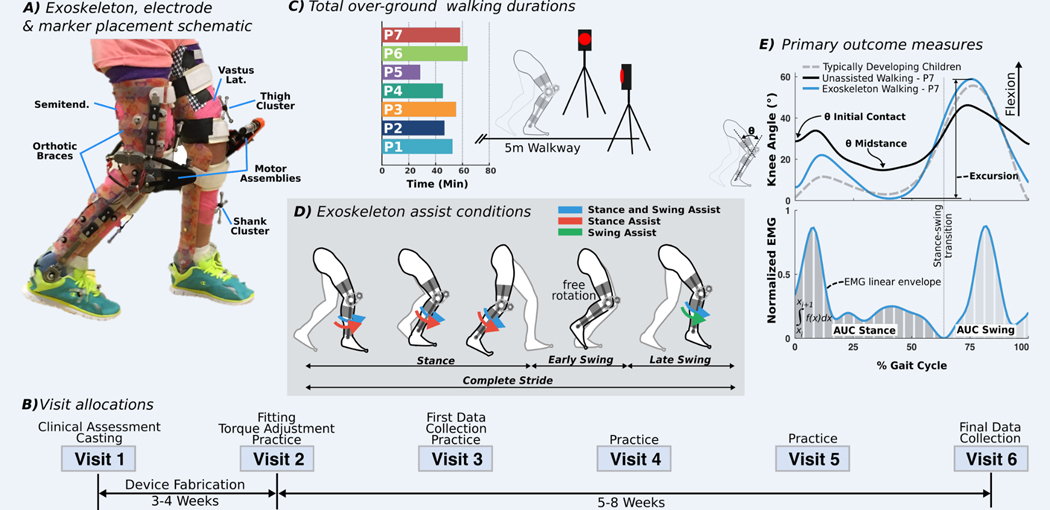
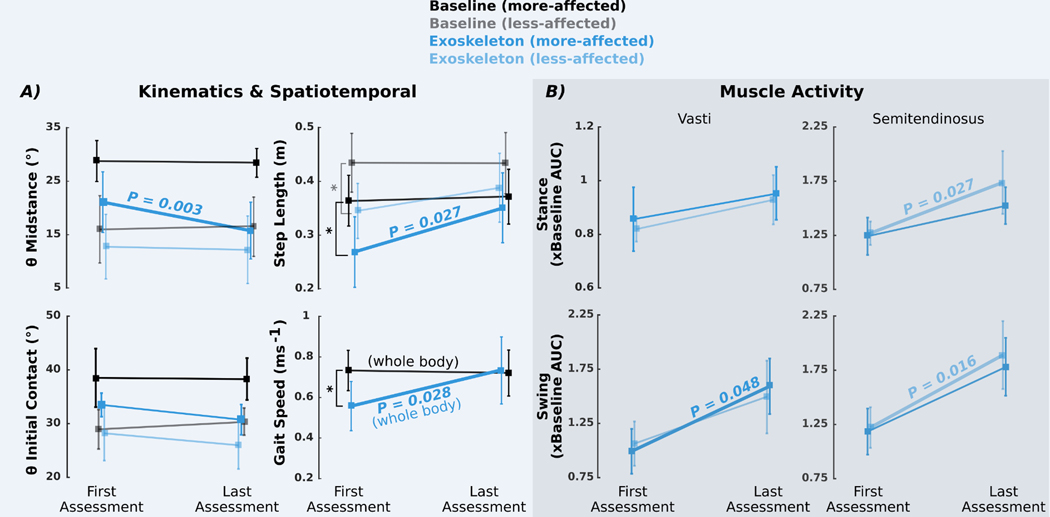
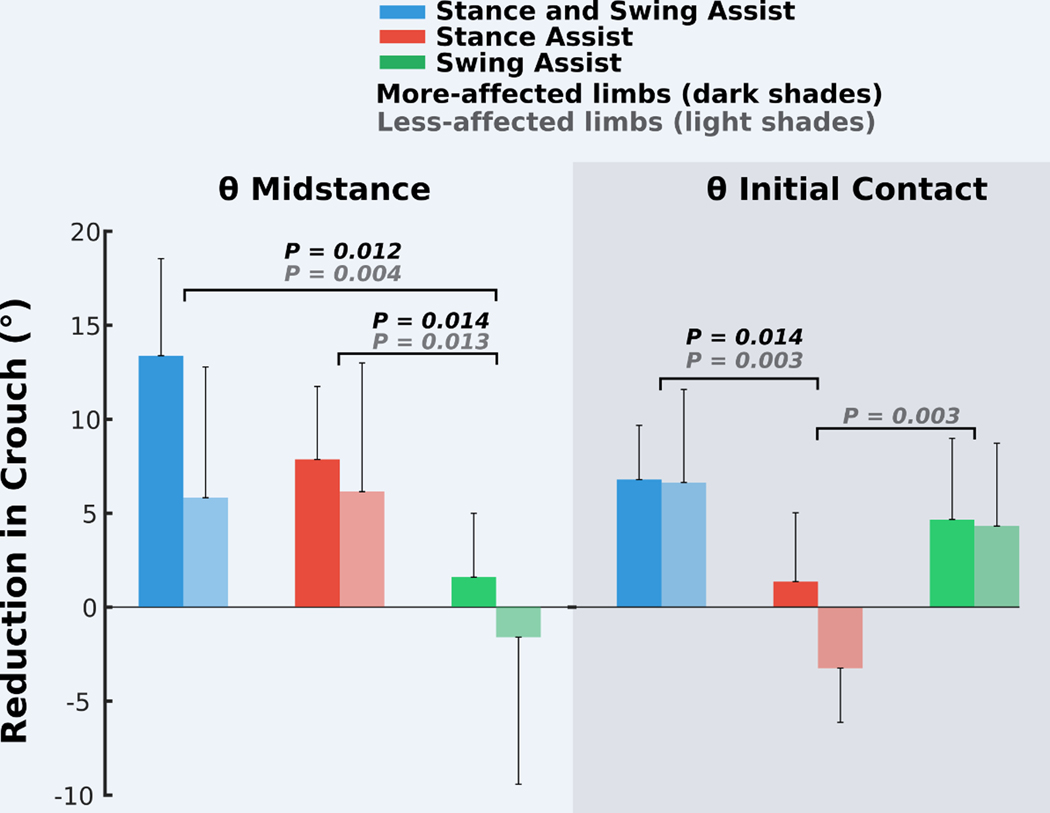
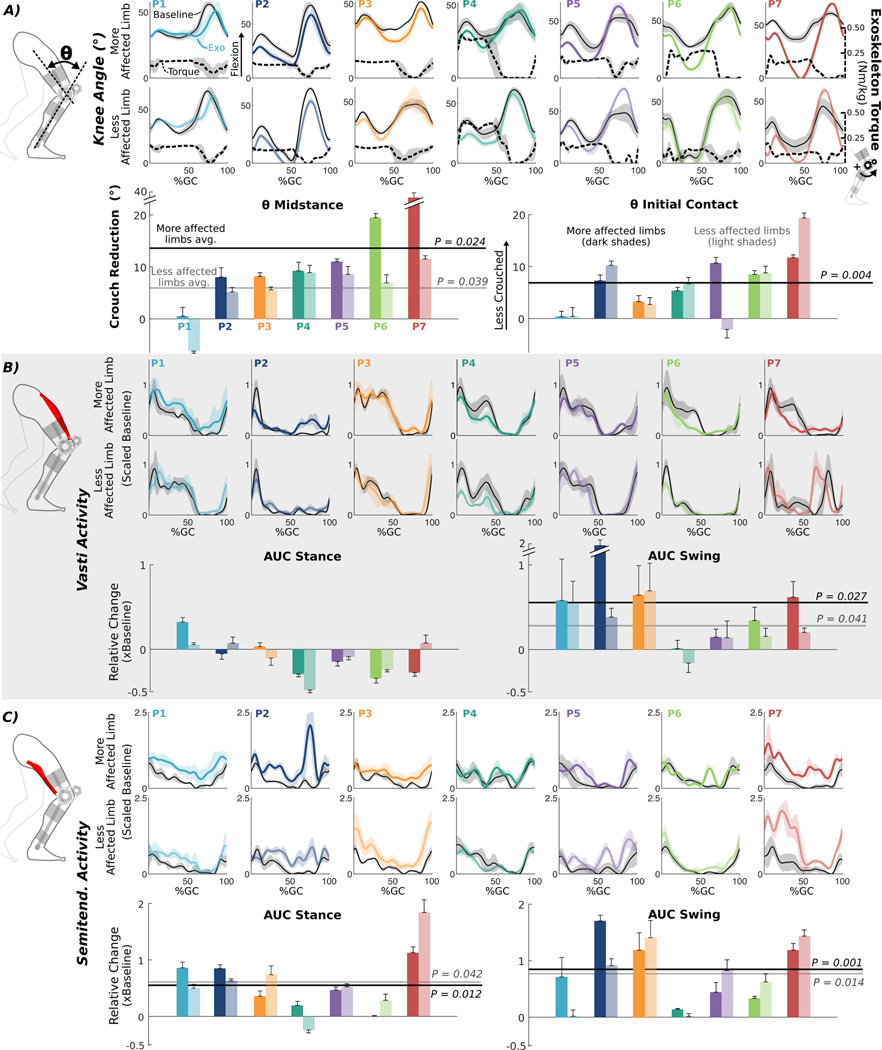
The ability to walk contributes considerably to physical health and overall well-being, particularly in children with motor disability, and is therefore prioritized as a rehabilitation goal. However, half of ambulatory children with cerebral palsy (CP), the most prevalent childhood movement disorder, cease to walk in adulthood. Robotic gait trainers have shown positive outcomes in initial studies, but these clinic-based systems are limited to short-term programs of insufficient length to maintain improved function in a lifelong disability such as CP. Sophisticated wearable exoskeletons are now available, but their utility in treating childhood movement disorders remains unknown. We evaluated an exoskeleton for the treatment of crouch (or flexed-knee) gait, one of the most debilitating pathologies in CP. We show that the exoskeleton reduced crouch in a cohort of ambulatory children with CP during overground walking. The exoskeleton was safe and well tolerated, and all children were able to walk independently with the device. Rather than guiding the lower limbs, the exoskeleton dynamically changed the posture by introducing bursts of knee extension assistance during discrete portions of the walking cycle, a perturbation that resulted in maintained or increased knee extensor muscle activity during exoskeleton use. Six of seven participants exhibited postural improvements equivalent to outcomes reported from invasive orthopedic surgery. We also demonstrate that improvements in crouch increased over the course of our multiweek exploratory trial. Together, these results provide evidence supporting the use of wearable exoskeletons as a treatment strategy to improve walking in children with CP.
行走能力对身体健康和整体幸福感有很大的影响,尤其是对于患有运动障碍的儿童,因此被优先视为康复目标。然而,半数能行走的脑瘫儿童(脑瘫是最常见的儿童运动障碍)在成年后会停止行走。机器人步态训练器在初步研究中显示出了积极的结果,但这些基于诊所的系统仅限于短期项目,时间不足以维持脑瘫等终身残疾的功能改善。现在已经有了复杂的可穿戴式外骨骼,但它们在治疗儿童运动障碍方面的效用仍不清楚。我们评估了一种外骨骼,用于治疗脑瘫最具致残性的病理之一——蹲伏步态(或屈膝步态)。我们发现,在户外行走时,外骨骼能降低脑瘫患儿的蹲伏程度。外骨骼安全且耐受性良好,所有孩子都能在设备的辅助下独立行走。外骨骼不是引导下肢,而是通过在步行周期的离散部分引入突发的膝关节伸展辅助来动态改变姿势,这种微扰导致在使用外骨骼时膝关节伸肌肌肉活动得到维持或增加。七名参与者中有六名表现出的姿势改善与侵入性骨科手术报告的结果相当。我们还证明,在我们的多周探索性试验过程中,蹲伏的改善程度逐渐增加。这些结果共同证明了可穿戴外骨骼作为改善脑瘫儿童行走能力的治疗策略的有效性。