Wroblewski M, Bauer R, Cubas Córdova M, Udonta F, Ben-Batalla I, Legler K, Hauser C, Egberts J, Janning M, Velthaus J, Schulze C, Pantel K, Bokemeyer C, Loges S
Department of Hematology and Oncology with Sections BMT and Pneumology, Hubertus Wald Tumorzentrum, University Comprehensive Cancer Center Hamburg, University Medical Center Hamburg-Eppendorf, Martinistraße 52, 20246, Hamburg, Germany.
Institute of Tumor Biology, Center of Experimental Medicine University Medical Center Hamburg-Eppendorf, Martinistraße 52, 20246, Hamburg, Germany.
Nat Commun. 2017 Aug 16;8(1):269. doi: 10.1038/s41467-017-00327-8.
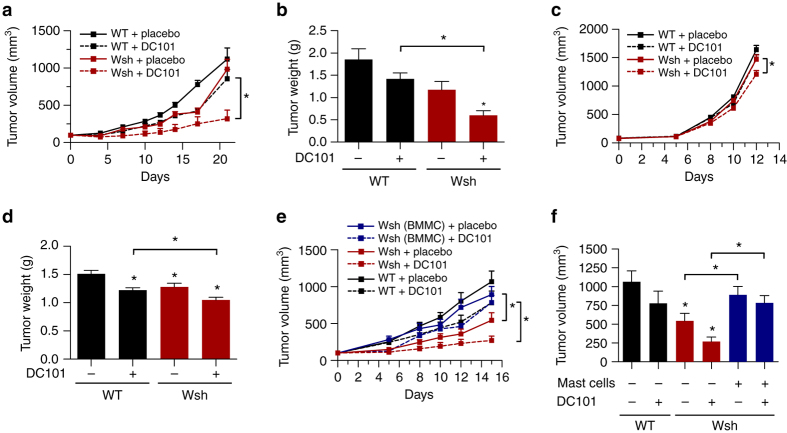
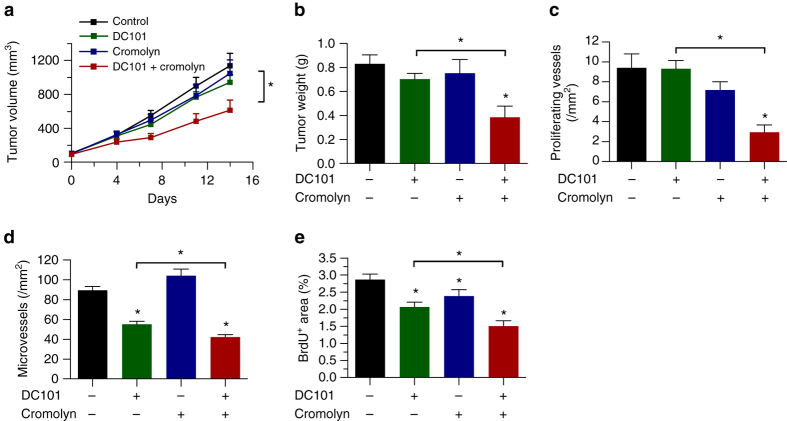
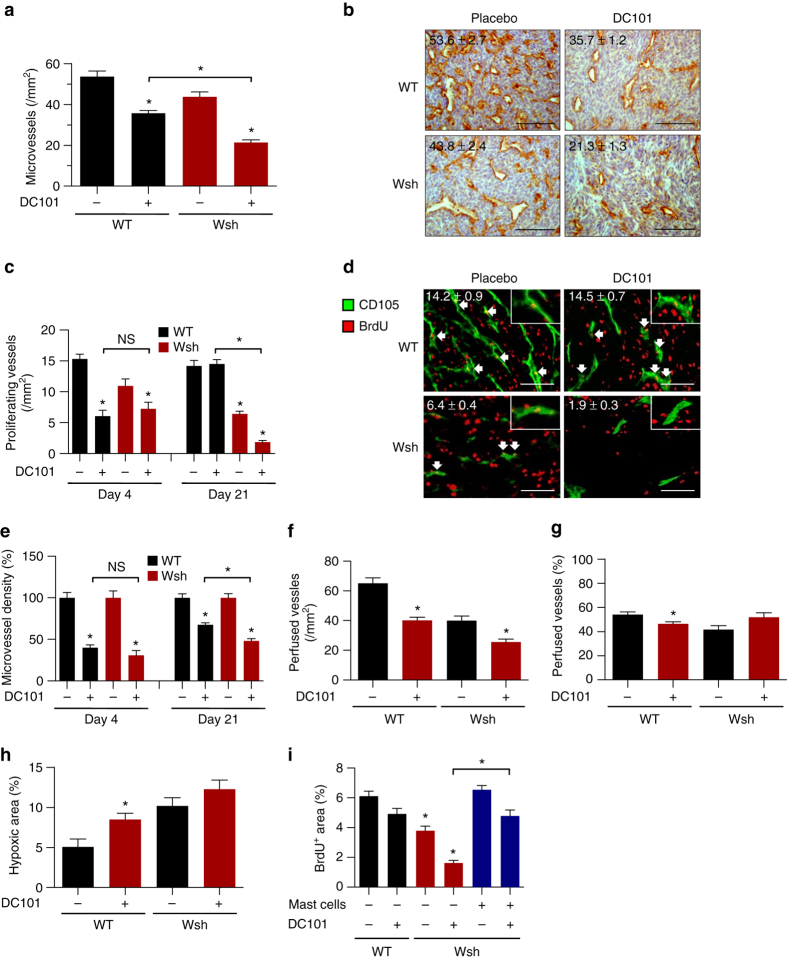
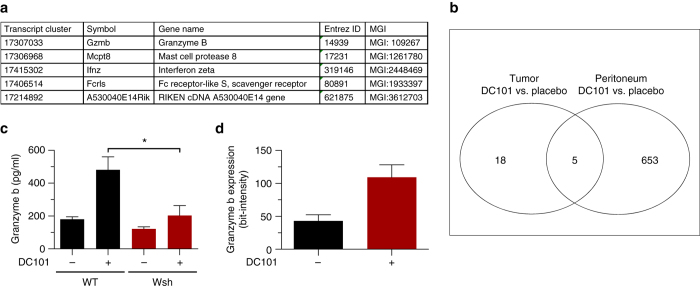
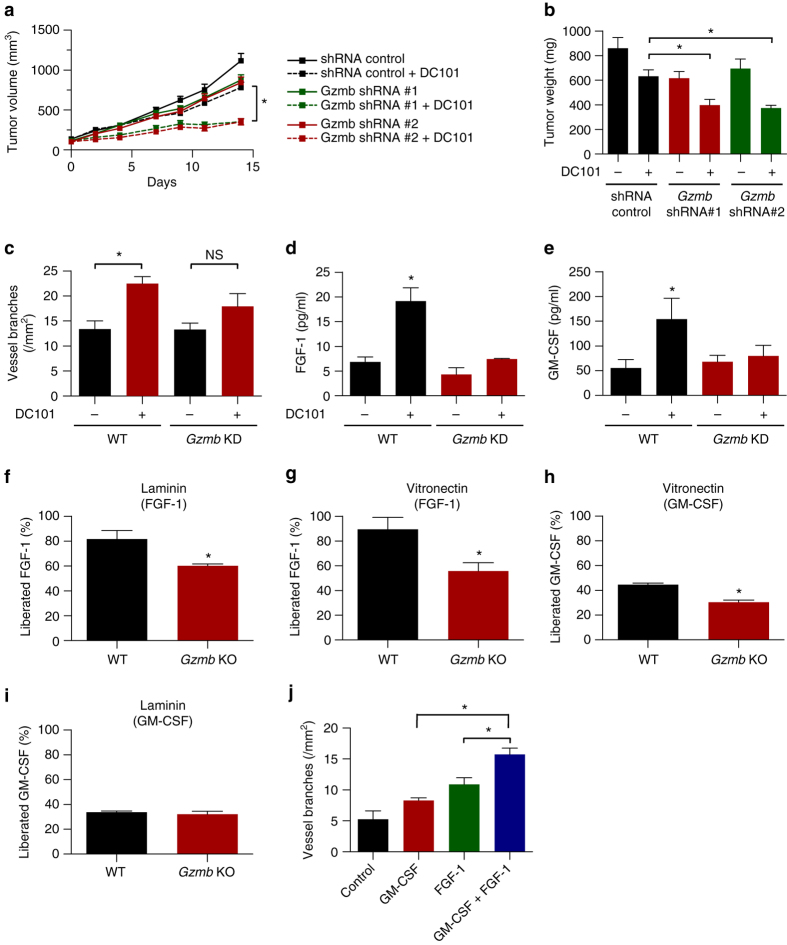
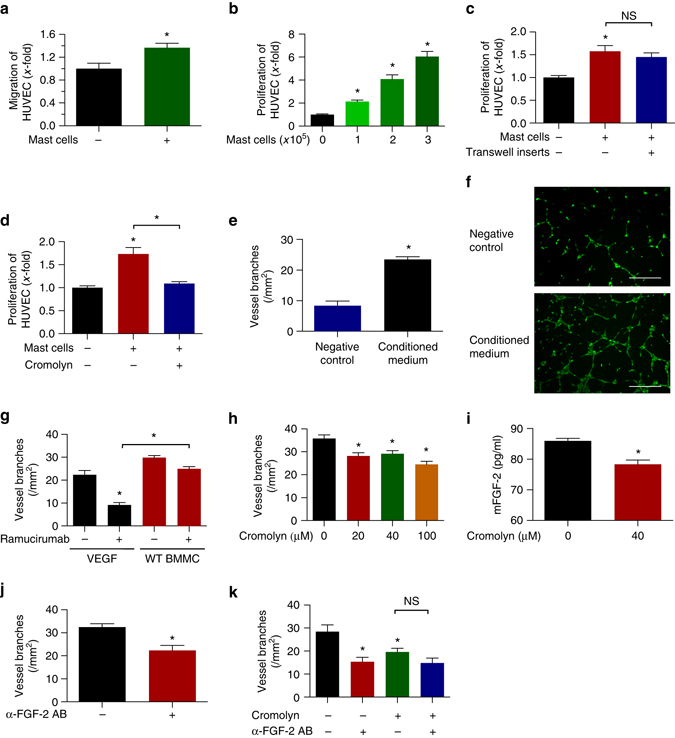
Resistance towards VEGF-centered anti-angiogenic therapy still represents a substantial clinical challenge. We report here that mast cells alter the proliferative and organizational state of endothelial cells which reduces the efficacy of anti-angiogenic therapy. Consequently, absence of mast cells sensitizes tumor vessels for anti-angiogenic therapy in different tumor models. Mechanistically, anti-angiogenic therapy only initially reduces tumor vessel proliferation, however, this treatment effect was abrogated over time as a result of mast cell-mediated restimulation of angiogenesis. We show that mast cells secrete increased amounts of granzyme b upon therapy, which mobilizes pro-angiogenic laminin- and vitronectin-bound FGF-1 and GM-CSF from the tumor matrix. In addition, mast cells also diminish efficacy of anti-angiogenic therapy by secretion of FGF-2. These pro-angiogenic factors act beside the targeted VEGFA-VEGFR2-axis and reinduce endothelial cell proliferation and angiogenesis despite the presence of anti-angiogenic therapy. Importantly, inhibition of mast cell degranulation with cromolyn is able to improve efficacy of anti-angiogenic therapy. Thus, concomitant mast cell-targeting might lead to improved efficacy of anti-angiogenic therapy.Resistance towards VEGF-centered anti-angiogenic therapy is an important clinical challenge. Here, the authors show that mast cells mediate resistance to anti-angiogenetic inhibitors by altering the proliferative and organizational state of endothelial cells through mobilization of FGF-1 and GM-CSF from the tumor matrix and secretion of FGF-2.
对以VEGF为中心的抗血管生成疗法产生耐药性仍然是一个重大的临床挑战。我们在此报告,肥大细胞会改变内皮细胞的增殖和组织状态,从而降低抗血管生成疗法的疗效。因此,在不同的肿瘤模型中,缺乏肥大细胞会使肿瘤血管对抗血管生成疗法更加敏感。从机制上讲,抗血管生成疗法最初仅能降低肿瘤血管的增殖,然而,随着时间的推移,由于肥大细胞介导的血管生成再刺激,这种治疗效果会被消除。我们发现,肥大细胞在治疗后会分泌更多的颗粒酶b,从而从肿瘤基质中动员与促血管生成的层粘连蛋白和玻连蛋白结合的FGF-1和GM-CSF。此外,肥大细胞还通过分泌FGF-2降低抗血管生成疗法的疗效。尽管存在抗血管生成疗法,但这些促血管生成因子在靶向的VEGFA-VEGFR2轴之外发挥作用,重新诱导内皮细胞增殖和血管生成。重要的是,用色甘酸抑制肥大细胞脱颗粒能够提高抗血管生成疗法的疗效。因此,同时靶向肥大细胞可能会提高抗血管生成疗法的疗效。对以VEGF为中心的抗血管生成疗法产生耐药性是一项重要的临床挑战。在此,作者表明肥大细胞通过从肿瘤基质中动员FGF-1和GM-CSF以及分泌FGF-2来改变内皮细胞的增殖和组织状态,从而介导对抗血管生成抑制剂的耐药性。