Nikookar Seyed Hassan, Fazeli-Dinan Mahmoud, Azari-Hamidian Shahyad, Mousavinasab Seyed Nouraddin, Aarabi Mohsen, Ziapour Seyyed Payman, Esfandyari Yahya, Enayati Ahmadali
Student Research Committee, Department of Medical Entomology and Vector Control, School of Public Health and Health Sciences Research Center, Mazandaran University of Medical Sciences, Sari, Iran.
Assistant Professor, Department of Medical Entomology and Vector Control, School of Public Health and Health Sciences Research Center, Mazandaran University of Medical Science, Sari, Iran.
PLoS Negl Trop Dis. 2017 Aug 18;11(8):e0005835. doi: 10.1371/journal.pntd.0005835. eCollection 2017 Aug.
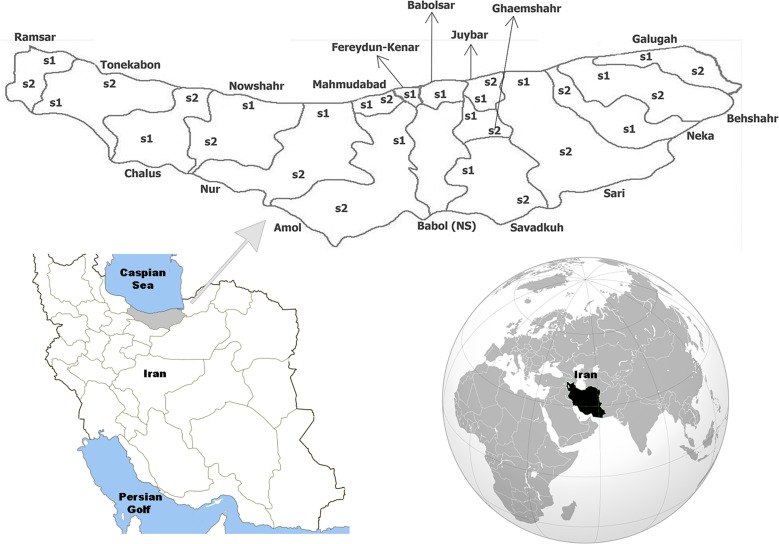
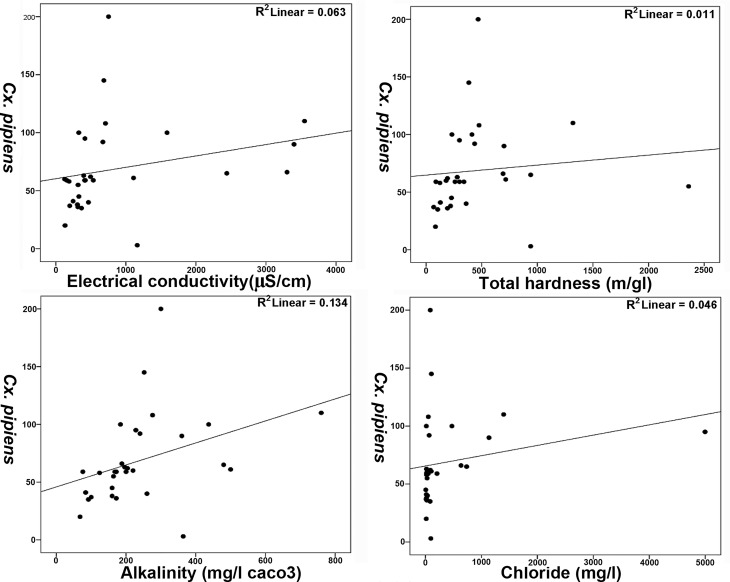
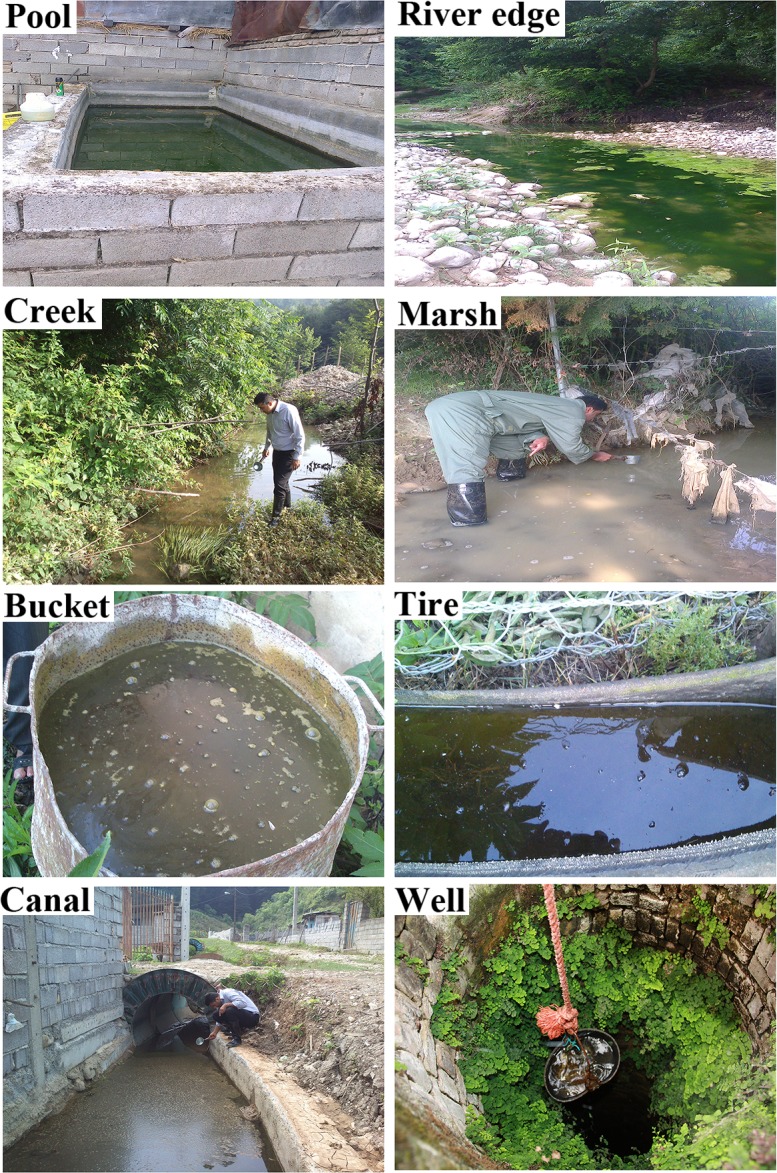
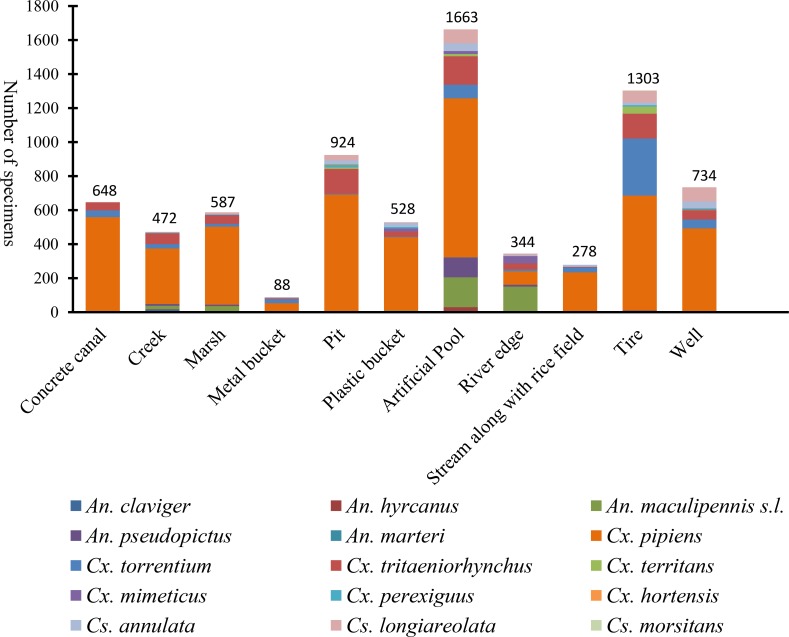
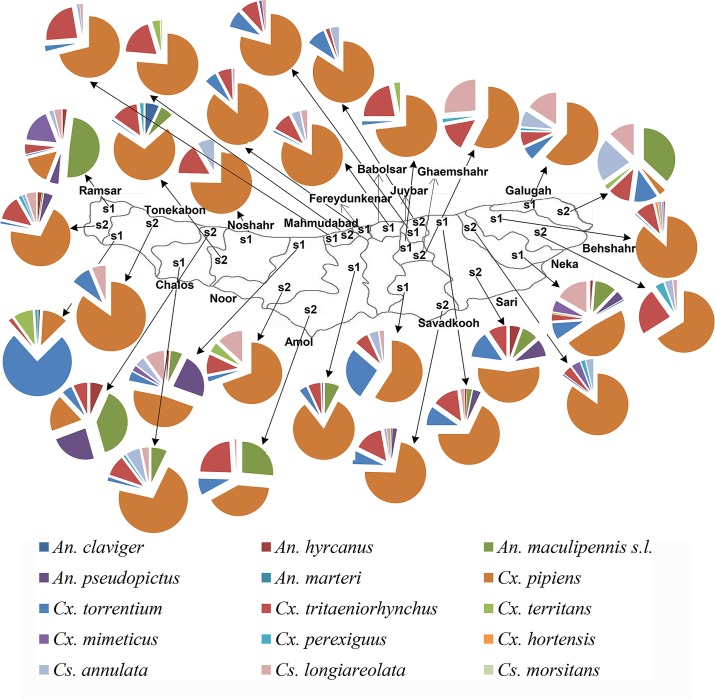
Characteristics of mosquito larval habitats are important in determining whether they can survive and successfully complete their developmental stages. Therefore, data on the ecological factors affecting mosquito density and abundance especially the physicochemical properties of water of their breeding sites, can possibly be helpful in implementing larval management programs. Mosquito larvae were collected using a standard 350 ml dipper from fixed habitats including: artificial pool, river edge, creek and etc, in 30 villages of 16 counties from May-December 2014. Water samples were collected during larval collection and temperature (°C), acidity (pH), turbidity (NTU), electrical conductivity (μS/cm), alkalinity (mg/l CaCO3), total hardness (mg/l), nitrate (mg/l), chloride (mg/l), phosphate (mg/l) and sulphate (mg/l) were measured using standard methods. Spearman correlation coefficient, Kruskal-Wallis test of nonparametric analysis, Chi-square (χ2) analysis, regression analysis and C8 interspecific correlation coefficient were used for data analysis. A total of 7,566 mosquito larvae belonging to 15 species representing three genera were collected from fixed larval breeding places. Culex pipiens was the dominant species except in four villages where An. maculipennis s.l. and Cx. torrentium were predominant. There was a significant positive correlation between the density of Cx. pipiens and electrical conductivity, alkalinity, total hardness and chloride, whereas no significant negative correlation was observed between physicochemical factors and larval density. The highest interspecific association of up to 0.596 was observed between An. maculipennis s.l/An. pseudopictus followed by up to 0.435 between An. maculipennis s.l/An. hyrcanus and An. hyrcanus/An. pseudopictus. The correlations observed between physicochemical factors and larval density, can possibly confirm the effect of these parameters on the breeding activities of mosquitoes, and may be indicative of the presence of certain mosquito fauna in a given region.
蚊虫幼虫栖息地的特征对于确定它们能否生存并成功完成发育阶段至关重要。因此,有关影响蚊虫密度和数量的生态因素的数据,尤其是其繁殖场所水体的理化性质,可能有助于实施幼虫管理计划。2014年5月至12月期间,在16个县的30个村庄中,使用标准的350毫升水勺从包括人工水池、河边、小溪等固定栖息地采集蚊虫幼虫。在采集幼虫期间采集水样,并使用标准方法测量温度(℃)、酸度(pH值)、浊度(NTU)、电导率(μS/cm)、碱度(mg/l碳酸钙)、总硬度(mg/l)、硝酸盐(mg/l)、氯化物(mg/l)、磷酸盐(mg/l)和硫酸盐(mg/l)。数据分析采用Spearman相关系数、非参数分析的Kruskal-Wallis检验、卡方(χ2)分析、回归分析和C8种间相关系数。从固定的幼虫繁殖地共采集到7566只属于3个属的15个物种的蚊虫幼虫。除了4个村庄中淡色库蚊是优势种外,在这4个村庄中,嗜人按蚊复合组和溪流库蚊是优势种。淡色库蚊的密度与电导率、碱度、总硬度和氯化物之间存在显著正相关,而理化因素与幼虫密度之间未观察到显著负相关。在嗜人按蚊复合组/伪杂鳞库蚊之间观察到最高的种间关联度达0.596,其次是嗜人按蚊复合组/赫坎按蚊和赫坎按蚊/伪杂鳞库蚊之间分别高达0.435。理化因素与幼虫密度之间的相关性可能证实了这些参数对蚊虫繁殖活动的影响,并可能表明特定区域存在某些蚊虫种类。