Lai Fang-Yu, Tu Po-An, Ding Shih-Torng, Lin Min-Jung, Chang Shen-Chang, Lin En-Chung, Lo Ling-Ling, Wang Pei-Hwa
Department of Animal Science and Technology, College of Bioresources and Agriculture, National Taiwan University, Taipei 10672, Taiwan.
Hsinchu Branch, Livestock Research Institute, Council of Agriculture, Executive Yuan, Miao-li County 36848, Taiwan.
Asian-Australas J Anim Sci. 2018 Feb;31(2):167-179. doi: 10.5713/ajas.17.0224. Epub 2017 Aug 16.
The aim of this study was to create a set of microsatellite markers with high polymorphism for the genetic monitoring and genetic structure analysis of local goose populations.
Novel microsatellite markers were isolated from the genomic DNA of white Roman geese using short tandem repeated probes. The DNA segments, including short tandem repeats, were tested for their variability among four populations of geese from the Changhua Animal Propagation Station (CAPS). The selected microsatellite markers could then be used to monitor genetic variability and study the genetic structures of geese from local geese farms.
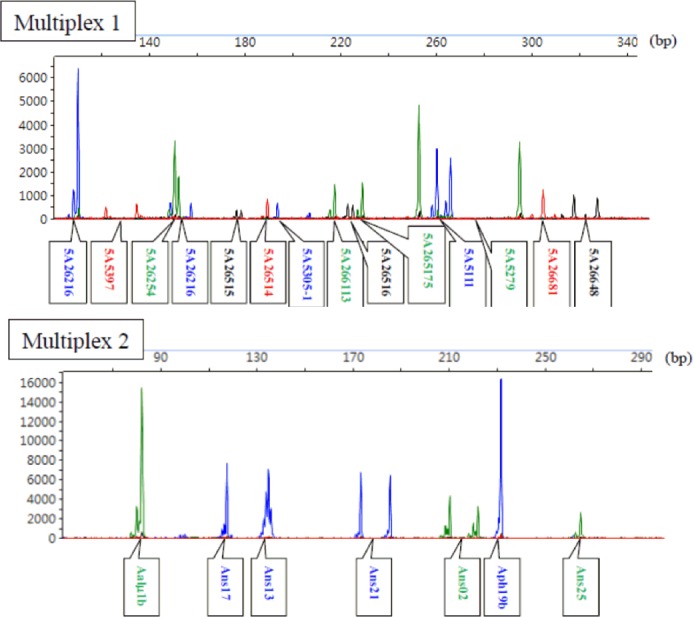
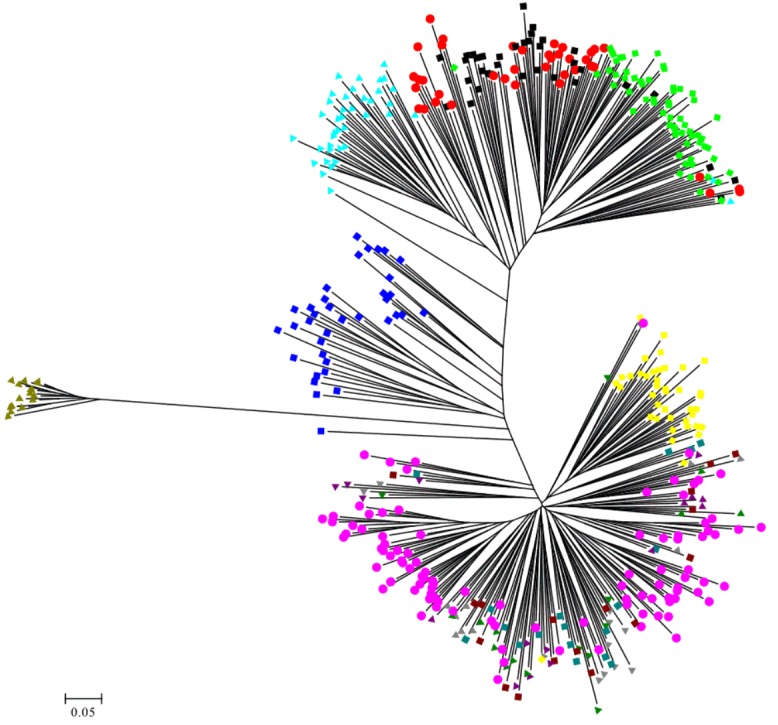
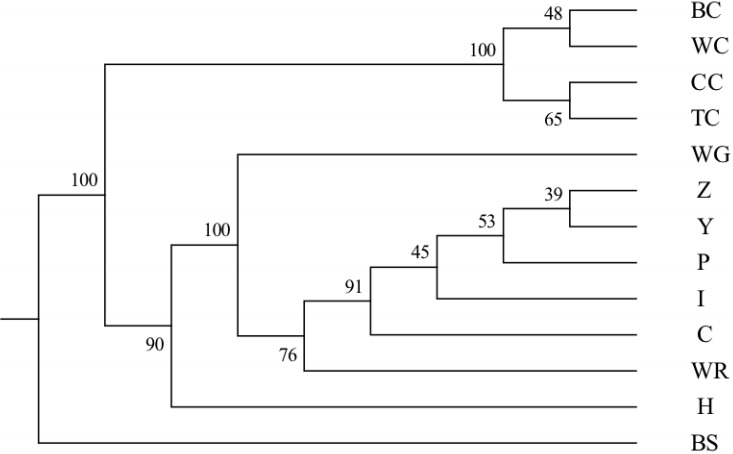
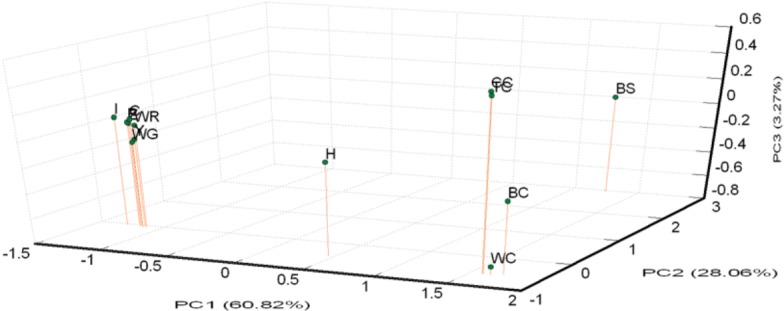
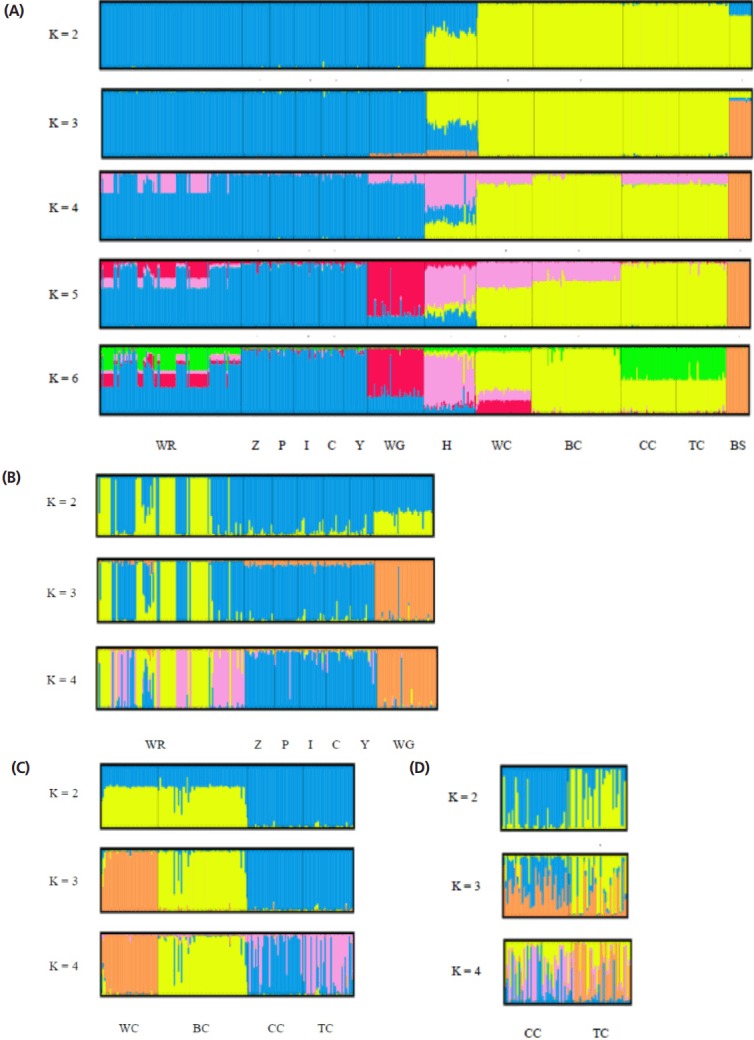
14 novel microsatellite loci were isolated. In addition to seven known loci, two multiplex sets were constructed for the detection of genetic variations in geese populations. The average of allele number, the effective number of alleles, the observed heterozygosity, the expected heterozygosity, and the polymorphism information content were 11.09, 5.145, 0.499, 0.745, and 0.705, respectively. The results of analysis of molecular variance and principal component analysis indicated a contracting white Roman cluster and a spreading Chinese cluster. In white Roman populations, the CAPS populations were depleted to roughly two clusters when K was set equal to 6 in the Bayesian cluster analysis. The founders of private farm populations had a similar genetic structure. Among the Chinese geese populations, the CAPS populations and private populations represented different clads of the phylogenetic tree and individuals from the private populations had uneven genetic characteristics according to various analyses.
Based on this study's analyses, we suggest that the CAPS should institute a proper breeding strategy for white Roman geese to avoid further clustering. In addition, for preservation and stable quality, the Chinese geese in the CAPS and the aforementioned proper breeding scheme should be introduced to geese breeders.
本研究旨在创建一组具有高多态性的微卫星标记,用于本地鹅种群的遗传监测和遗传结构分析。
使用短串联重复探针从白罗曼鹅的基因组DNA中分离新的微卫星标记。对包括短串联重复序列在内的DNA片段在彰化动物繁殖场(CAPS)的四个鹅种群中的变异性进行了测试。然后可以使用选定的微卫星标记来监测遗传变异性并研究本地鹅场鹅的遗传结构。
分离出14个新的微卫星位点。除了7个已知位点外,还构建了两个多重集用于检测鹅种群中的遗传变异。等位基因数的平均值、有效等位基因数、观察到的杂合度、预期杂合度和多态性信息含量分别为11.09、5.145、0.499、0.745和0.705。分子方差分析和主成分分析结果表明,白罗曼集群收缩,中国集群扩散。在白罗曼种群中,当贝叶斯聚类分析中K设为6时,CAPS种群大致分为两个集群。私人农场种群的创始人具有相似的遗传结构。在中国鹅种群中,CAPS种群和私人种群代表了系统发育树的不同分支,根据各种分析,私人种群的个体具有不均匀的遗传特征。
基于本研究的分析,我们建议CAPS应为白罗曼鹅制定适当的育种策略,以避免进一步聚类。此外,为了保存和稳定品质,应将CAPS中的中国鹅和上述适当的育种方案引入鹅养殖者。