González-Chomón Clara, Concheiro Angel, Alvarez-Lorenzo Carmen
Departamento de Farmacia y Tecnología Farmacéutica, Facultad de Farmacia, Universidad de Santiago de Compostela, 15782-Santiago de Compostela, Spain.
Materials (Basel). 2011 Nov 1;4(11):1927-1940. doi: 10.3390/ma4111927.
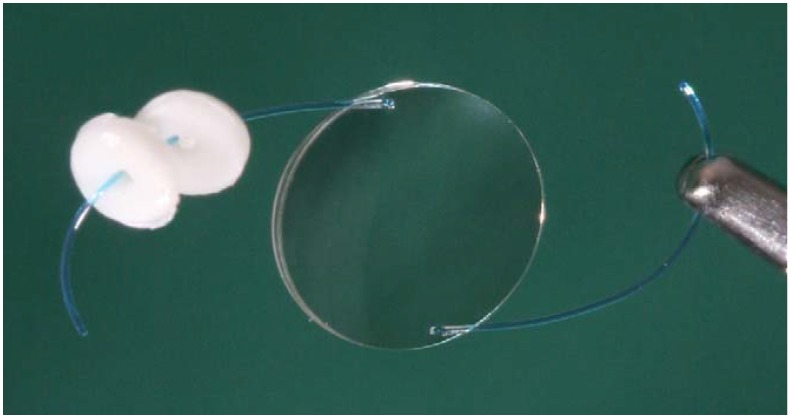
Notable advances in materials science and in surgical techniques make the management of cataract by replacement of the opaque crystalline with an intraocular lens (IOL), one of the most cost-effective interventions in current healthcare. The usefulness and safety of IOLs can be enhanced if they are endowed with the ability to load and to sustain drug release in the implantation site. Drug-eluting IOLs can prevent infections and untoward reactions of eye tissues (which lead to opacification) and also can act as drug depots for treatment of several other ocular pathologies. Such a myriad of therapeutic possibilities has prompted the design of drug-IOL combination products. Several approaches are under study, namely combination of the IOL with an insert in a single device, soaking in drug solutions, impregnation using supercritical fluids, coating with drug/polymer layers, and covalent grafting of the drug. The advantages/limitations of each technique are discussed in the present review on selected examples. Although more in vivo data are required, the information already available proves the interest of some approaches in ocular therapeutics.
材料科学和手术技术的显著进步使得通过用人工晶状体(IOL)替换不透明晶状体来治疗白内障成为当前医疗保健中最具成本效益的干预措施之一。如果人工晶状体具备在植入部位加载和持续释放药物的能力,那么其效用和安全性将会提高。药物洗脱人工晶状体可以预防感染和眼部组织的不良反应(这会导致浑浊),还可以作为治疗其他几种眼部疾病的药物储存库。如此众多的治疗可能性促使人们设计药物与人工晶状体的组合产品。目前正在研究几种方法,即将人工晶状体与单个装置中的插入物相结合、浸泡在药物溶液中、使用超临界流体进行浸渍、用药物/聚合物层进行涂层以及药物的共价接枝。本综述通过选定的示例讨论了每种技术的优点/局限性。尽管还需要更多的体内数据,但已有的信息证明了某些方法在眼部治疗中的价值。