Scarano Antonio, Lorusso Felice, Staiti Giorgio, Sinjari Bruna, Tampieri Anna, Mortellaro Carmen
Department of Medical, Oral and Biotechnological Sciences and CeSi-MeT, University of Chieti-PescaraChieti, Italy.
Private PracticeTorino, Italy.
Front Physiol. 2017 Aug 3;8:565. doi: 10.3389/fphys.2017.00565. eCollection 2017.
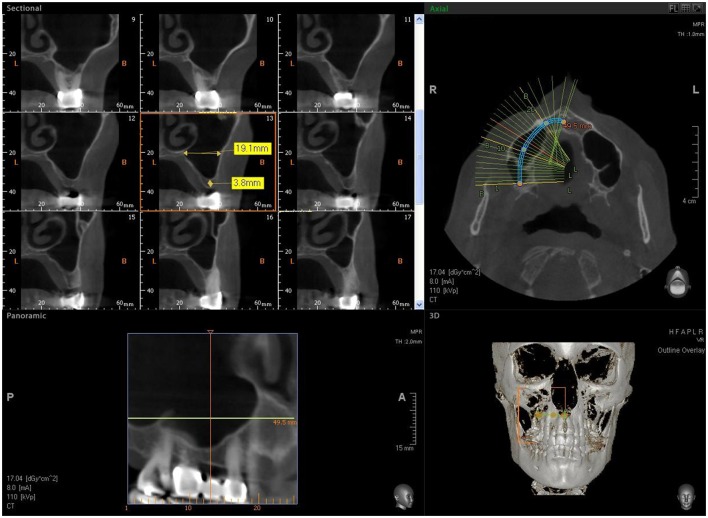
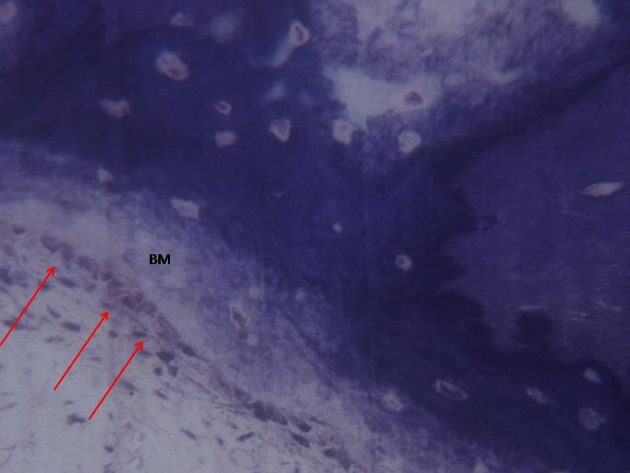
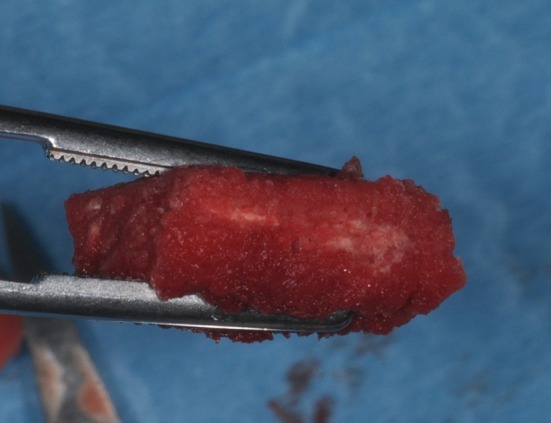
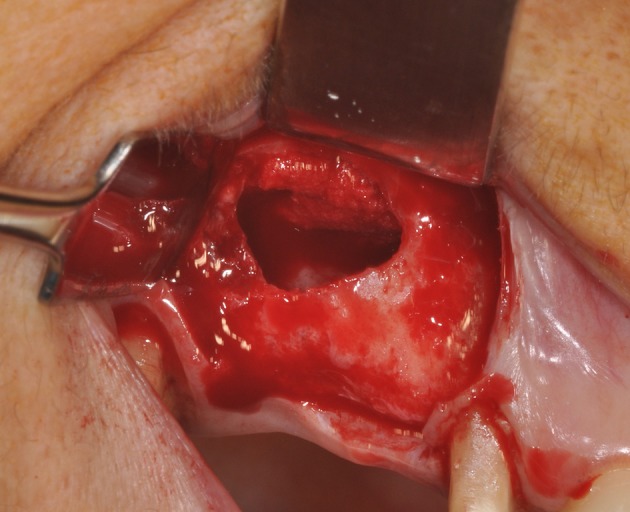
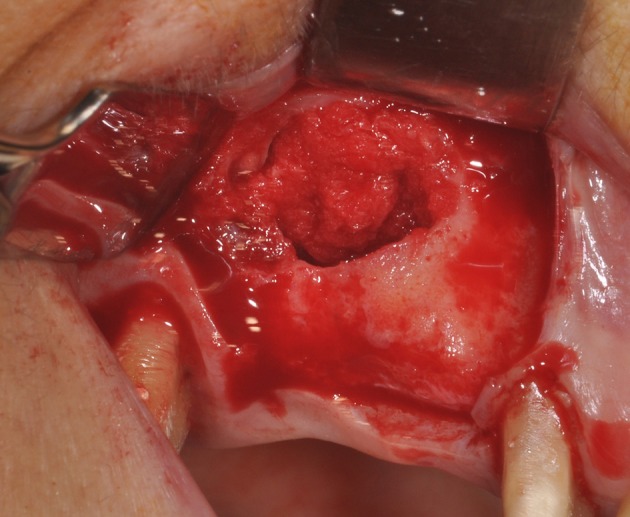
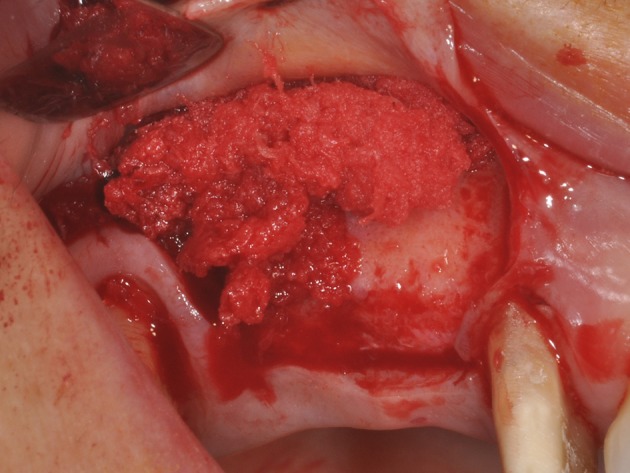
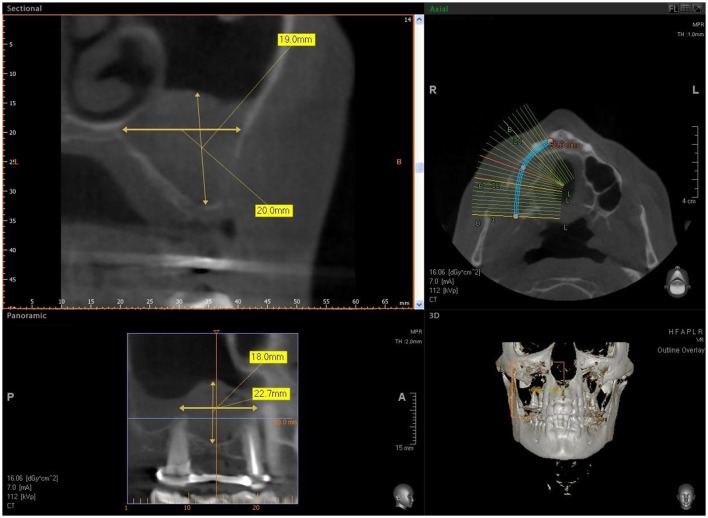
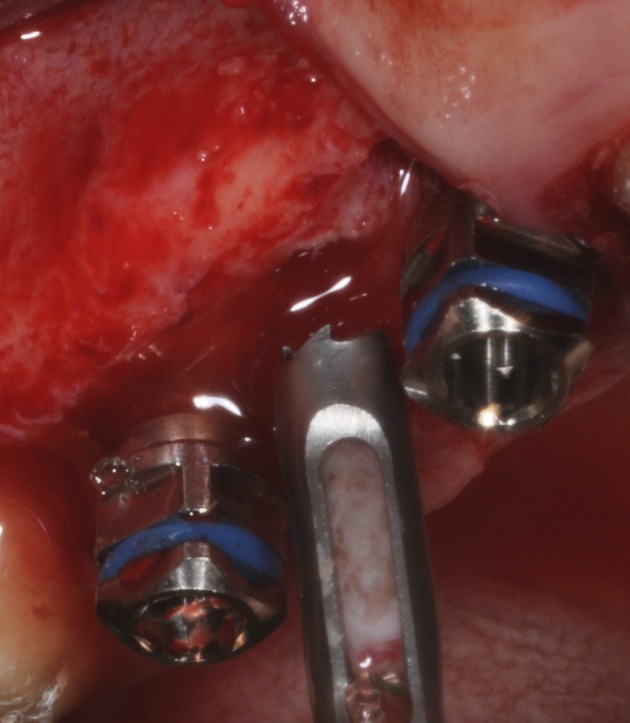
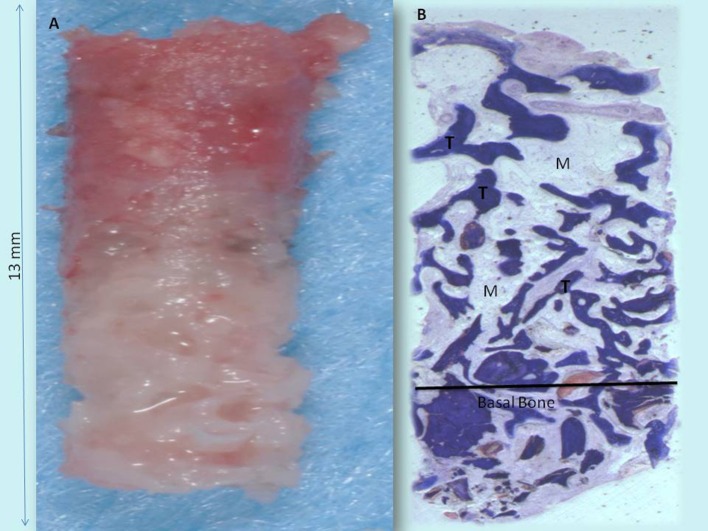
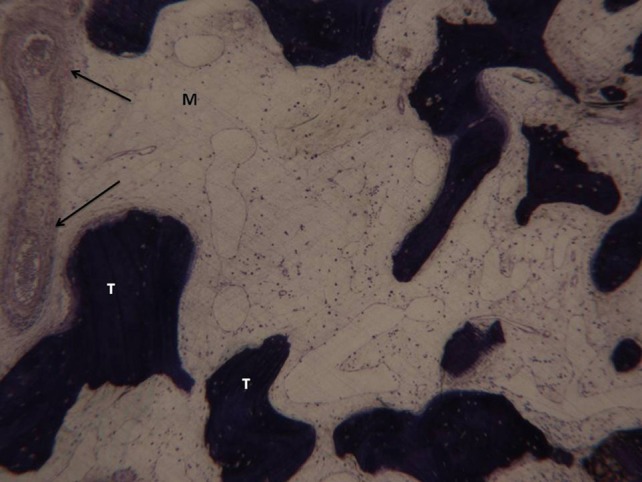
Many bone substitutes have been applied for sinus regeneration procedures, such as autogenous bone, inorganic bovine bone, porous and resorbable hydroxyapatite, tricalcium phosphate, bioactive glass, and blood clots. The aim of the present study was a tomographic, histological and histomorphometrical evaluation in humans, of specimens retrieved from sinuses augmented with MgHA/collagen-based scaffolds, after a healing period of 6 months. Eleven healthy patients and a total of 15 sinuses were included in this study. The maxillary sinuses were filled with commercial MgHA/collagen-based scaffolds (RegenOss) with a porous three-dimensional (3D) structure (Fin-Ceramica Faenza S.p.A., Faenza, Italy). These grafts have a composite design, that replicate the organization of bone structure, obtained by a technique in which a specific hybrid organic-inorganic composite is spontaneously built by a biological mechanism. The CBCT scans were done before the procedure, after the surgical protocol (T1), and 6 months after sinus surgery (T2) for implantology. Bone specimens were stored in 10% formalin solution, embedded in a glycolmethacrylate resin and sectioned by a high-precision diamond disc. Histologic and histomorphometric analysis were carried out to evaluate the graft reabsorption and bone healing. The mean volume after graft elevation, calculated for each of the 15 sinuses, was 2,906 mm in the immediate postoperative period (5-7 days), ranging from 2,148.8 to 3,146.4 mm. In the late postoperative period (6 months) it was 2,806.7 mm, ranging from 2,010.9 to 3,008.9 mm. The sinuses were completely healed and no residual MgHA/collagen-based scaffolds were visible. Osteoblasts appeared actively secreting bone matrix and marrow spaces contained moderate numbers of stromal cells and vascular network. Osteoblasts were observed actively secreting osteoid matrix. The tissues present in the samples were composed of 1.9 ± 1.9% of lamellar bone, 36 ± 1% of woven bone and 58 ± 3.8% of marrow spaces. Mg-MgHA/collagen-based scaffolds can successfully be used for sinus augmentation procedures.
许多骨替代物已应用于鼻窦再生手术,如自体骨、无机牛骨、多孔可吸收羟基磷灰石、磷酸三钙、生物活性玻璃和血凝块。本研究的目的是对6个月愈合期后从用基于MgHA/胶原蛋白的支架进行增容的鼻窦中取出的标本进行人体层面摄影、组织学和组织形态计量学评估。本研究纳入了11名健康患者和总共15个鼻窦。上颌窦用具有多孔三维(3D)结构的商用基于MgHA/胶原蛋白的支架(RegenOss)填充(意大利法恩扎的Fin-Ceramica Faenza S.p.A.)。这些移植物采用复合设计,通过一种特定的有机-无机杂化复合材料由生物机制自发构建的技术来复制骨结构的组织。在手术前、手术方案实施后(T1)以及鼻窦手术后6个月(T2)进行种植学的CBCT扫描。骨标本储存在10%福尔马林溶液中,包埋在甲基丙烯酸乙二醇酯树脂中,并用高精度金刚石盘切片。进行组织学和组织形态计量学分析以评估移植物的吸收和骨愈合情况。为15个鼻窦中的每一个计算的移植物抬高后的平均体积在术后即刻(5 - 7天)为2906立方毫米,范围为2148.8至3146.4立方毫米。在术后后期(6个月)为2806.7立方毫米,范围为2010.9至3008.9立方毫米。鼻窦完全愈合,未见残留的基于MgHA/胶原蛋白的支架。成骨细胞活跃地分泌骨基质,骨髓腔中含有中等数量的基质细胞和血管网络。观察到成骨细胞活跃地分泌类骨质基质。样本中存在的组织由1.9±1.9%的板层骨、36±1%的编织骨和58±3.8%的骨髓腔组成。基于Mg - MgHA/胶原蛋白的支架可成功用于鼻窦增容手术。