NIZO Food Research BV, Ede, The Netherlands.
Departments of Pediatrics and Medical Microbiology and Immunology, St. Antonius Hospital, Nieuwegein, The Netherlands.
Sci Rep. 2017 Aug 21;7(1):8327. doi: 10.1038/s41598-017-08268-4.
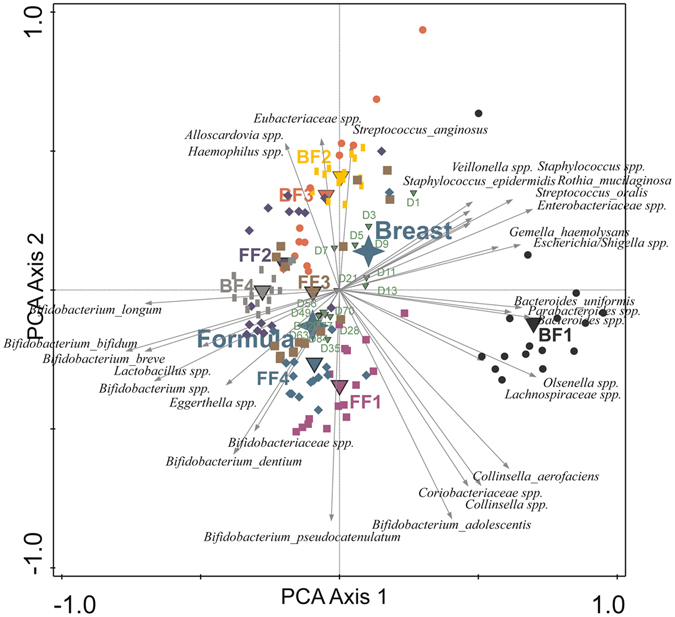
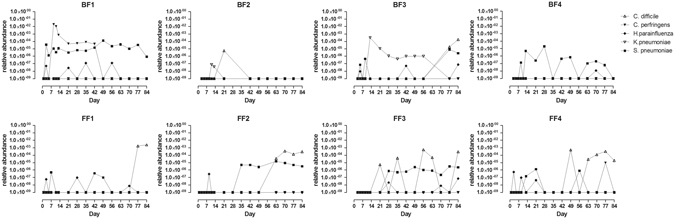
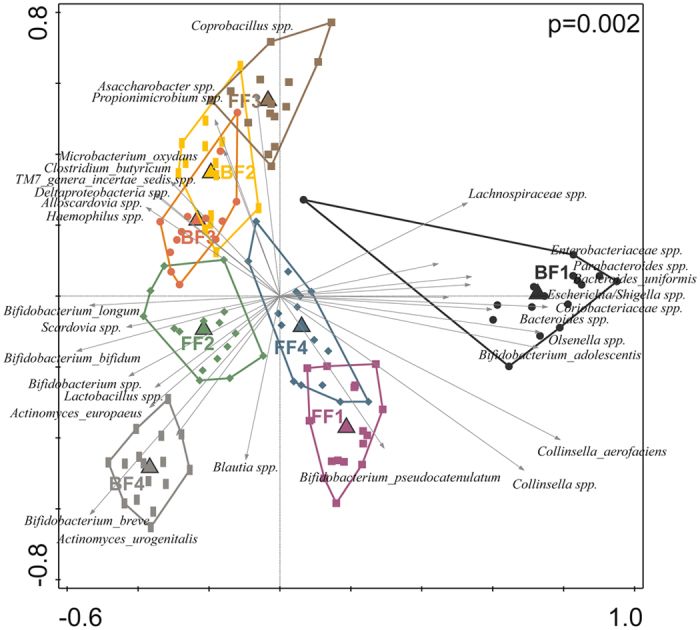
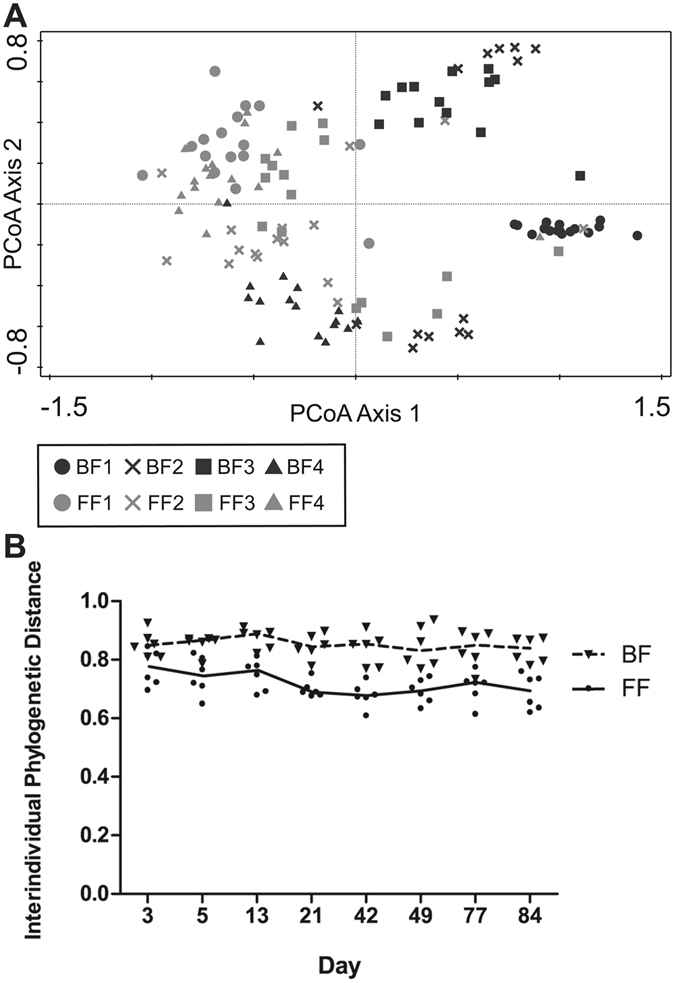
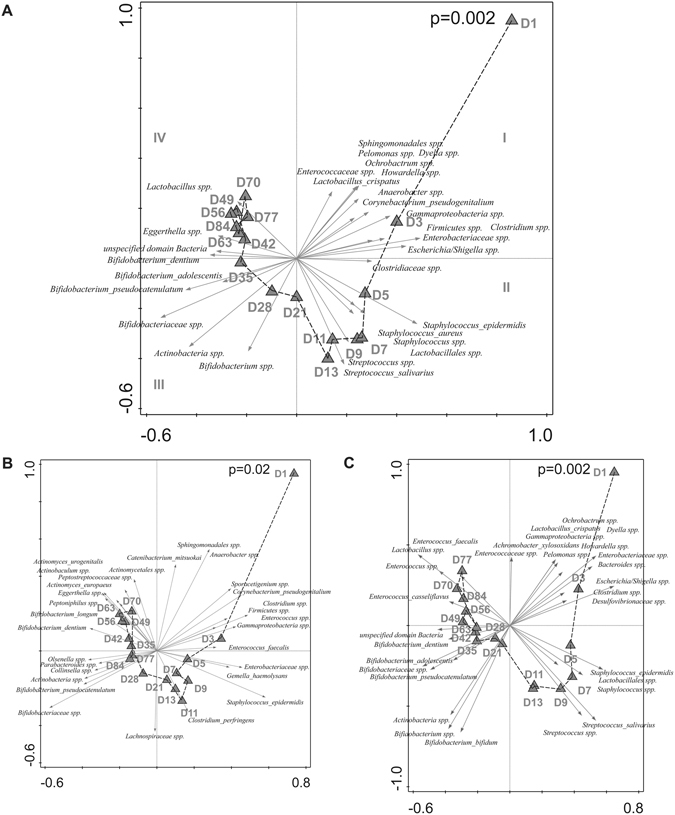
The establishment of the infant gut microbiota is a highly dynamic process dependent on extrinsic and intrinsic factors. We characterized the faecal microbiota of 4 breastfed infants and 4 formula-fed infants at 17 consecutive time points during the first 12 weeks of life. Microbiota composition was analysed by a combination of 16S rRNA gene sequencing and quantitative PCR (qPCR). In this dataset, individuality was a major driver of microbiota composition (P = 0.002) and was more pronounced in breastfed infants. A developmental signature could be distinguished, characterized by sequential colonisation of i) intrauterine/vaginal birth associated taxa, ii) skin derived taxa and other typical early colonisers such as Streptococcus and Enterobacteriaceae, iii) domination of Bifidobacteriaceae, and iv) the appearance of adultlike taxa, particularly species associated with Blautia, Eggerthella, and the potential pathobiont Clostridium difficile. Low abundance of potential pathogens was detected by 16S profiling and confirmed by qPCR. Incidence and dominance of skin and breast milk associated microbes were increased in the gut microbiome of breastfed infants compared to formula-fed infants. The approaches in this study indicate that microbiota development of breastfed and formula-fed infants proceeds according to similar developmental stages with microbiota signatures that include stage-specific species.
婴儿肠道微生物群的建立是一个高度动态的过程,依赖于外在和内在因素。我们在生命的前 12 周内,连续 17 次对 4 名母乳喂养的婴儿和 4 名配方奶喂养的婴儿的粪便微生物群进行了特征描述。通过 16S rRNA 基因测序和定量 PCR(qPCR)组合分析了微生物群落组成。在这个数据集,个体性是微生物群落组成的主要驱动因素(P=0.002),在母乳喂养的婴儿中更为明显。可以区分出一种发育特征,其特征为:i)定植于宫内/阴道相关的分类群;ii)定植于皮肤相关的分类群和其他典型的早期定植菌,如链球菌和肠杆菌科;iii)双歧杆菌科的主导地位;iv)出现成人样的分类群,特别是与布劳特氏菌、卵形拟杆菌和潜在的病原菌艰难梭菌相关的物种。通过 16S 分析可以检测到低丰度的潜在病原体,并通过 qPCR 进行确认。与配方奶喂养的婴儿相比,母乳喂养的婴儿肠道微生物群中皮肤和母乳相关微生物的发生率和优势度增加。本研究采用的方法表明,母乳喂养和配方奶喂养婴儿的肠道微生物群发育遵循类似的发育阶段,具有包括特定阶段物种的微生物特征。