Liechti Jonas I, Leventhal Gabriel E, Bonhoeffer Sebastian
Institute for Integrative Biology, ETH Zürich, Zürich, Switzerland.
Department of Civil and Environmental Engineering, Massachusetts Institute of Technology (MIT), Cambridge, Massachusetts, United States of America.
PLoS Comput Biol. 2017 Aug 21;13(8):e1005704. doi: 10.1371/journal.pcbi.1005704. eCollection 2017 Aug.
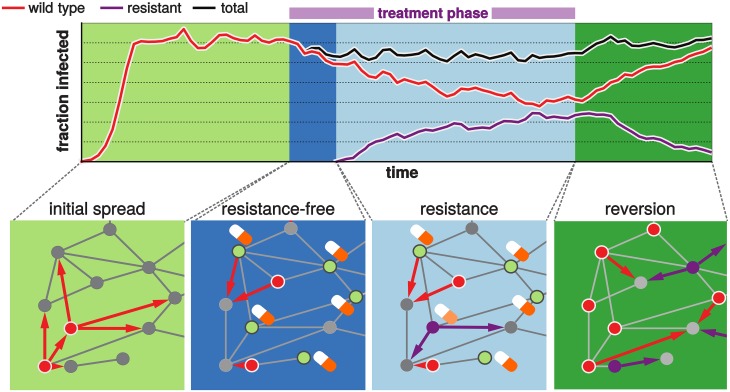
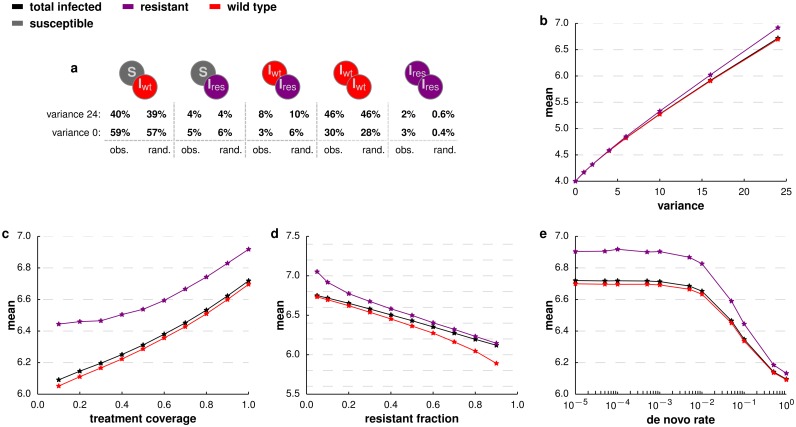
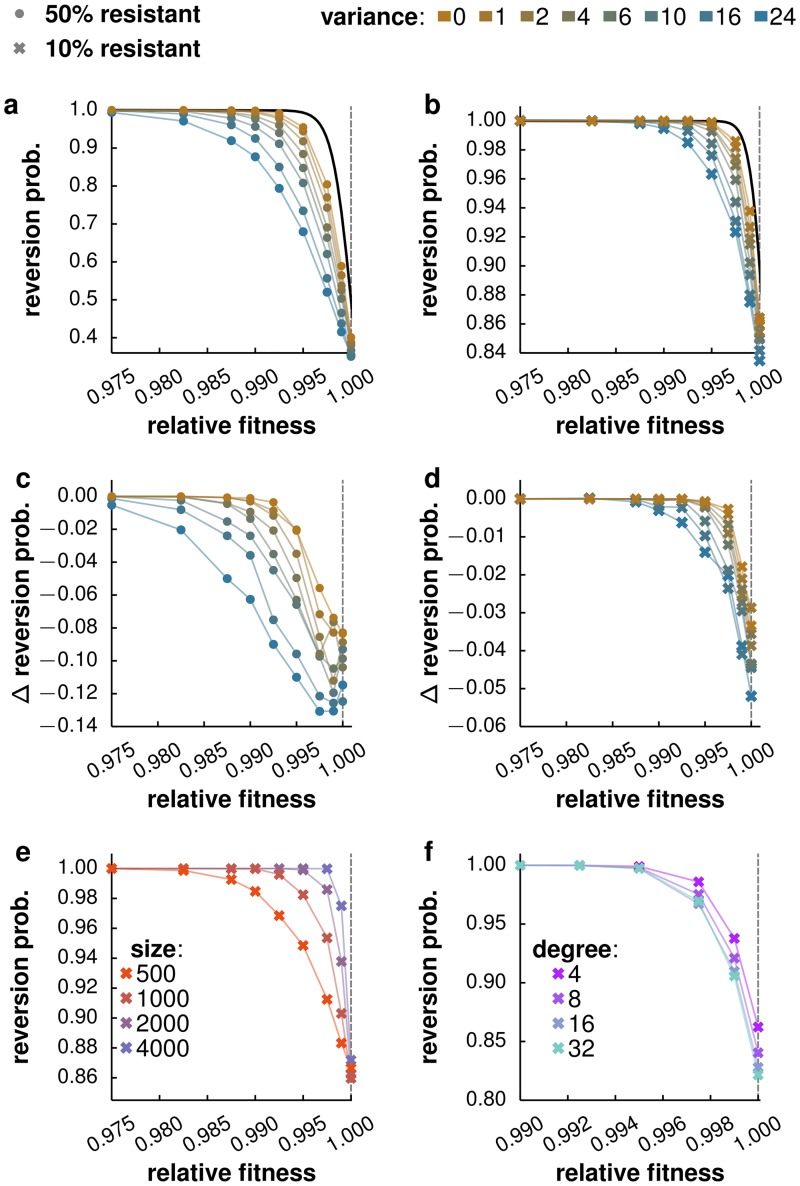
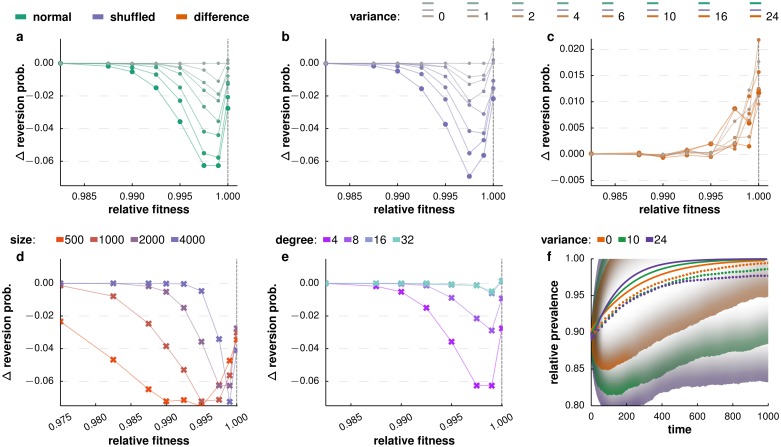
Intense use of antibiotics for the treatment of diseases such as tuberculosis, malaria, Staphylococcus aureus or gonorrhea has led to rapidly increasing population levels of drug resistance. This has generally necessitated a switch to new drugs and the discontinuation of older ones, after which resistance often only declines slowly or even persists indefinitely. These long-term effects are usually ascribed to low fitness costs of resistance in absence of the drug. Here we show that structure in the host population, in particular heterogeneity in number of contacts, also plays an important role in the reversion dynamics. Host contact structure acts both during the phase of intense treatment, leading to non-random distributions of the resistant strain among the infected population, and after the discontinuation of the drug, by affecting the competition dynamics resulting in a mitigation of fitness advantages. As a consequence, we observe both a lower rate of reversion and a lower probability that reversion to sensitivity on the population level occurs after treatment is stopped. Our simulations show that the impact of heterogeneity in the host structure is maximal in the biologically most plausible parameter range, namely when fitness costs of resistance are small.
在治疗诸如结核病、疟疾、金黄色葡萄球菌感染或淋病等疾病时大量使用抗生素,已导致耐药性在人群中的迅速上升。这通常需要更换新药并停用旧药,而在此之后,耐药性往往只会缓慢下降,甚至会无限期持续存在。这些长期影响通常归因于在无药物情况下耐药性的适应性成本较低。在此我们表明,宿主群体结构,尤其是接触数量的异质性,在耐药性逆转动态中也起着重要作用。宿主接触结构在强化治疗阶段发挥作用,导致耐药菌株在感染人群中呈非随机分布,并且在停药后,通过影响竞争动态,从而减轻适应性优势。因此,我们观察到耐药性逆转率较低,且在停药后群体水平上恢复敏感性的概率也较低。我们的模拟表明,宿主结构异质性的影响在生物学上最合理的参数范围内最大,即在耐药性适应性成本较小时。