Mishra Priyanka, Kumar Amit, Nagireddy Akshitha, Shukla Ashutosh K, Sundaresan Velusamy
Plant Biology and Systematics, CSIR-Central Institute of Medicinal and Aromatic Plants, Research Center, Bengaluru, Karnataka, India.
Biotechnology Division, CSIR-Central Institute of Medicinal and Aromatic Plants, Lucknow, Uttar Pradesh, India.
PLoS One. 2017 Aug 22;12(8):e0182836. doi: 10.1371/journal.pone.0182836. eCollection 2017.
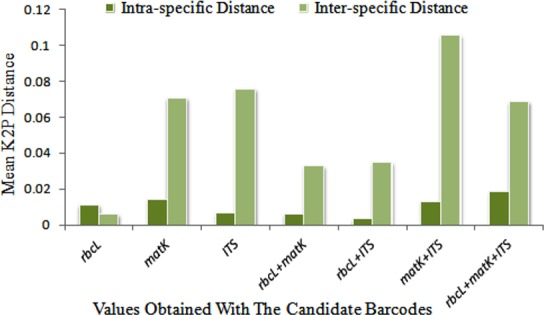
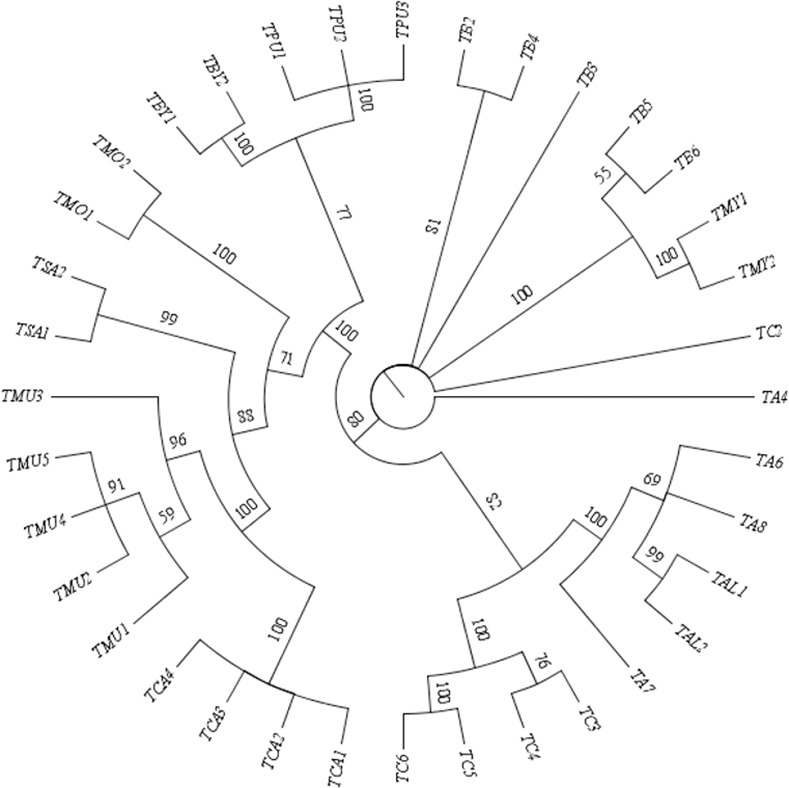
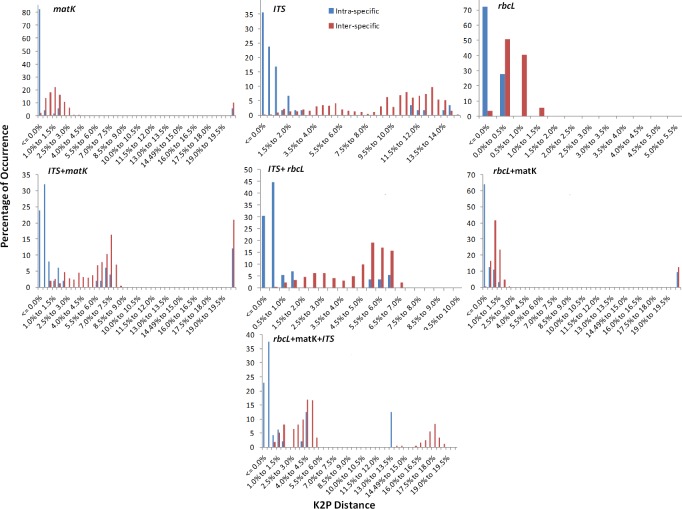
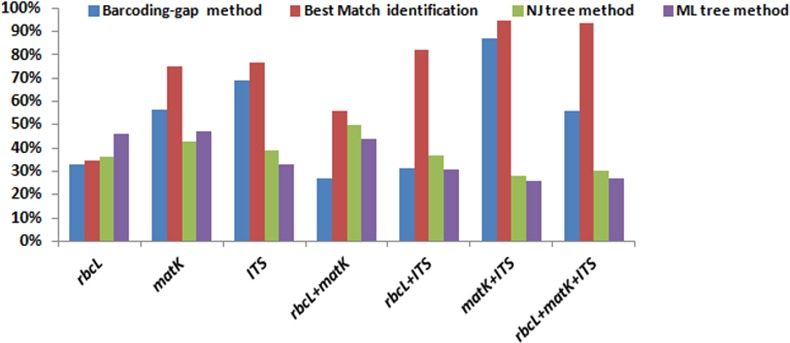
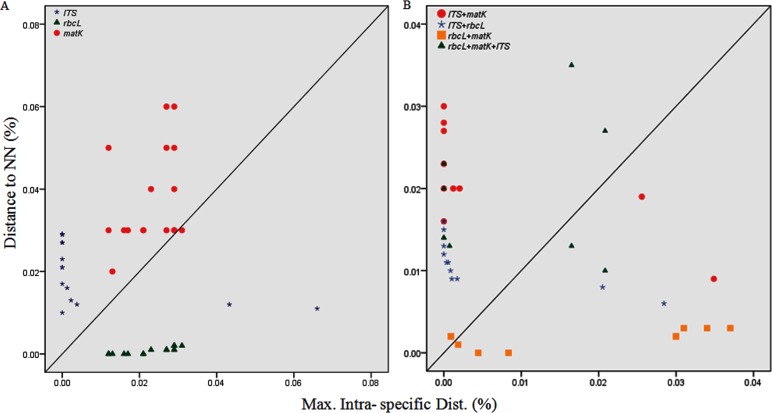
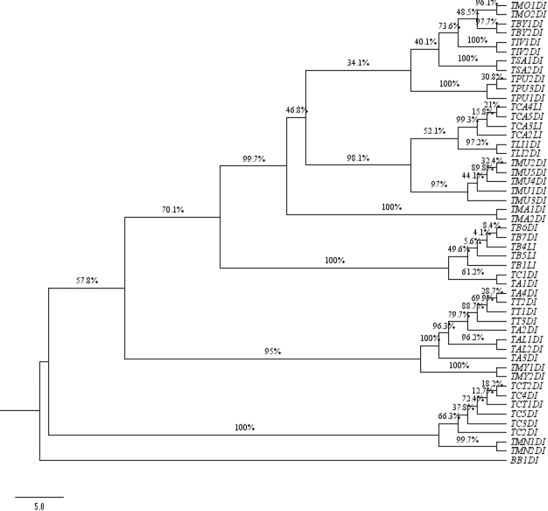
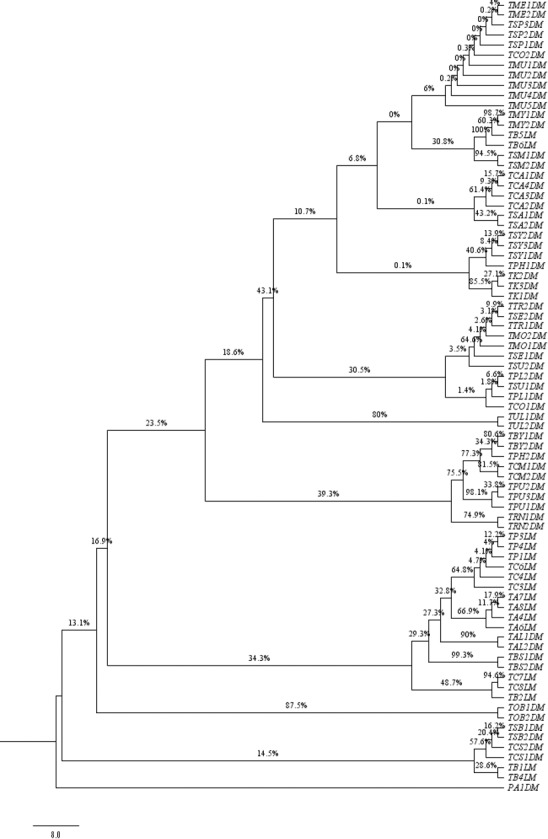
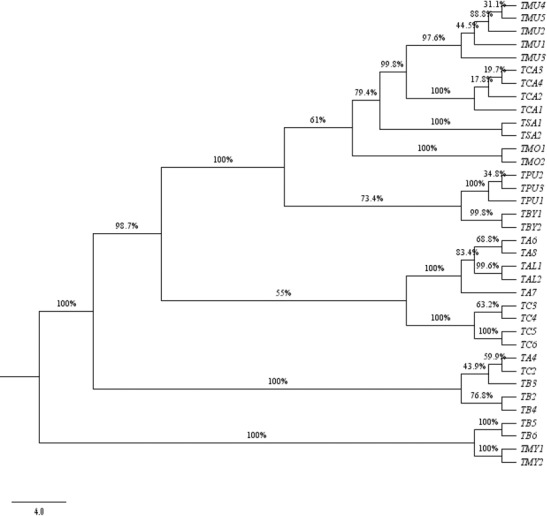
DNA barcoding is used as a universal tool for delimiting species boundaries in taxonomically challenging groups, with different plastid and nuclear regions (rbcL, matK, ITS and psbA-trnH) being recommended as primary DNA barcodes for plants. We evaluated the feasibility of using these regions in the species-rich genus Terminalia, which exhibits various overlapping morphotypes with pantropical distribution, owing to its complex taxonomy. Terminalia bellerica and T. chebula are ingredients of the famous Ayurvedic Rasayana formulation Triphala, used for detoxification and rejuvenation. High demand for extracted phytochemicals as well as the high trade value of several species renders mandatory the need for the correct identification of traded plant material. Three different analytical methods with single and multilocus barcoding regions were tested to develop a DNA barcode reference library from 222 individuals representing 41 Terminalia species. All the single barcodes tested had a lower discriminatory power than the multilocus regions, and the combination of matK+ITS had the highest resolution rate (94.44%). The average intra-specific variations (0.0188±0.0019) were less than the distance to the nearest neighbour (0.106±0.009) with matK and ITS. Distance-based Neighbour Joining analysis outperformed the character-based Maximum Parsimony method in the identification of traded species such as T. arjuna, T. chebula and T. tomentosa, which are prone to adulteration. rbcL was shown to be a highly conservative region with only 3.45% variability between all of the sequences. The recommended barcode combination, rbcL+matK, failed to perform in the genus Terminalia. Considering the complexity of resolution observed with single regions, the present study proposes the combination of matK+ITS as the most successful barcode in Terminalia.
DNA条形码被用作界定分类学上具有挑战性的类群中物种界限的通用工具,不同的质体和核区域(rbcL、matK、ITS和psbA-trnH)被推荐作为植物的主要DNA条形码。我们评估了在物种丰富的榄仁属中使用这些区域的可行性,该属由于其复杂的分类学,呈现出各种重叠的形态类型且分布于泛热带地区。诃子和余甘子是著名的阿育吠陀回春配方三果的成分,用于排毒和恢复活力。对提取的植物化学物质的高需求以及几种物种的高贸易价值使得正确识别贸易植物材料成为必要。测试了三种使用单一位点和多位点条形码区域的不同分析方法,以从代表41种榄仁属物种的222个个体中建立一个DNA条形码参考文库。所有测试的单一位点条形码的鉴别能力都低于多位点区域,matK+ITS的组合具有最高的分辨率(94.44%)。matK和ITS的种内平均变异(0.0188±0.0019)小于到最近邻种的距离(0.106±0.009)。在识别易掺假的贸易物种如阿江榄仁、诃子和绒毛诃子方面,基于距离的邻接法优于基于特征的最大简约法。rbcL被证明是一个高度保守的区域,所有序列之间的变异性仅为3.45%。推荐的条形码组合rbcL+matK在榄仁属中未能发挥作用。考虑到单一位点观察到的分辨率的复杂性,本研究提出matK+ITS的组合是榄仁属中最成功的条形码。