Dubey Lalit Kumar, Karempudi Praneeth, Luther Sanjiv A, Ludewig Burkhard, Harris Nicola L
Global Health Institute, School of Life Sciences, École Polytechnique Fédérale de Lausanne (EPFL), Lausanne, CH-1015, Switzerland.
Department of Biochemistry, University of Lausanne, Lausanne, CH-1066, Switzerland.
Nat Commun. 2017 Aug 28;8(1):367. doi: 10.1038/s41467-017-00504-9.
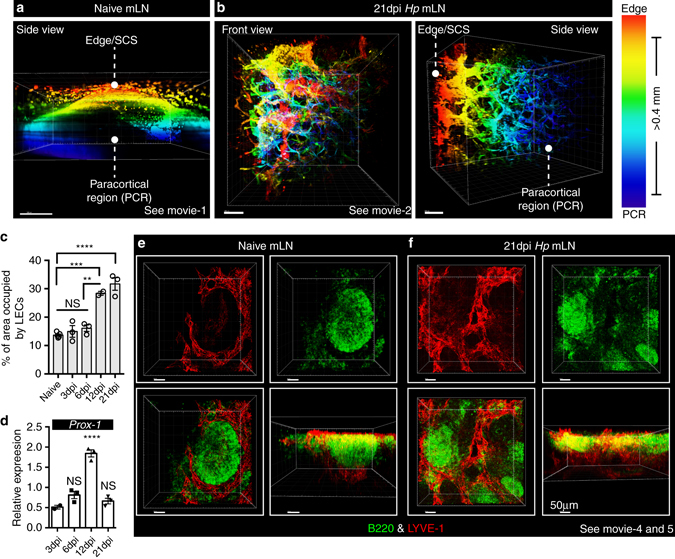
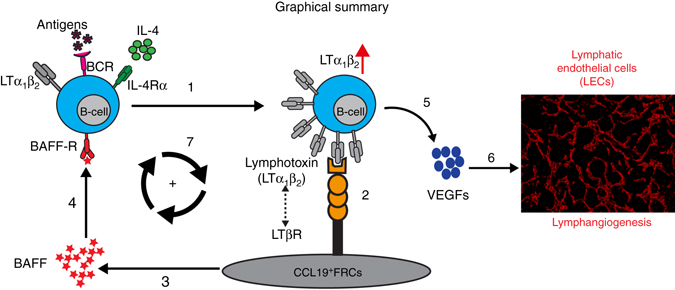
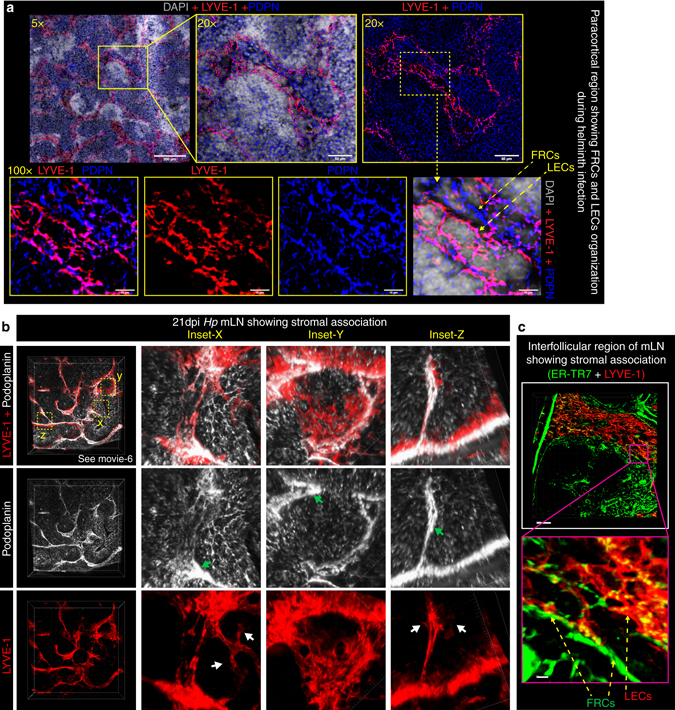
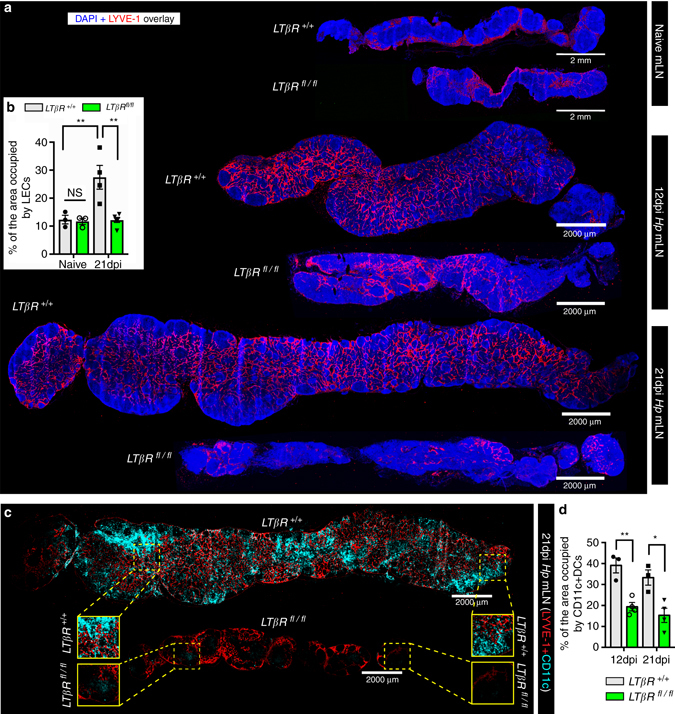
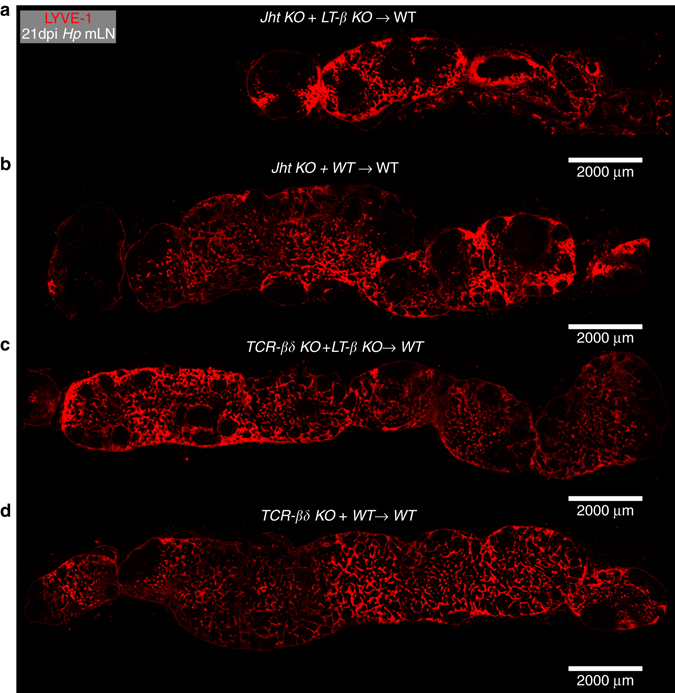
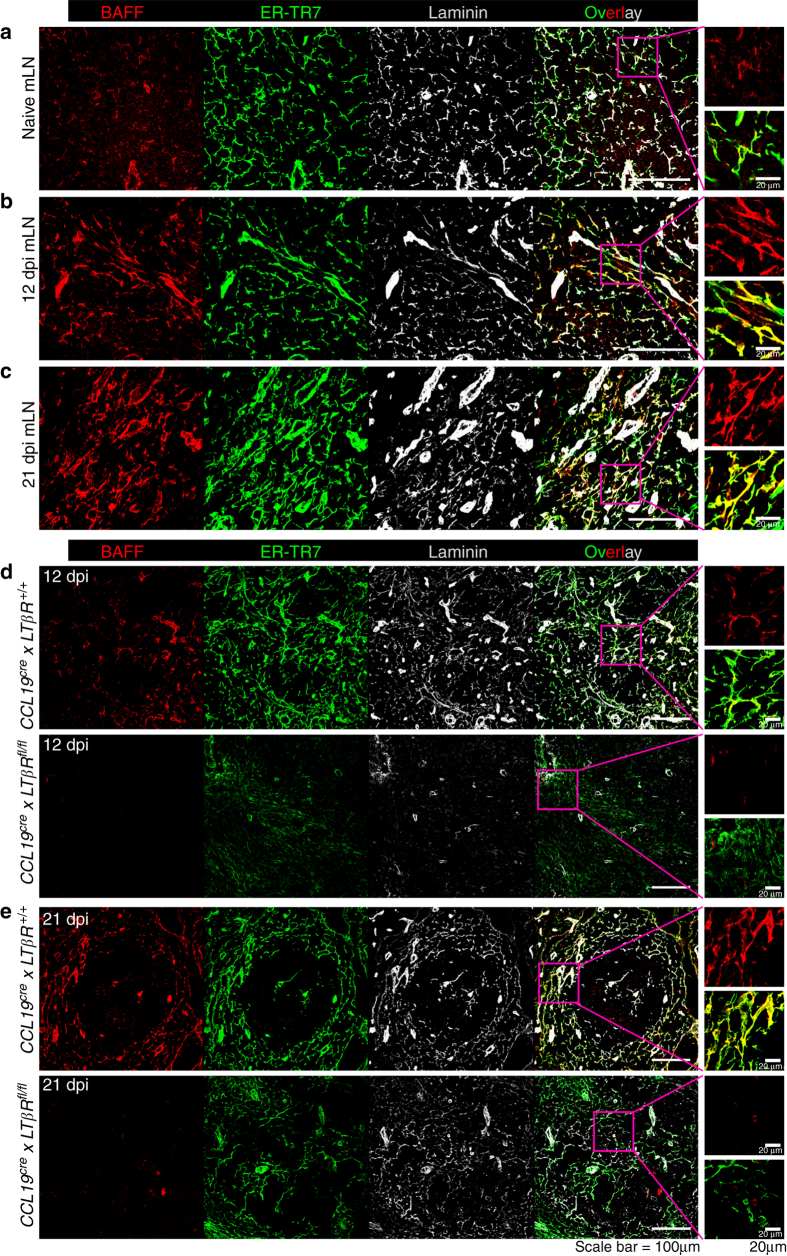
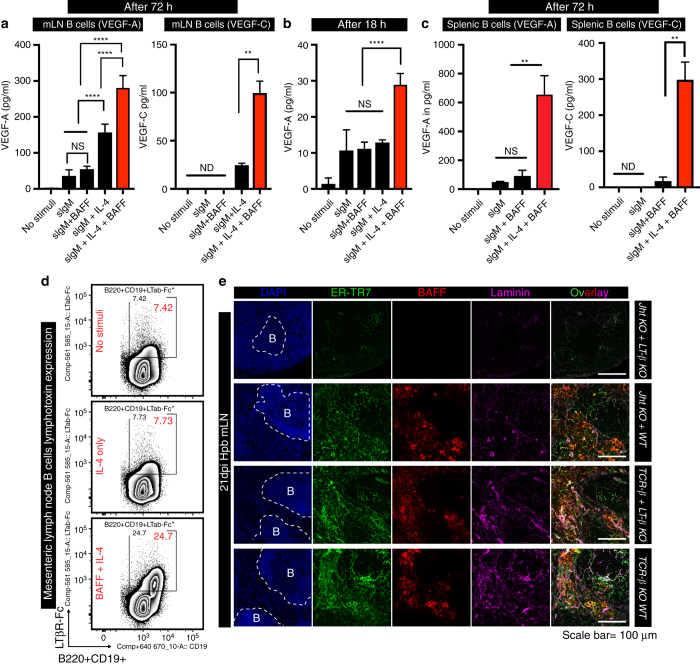
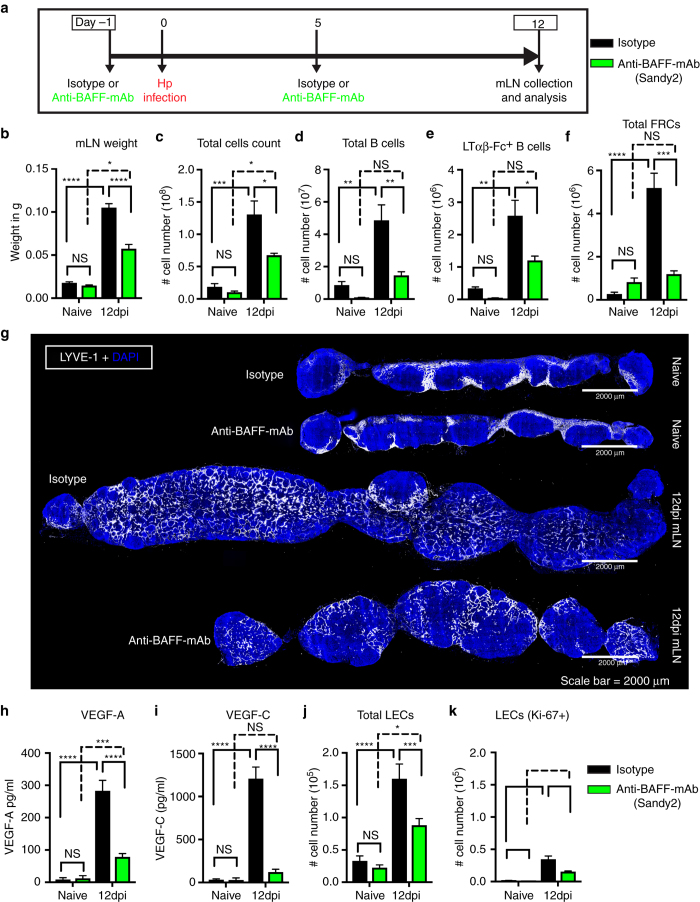
Lymphatic growth (lymphangiogenesis) within lymph nodes functions to promote dendritic cell entry and effector lymphocyte egress in response to infection or inflammation. Here we demonstrate a crucial role for lymphotoxin-beta receptor (LTβR) signaling to fibroblastic reticular cells (FRCs) by lymphotoxin-expressing B cells in driving mesenteric lymph node lymphangiogenesis following helminth infection. LTβR ligation on fibroblastic reticular cells leads to the production of B-cell-activating factor (BAFF), which synergized with interleukin-4 (IL-4) to promote the production of the lymphangiogenic factors, vascular endothelial growth factors (VEGF)-A and VEGF-C, by B cells. In addition, the BAFF-IL-4 synergy augments expression of lymphotoxin by antigen-activated B cells, promoting further B cell-fibroblastic reticular cell interactions. These results underlie the importance of lymphotoxin-dependent B cell-FRC cross talk in driving the expansion of lymphatic networks that function to promote and maintain immune responsiveness.The growth of lymph nodes in response to infection requires lymphangiogenesis. Dubey et al. show that the mesenteric lymph node lymphangiogenesis upon helminth infection depends on the signaling loop between the B and fibroblastic reticular cells (FRCs), whereby the FRCs respond to lymphotoxin secreted by B cells by releasing B cell activating factor.
淋巴结内的淋巴管生成(lymphangiogenesis)有助于促进树突状细胞进入以及效应淋巴细胞流出,以应对感染或炎症。在此,我们证明了表达淋巴毒素的B细胞通过淋巴毒素β受体(LTβR)信号传导至成纤维网状细胞(FRCs),在蠕虫感染后驱动肠系膜淋巴结淋巴管生成中发挥关键作用。成纤维网状细胞上的LTβR结合导致B细胞活化因子(BAFF)的产生,BAFF与白细胞介素-4(IL-4)协同作用,促进B细胞产生淋巴管生成因子血管内皮生长因子(VEGF)-A和VEGF-C。此外,BAFF-IL-4协同作用增强了抗原激活的B细胞表达淋巴毒素,促进了进一步的B细胞-成纤维网状细胞相互作用。这些结果揭示了淋巴毒素依赖性B细胞-FRC相互作用在驱动淋巴管网络扩张中的重要性,而淋巴管网络的功能是促进和维持免疫反应性。感染引起的淋巴结生长需要淋巴管生成。杜比等人表明,蠕虫感染后肠系膜淋巴结淋巴管生成取决于B细胞和成纤维网状细胞(FRCs)之间的信号传导回路,即FRCs通过释放B细胞活化因子对B细胞分泌的淋巴毒素作出反应。