Yao Cuiping, Rudnitzki Florian, Hüttmann Gereon, Zhang Zhenxi, Rahmanzadeh Ramtin
Key Laboratory of Biomedical Information Engineering of Education Ministry, Institute of Biomedical Analytical Technology and Instrumentation, School of Life Science and Technology, Xi'an Jiaotong University, Xi'an, China.
Institute of Biomedical Optics, University of Lübeck, Lübeck.
Int J Nanomedicine. 2017 Aug 7;12:5659-5672. doi: 10.2147/IJN.S140620. eCollection 2017.
Pulsed-laser irradiation of light-absorbing gold nanoparticles (AuNPs) attached to cells transiently increases cell membrane permeability for targeted molecule delivery. Here, we targeted EGFR on the ovarian carcinoma cell line OVCAR-3 with AuNPs. In order to optimize membrane permeability and to demonstrate molecule delivery into adherent OVCAR-3 cells, we systematically investigated different experimental conditions.
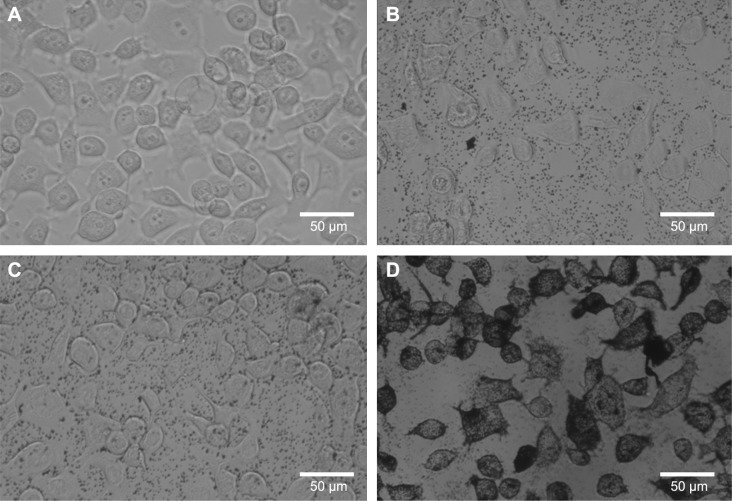
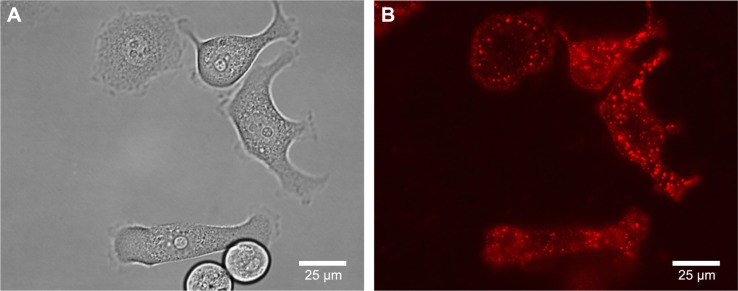
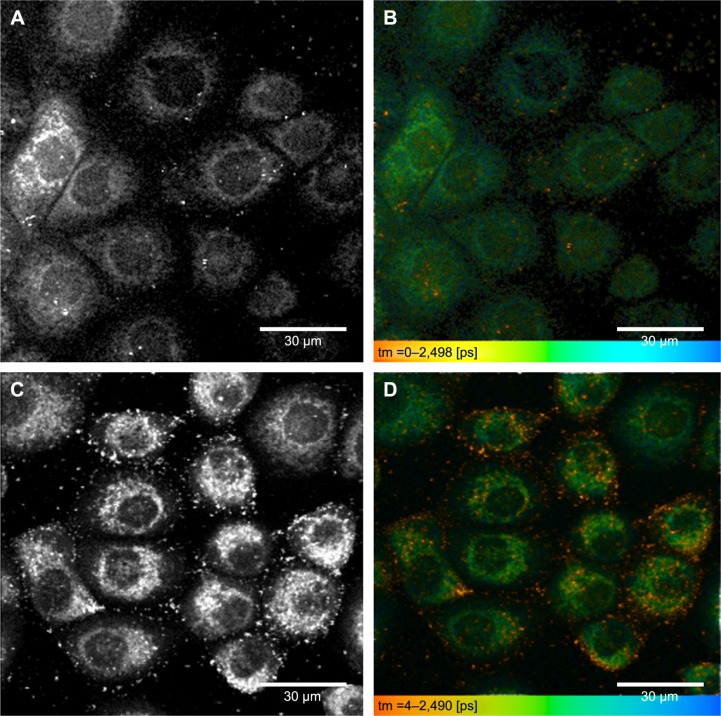
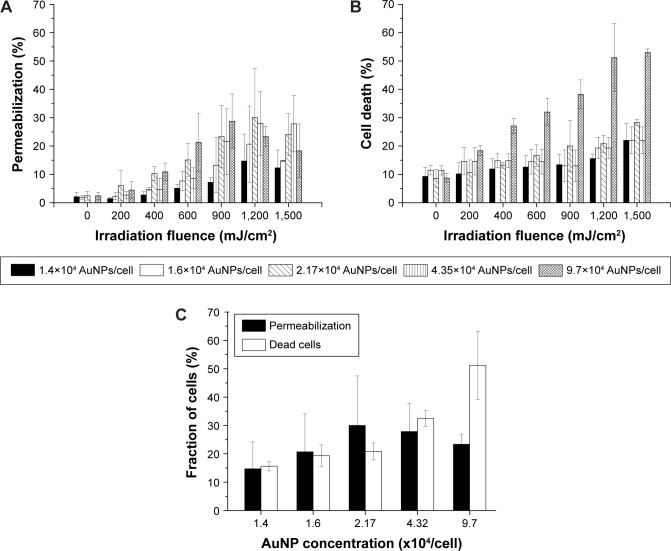
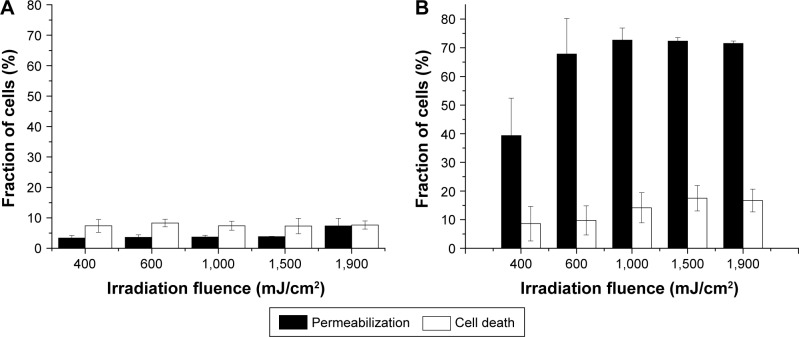
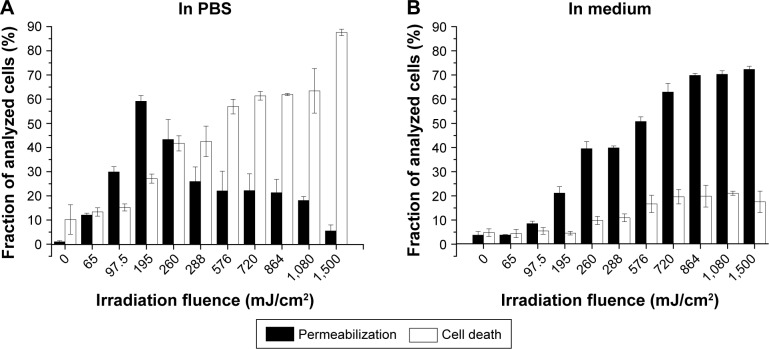
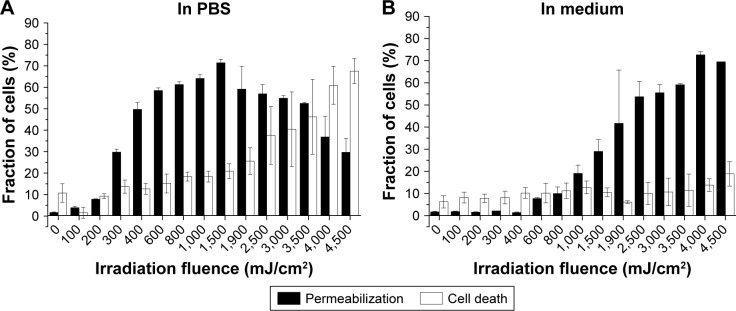
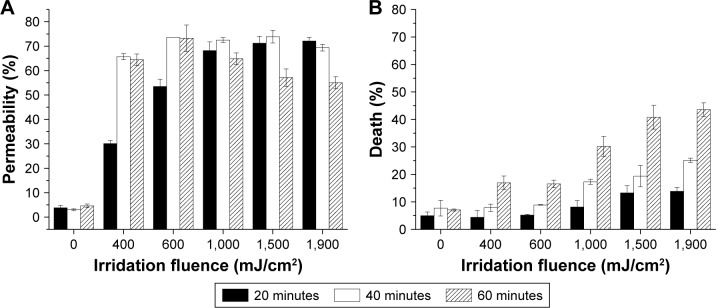
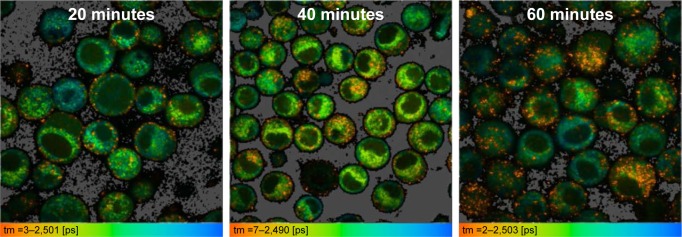
AuNPs (30 nm) were functionalized by conjugation of the antibody cetuximab against EGFR. Selective binding of the particles was demonstrated by silver staining, multiphoton imaging, and fluorescence-lifetime imaging. After laser irradiation, membrane permeability of OVCAR-3 cells was studied under different conditions of AuNP concentration, cell-incubation medium, and cell-AuNP incubation time. Membrane permeability and cell viability were evaluated by flow cytometry, measuring propidium iodide and fluorescein isothiocyanate-dextran uptake.
Adherently growing OVCAR-3 cells can be effectively targeted with EGFR-AuNP. Laser irradiation led to successful permeabilization, and 150 kDa dextran was successfully delivered into cells with about 70% efficiency.
Antibody-targeted and laser-irradiated AuNPs can be used to deliver molecules into adherent cells. Efficacy depends not only on laser parameters but also on AuNP:cell ratio, cell-incubation medium, and cell-AuNP incubation time.
对附着于细胞的吸光金纳米颗粒(AuNP)进行脉冲激光照射,可短暂增加细胞膜通透性,以实现靶向分子递送。在此,我们用AuNP靶向卵巢癌细胞系OVCAR-3上的表皮生长因子受体(EGFR)。为了优化膜通透性并证明分子可递送至贴壁生长的OVCAR-3细胞,我们系统地研究了不同的实验条件。
通过将抗EGFR的西妥昔单抗抗体与30纳米的AuNP偶联,使其功能化。通过银染、多光子成像和荧光寿命成像证明颗粒的选择性结合。激光照射后,在不同的AuNP浓度、细胞孵育培养基和细胞-AuNP孵育时间条件下,研究OVCAR-3细胞的膜通透性。通过流式细胞术测量碘化丙啶和异硫氰酸荧光素-葡聚糖的摄取,评估膜通透性和细胞活力。
贴壁生长的OVCAR-3细胞可被EGFR-AuNP有效靶向。激光照射导致成功的通透性增加,150 kDa的葡聚糖以约70%的效率成功递送至细胞内。
抗体靶向且经激光照射的AuNP可用于将分子递送至贴壁细胞。其效果不仅取决于激光参数,还取决于AuNP与细胞的比例、细胞孵育培养基以及细胞-AuNP孵育时间。