Department of Clinical Studies, School of Veterinary Medicine, New Bolton Center, University of Pennsylvania, Kennett Square, PA, 19348, USA.
Department of Food Science, Pennsylvania State University, University Park, State College, PA, 16802, USA.
BMC Microbiol. 2017 Aug 30;17(1):190. doi: 10.1186/s12866-017-1098-z.
The purpose of this study was to compare the rumen bacterial composition in high and low yielding dairy cows within and between two dairy herds. Eighty five Holstein dairy cows in mid-lactation (79-179 days in milk) were selected from two farms: Farm 12 (M305 = 12,300 kg; n = 47; 24 primiparous cows, 23 multiparous cows) and Farm 9 (M305 = 9700 kg; n = 38; 19 primiparous cows, 19 multiparous cows). Each study cow was sampled once using the stomach tube method and processed for 16S rRNA gene amplicon sequencing using the Ion Torrent (PGM) platform.
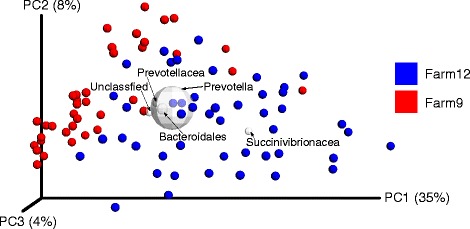
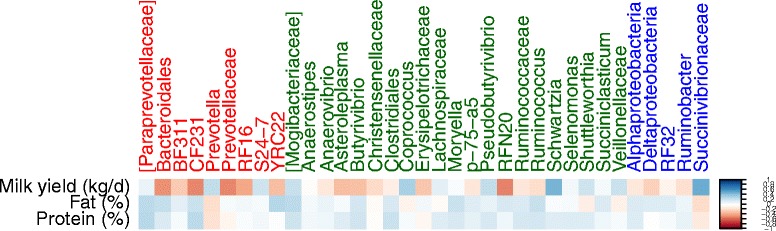
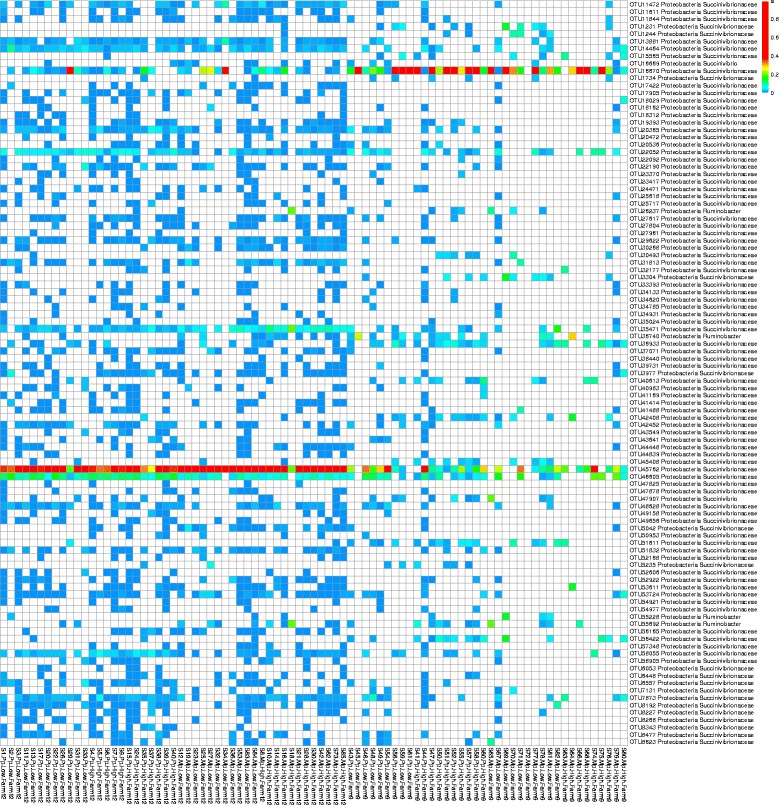
Differences in bacterial communities between farms were greater (Adonis: R = 0.16; p < 0.001) than within farm. Five bacterial lineages, namely Prevotella (48-52%), unclassified Bacteroidales (10-12%), unclassified bacteria (5-8%), unclassified Succinivibrionaceae (1-7%) and unclassified Prevotellaceae (4-5%) were observed to differentiate the community clustering patterns among the two farms. A notable finding is the greater (p < 0.05) contribution of Succinivibrionaceae lineages in Farm 12 compared to Farm 9. Furthermore, in Farm 12, Succinivibrionaceae lineages were higher (p < 0.05) in the high yielding cows compared to the low yielding cows in both primiparous and multiparous groups. Prevotella, S24-7 and Succinivibrionaceae lineages were found in greater abundance on Farm 12 and were positively correlated with milk yield.
Differences in rumen bacterial populations observed between the two farms can be attributed to dietary composition, particularly differences in forage type and proportion in the diets. A combination of corn silage and alfalfa silage may have contributed to the increased proportion of Proteobacteria in Farm 12. It was concluded that Farm 12 had a greater proportion of specialist bacteria that have the potential to enhance rumen fermentative digestion of feedstuffs to support higher milk yields.
本研究旨在比较两个奶牛场高产奶牛和低产奶牛的瘤胃细菌组成。从两个农场中选择了 85 头处于泌乳中期的荷斯坦奶牛(产奶天数 79-179 天):农场 12(M305=12300kg;n=47;24 头初产奶牛,23 头经产奶牛)和农场 9(M305=9700kg;n=38;19 头初产奶牛,19 头经产奶牛)。每个研究奶牛都通过胃管法取样一次,并使用 Ion Torrent(PGM)平台对 16S rRNA 基因扩增子进行测序。
农场之间的细菌群落差异较大(Adonis:R=0.16;p<0.001),而农场内差异较小。观察到五个细菌谱系,即普雷沃氏菌(48-52%)、未分类拟杆菌(10-12%)、未分类细菌(5-8%)、未分类琥珀酸单胞菌科(1-7%)和未分类普雷沃氏菌科(4-5%),这些细菌谱系区分了两个农场的群落聚类模式。一个显著的发现是,与农场 9 相比,农场 12 的琥珀酸单胞菌科谱系的贡献更大(p<0.05)。此外,在农场 12 中,高产奶牛的琥珀酸单胞菌科谱系高于低产奶牛(p<0.05),无论是初产奶牛还是经产奶牛均是如此。普雷沃氏菌、S24-7 和琥珀酸单胞菌科谱系在农场 12 中更为丰富,与产奶量呈正相关。
两个农场之间观察到的瘤胃细菌种群差异可归因于饮食组成,特别是饲料类型和比例的差异。玉米青贮和苜蓿青贮的组合可能导致农场 12 中变形菌门的比例增加。研究得出结论,农场 12 拥有更多具有潜在能力的专业细菌,这些细菌能够增强瘤胃对饲料的发酵消化,从而提高产奶量。