Wu Mon-Ju, Mwangi Benson, Passos Ives Cavalcante, Bauer Isabelle E, Cao Bo, Frazier Thomas W, Zunta-Soares Giovana B, Soares Jair C
UT Center of Excellence on Mood Disorder, Department of Psychiatry and Behavioral Sciences, The University of Texas Science Center at Houston, Houston, TX, USA.
Department of Psychiatry & Behavioral Sciences, The University of Texas Health Science Center, 1941 East Road, Houston, TX, 77054, USA.
Int J Bipolar Disord. 2017 Sep 1;5(1):32. doi: 10.1186/s40345-017-0101-9.
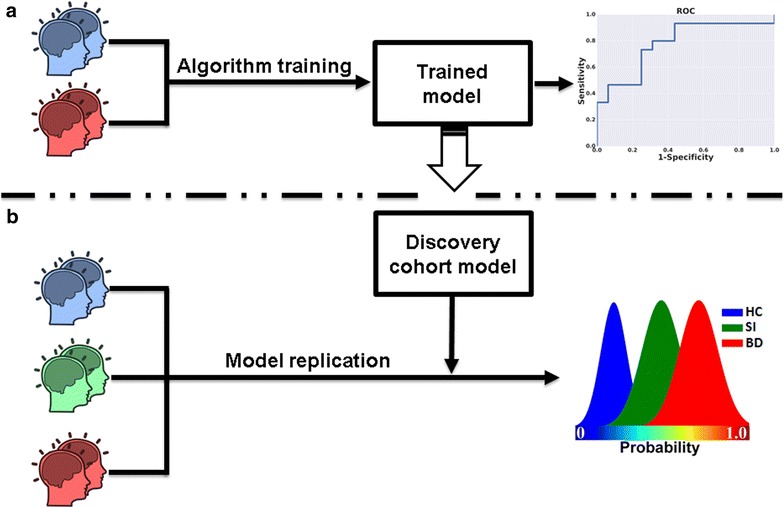
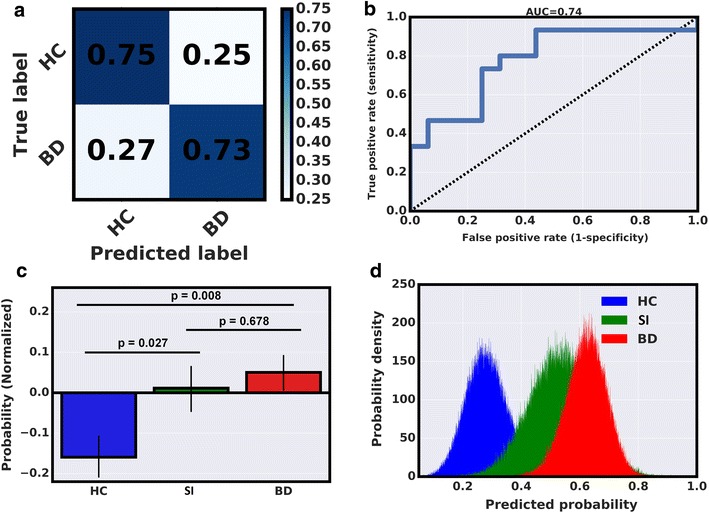
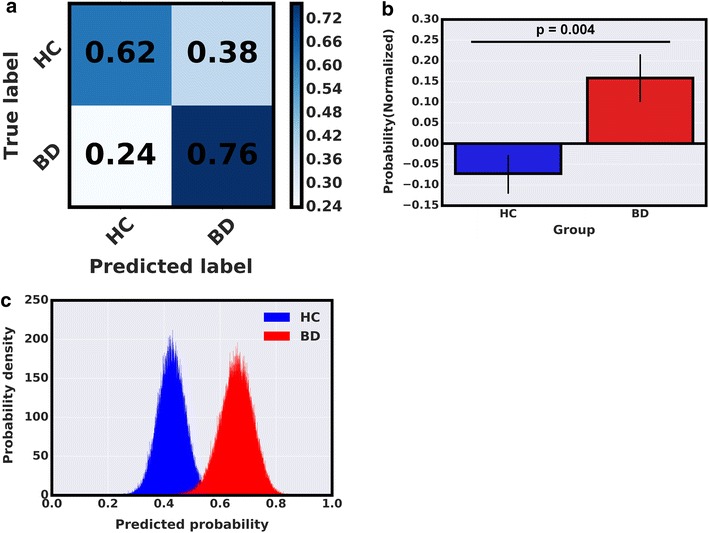
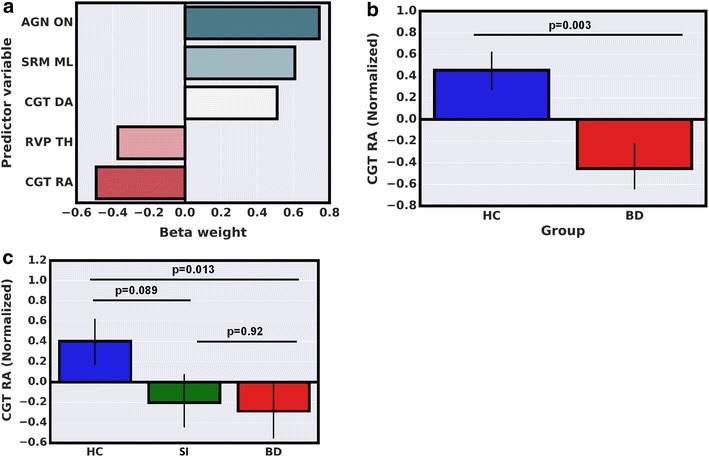
Bipolar disorder (BD) is a common disorder with high reoccurrence rate in general population. It is critical to have objective biomarkers to identify BD patients at an individual level. Neurocognitive signatures including affective Go/No-go task and Cambridge Gambling task showed the potential to distinguish BD patients from health controls as well as identify individual siblings of BD patients. Moreover, these neurocognitive signatures showed the ability to be replicated at two independent cohorts which indicates the possibility for generalization. Future studies will examine the possibility of combining neurocognitive data with other biological data to develop more accurate signatures.
双相情感障碍(BD)是一种在普通人群中复发率较高的常见疾病。拥有客观的生物标志物以在个体层面识别BD患者至关重要。包括情感性Go/No-go任务和剑桥赌博任务在内的神经认知特征显示出区分BD患者与健康对照以及识别BD患者个体亲属的潜力。此外,这些神经认知特征在两个独立队列中显示出可重复性,这表明具有推广的可能性。未来的研究将探讨将神经认知数据与其他生物学数据相结合以开发更准确特征的可能性。