Li Fei, Qiu Zhenzhen, Zhang Jingdong, Liu Chaoyang, Cai Ying, Xiao Minsi
Research Center for Environment and Health, Zhongnan University of Economics and Law, Wuhan 430073, China.
School of Information and Safety Engineering, Zhongnan University of Economics and Law, Wuhan 430073, China.
Int J Environ Res Public Health. 2017 Sep 4;14(9):1011. doi: 10.3390/ijerph14091011.
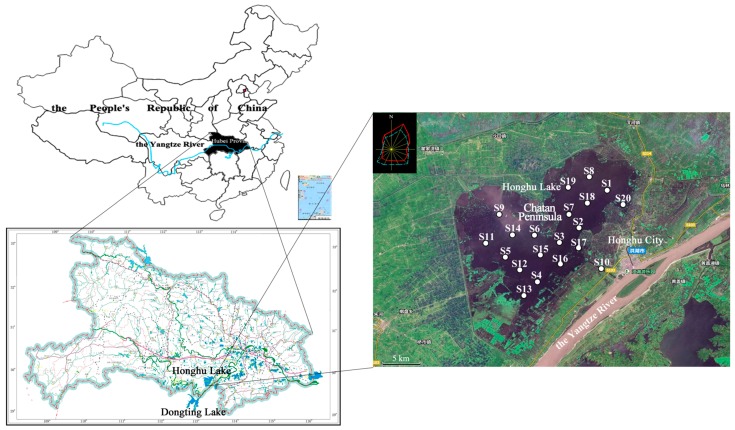
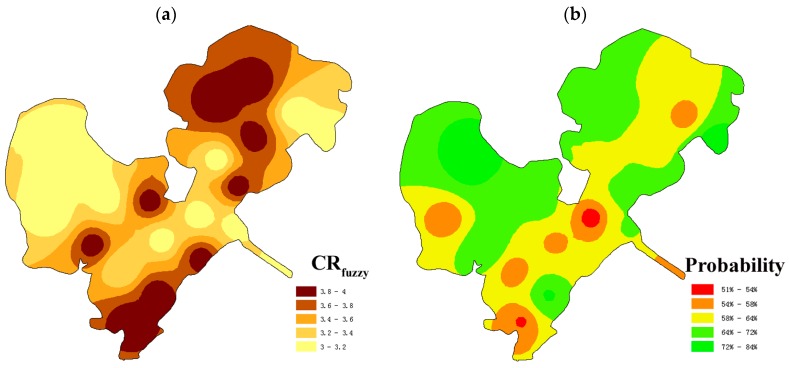
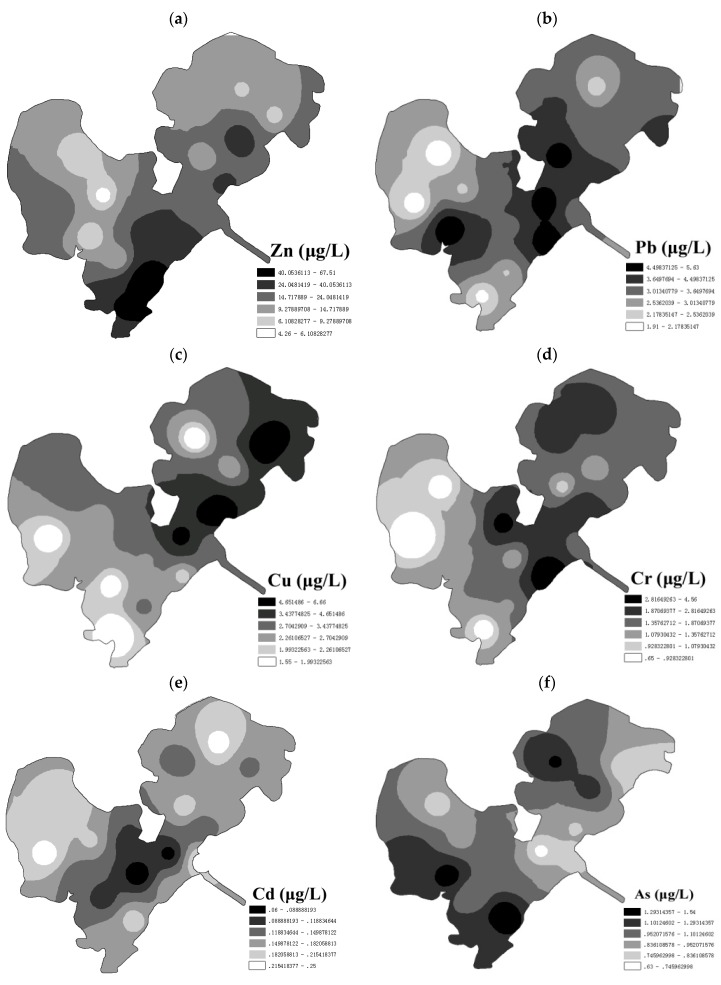
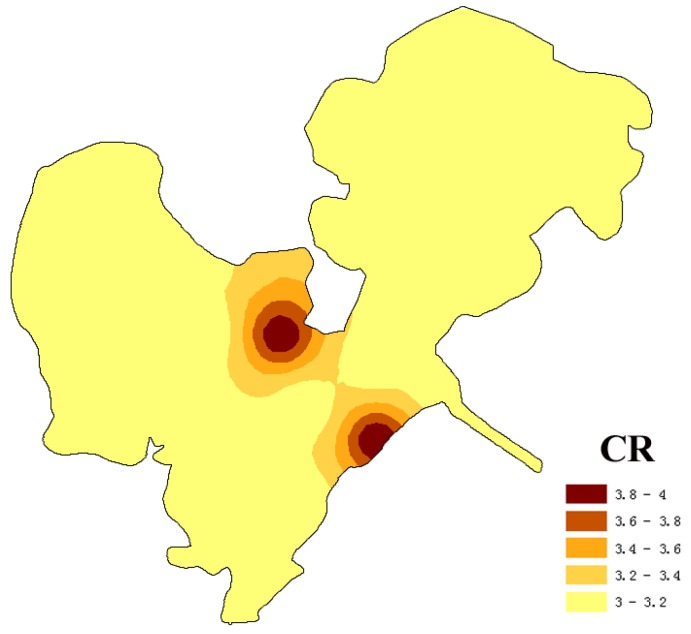
Previous studies revealed that Honghu Lake was polluted by trace elements due to anthropogenic activities. This study investigated the spatial distribution of trace elements in Honghu Lake, and identified the major pollutants and control areas based on the fuzzy health risk assessment at screening level. The mean total content of trace elements in surface water decreased in the order of Zn (18.04 μg/L) > Pb (3.42 μg/L) > Cu (3.09 μg/L) > Cr (1.63 μg/L) > As (0.99 μg/L) > Cd (0.14 μg/L), within limits of Drinking Water Guidelines. The results of fuzzy health risk assessment indicated that there was no obvious non-carcinogenic risk to human health, while carcinogenic risk was observed in descending order of As > Cr > Cd > Pb. As was regarded to have the highest carcinogenic risk among selected trace elements because it generally accounted for 64% of integrated carcinogenic risk. Potential carcinogenic risk of trace elements in each sampling site was approximately at medium risk level (10 to 10). The areas in the south (S4, S13, and S16) and northeast (S8, S18, and S19) of Honghu Lake were regarded as the risk priority control areas. However, the corresponding maximum memberships of integrated carcinogenic risk in S1, S3, S10-S13, S15, and S18 were of relatively low credibility (50-60%), and may mislead the decision-makers in identifying the risk priority areas. Results of fuzzy assessment presented the subordinate grade and corresponding reliability of risk, and provided more full-scale results for decision-makers, which made up for the deficiency of certainty assessment to a certain extent.
以往研究表明,由于人为活动,洪湖受到微量元素污染。本研究调查了洪湖微量元素的空间分布,并基于筛选水平的模糊健康风险评估确定了主要污染物和控制区域。地表水中微量元素的平均总含量按Zn(18.04μg/L)>Pb(3.42μg/L)>Cu(3.09μg/L)>Cr(1.63μg/L)>As(0.99μg/L)>Cd(0.14μg/L)的顺序降低,均在《饮用水准则》规定的限值范围内。模糊健康风险评估结果表明,对人体健康不存在明显的非致癌风险,而致癌风险按As>Cr>Cd>Pb的顺序依次降低。在所选微量元素中,As被认为具有最高的致癌风险,因为它通常占综合致癌风险的64%。每个采样点微量元素的潜在致癌风险约为中等风险水平(10至10)。洪湖南部(S4、S13和S16)和东北部(S8、S18和S19)的区域被视为风险优先控制区域。然而,S1、S3、S10 - S13、S15和S18中综合致癌风险的相应最大隶属度的可信度相对较低(50 - 60%),可能会在确定风险优先区域时误导决策者。模糊评估结果呈现了风险的隶属等级和相应可靠性,为决策者提供了更全面的结果,在一定程度上弥补了确定性评估的不足。