Nyaoke Borna A, Mutua Gaudensia N, Sajabi Rose, Nyasani Delvin, Mureithi Marianne W, Anzala Omu A
KAVI -Institute of Clinical Research (KAVI-ICR), University of Nairobi. Nairobi, Kenya.
PLoS One. 2017 Sep 7;12(9):e0183788. doi: 10.1371/journal.pone.0183788. eCollection 2017.
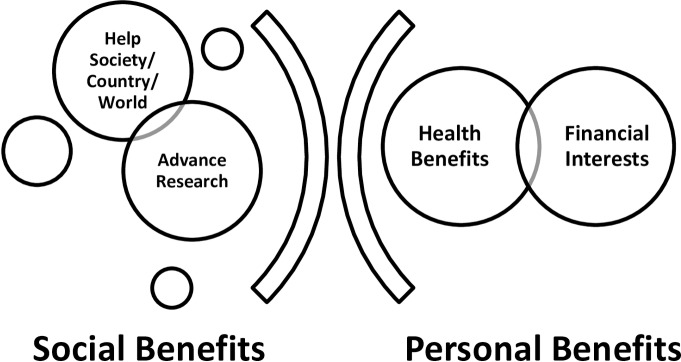
1.5 million Kenyans are living with HIV/AIDS as per 2015 estimates. Though there is a notable decline in new HIV infections, continued effort is still needed to develop an efficacious, accessible and affordable HIV vaccine. HIV vaccine clinical trials bear risks, hence a need to understand volunteer motivators for enrolment, retention and follow-up. Understanding the factors that motivate volunteers to participate in a clinical trial can help to strategize, refine targeting and thus increase enrolment of volunteers in future HIV vaccine clinical trials. The health belief model classifies motivators into social benefits such as 'advancing research' and collaboration with science, and personal benefits such as health benefits and financial interests.
A thematic analysis was carried out on data obtained from four HIV clinical trials conducted at KAVI-Institute of Clinical Research in Nairobi Kenya from 2009 to 2015. Responses were obtained from a Questionnaire administered to the volunteers during their screening visit at the research site.
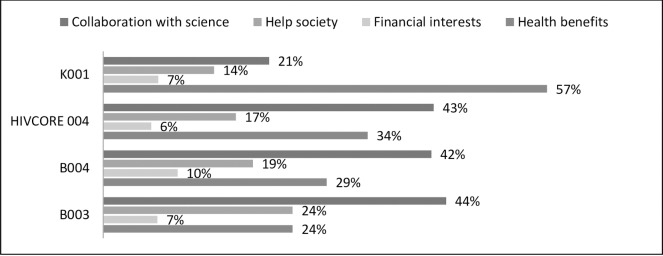
Of the 281 healthy, HIV-uninfected volunteers participating in this study; 38% were motivated by personal benefits including, 31% motivated by health benefits and 7% motivated by possible financial gains. In addition, 62% of the volunteers were motivated by social benefits with 20% of who were seeking to help their family/society/world while 42% were interested in advancing research.
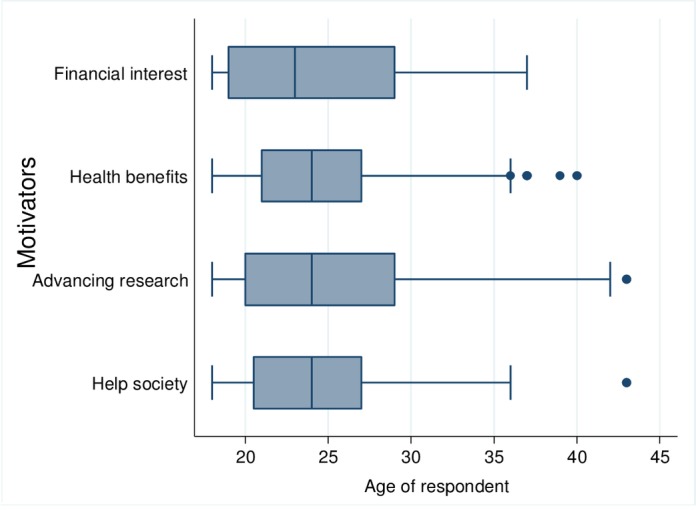
The majority of volunteers in the HIV vaccine trials at our site were motivated by social benefits, suggesting that altruism can be a major contributor to participation in HIV vaccine studies. Personal benefits were a secondary motivator for the volunteers. The motivators to volunteer in HIV clinical trials were similar across ages, education level and gender. Education on what is needed (including volunteer participation) to develop an efficacious vaccine could be the key to greater volunteer motivation to participate in HIV vaccine clinical trials.
根据2015年的估计,有150万肯尼亚人感染了艾滋病毒/艾滋病。尽管新的艾滋病毒感染人数显著下降,但仍需要持续努力来开发一种有效、可及且负担得起的艾滋病毒疫苗。艾滋病毒疫苗临床试验存在风险,因此有必要了解志愿者参与入组、留存和随访的动机。了解促使志愿者参与临床试验的因素有助于制定策略、优化目标定位,从而增加未来艾滋病毒疫苗临床试验中志愿者的入组人数。健康信念模型将动机分为社会效益,如“推进研究”和与科学合作,以及个人利益,如健康益处和经济利益。
对2009年至2015年在肯尼亚内罗毕的肯尼亚艾滋病疫苗倡议临床研究机构进行的四项艾滋病毒临床试验所获得的数据进行了主题分析。通过在研究地点对志愿者进行筛查访问时发放的问卷获得了回复。
在参与本研究的281名健康、未感染艾滋病毒的志愿者中,38%的动机是个人利益,其中31%是出于健康益处,7%是出于可能的经济收益。此外,62%的志愿者的动机是社会效益,其中20%的人试图帮助家人/社会/世界,42%的人对推进研究感兴趣。
我们研究地点的艾滋病毒疫苗试验中的大多数志愿者的动机是社会效益,这表明利他主义可能是参与艾滋病毒疫苗研究的一个主要因素。个人利益是志愿者的次要动机。艾滋病毒临床试验中志愿者的动机在年龄、教育水平和性别方面相似。关于开发有效疫苗所需条件(包括志愿者参与)的教育可能是提高志愿者参与艾滋病毒疫苗临床试验积极性的关键。