Weißkircher Janosch, Koch Cora, Dreimüller Nadine, Lieb Klaus
Universitätsmedizin der Johannes Gutenberg-Universität Mainz, Körperschaft des öffentlichen Rechts, Klinik für Psychiatrie und Psychotherapie, Mainz, Deutschland.
GMS J Med Educ. 2017 Aug 15;34(3):Doc37. doi: 10.3205/zma001114. eCollection 2017.
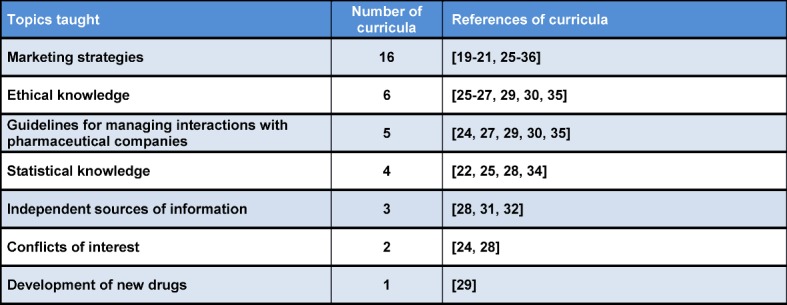
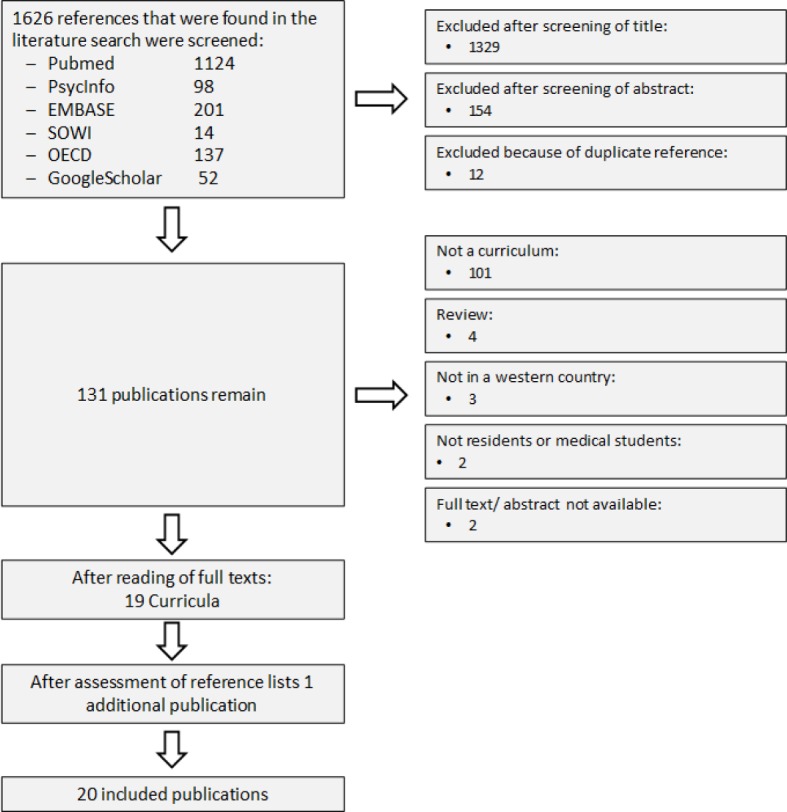
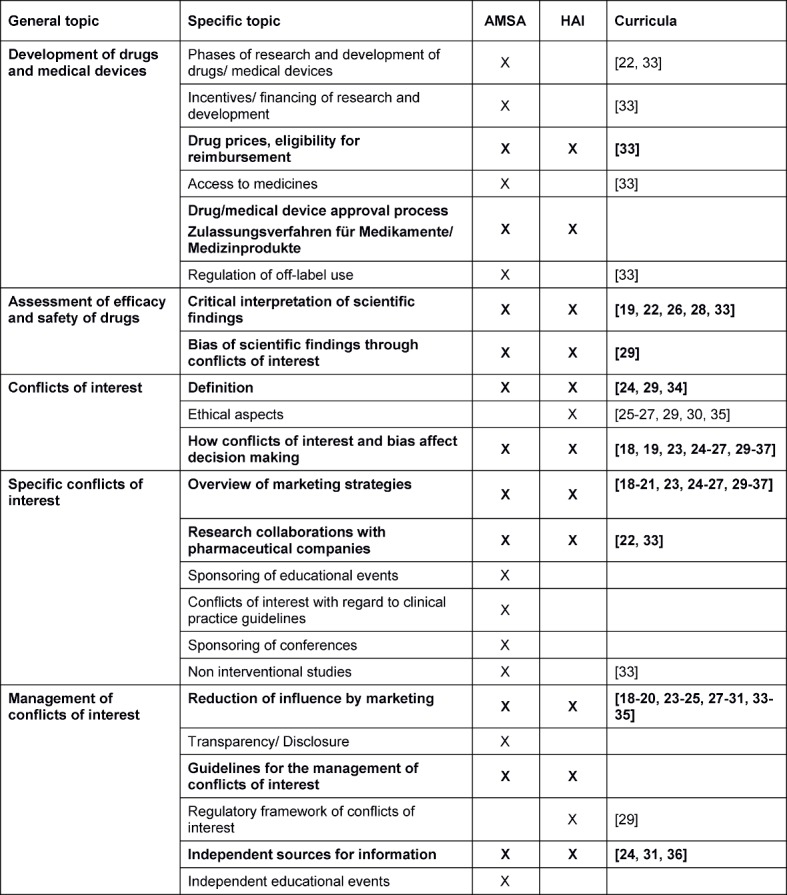
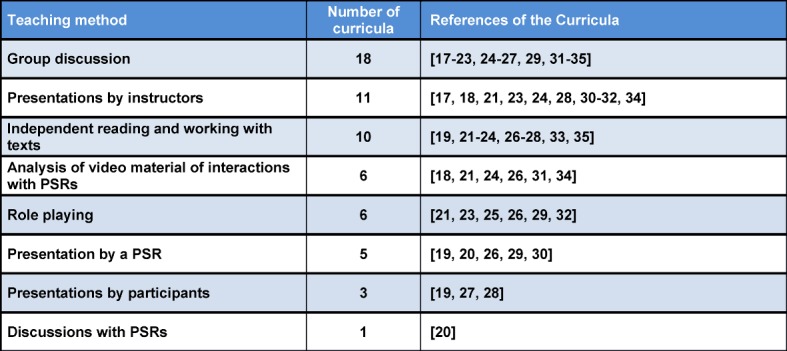
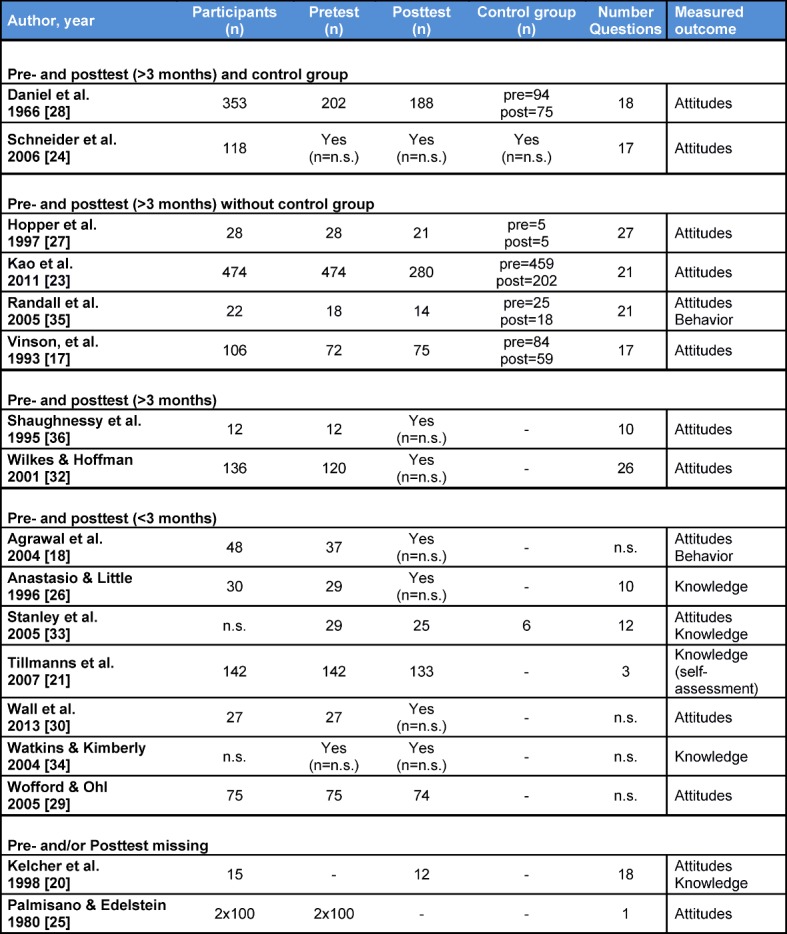
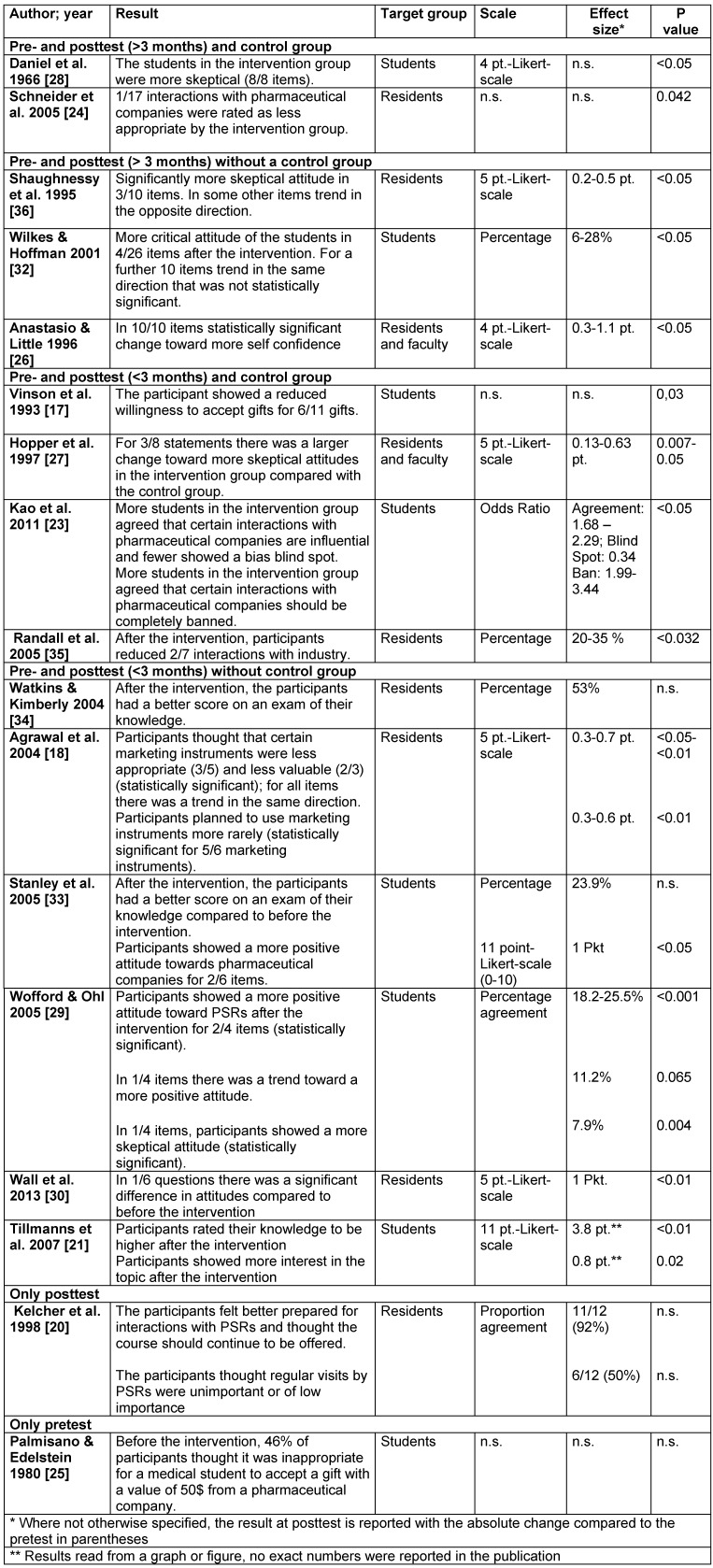
Conflicts of interests resulting from interactions with pharmaceutical companies are pervasive in medicine and can result in an undue influence on physicians' decision-making. The objective of this systematic review is to analyze published and scientifically evaluated curricula for medical students and residents regarding such conflicts of interest. We begin by describing the covered topics and teaching methods; afterwards we analyze the quality of the curricula using the published data on their evaluations and comparing the content with content recommended for such curricula. We searched Pubmed, PsycInfo, EMBASE, OECD, WISO, SOWI and googlescholar up to and including the 5th of September 2016. Publications describing curricula for residents or medical students on the topic of conflicts of interest in medicine and evaluating them for their effects on the participants' learning were included. We analyzed the covered topics and the teaching methods used and compared them with recommendations by the American Medical Students' Association (AMSA) and Health Action International (HAI). The literature search resulted in 20 publications that fulfilled our search criteria. In five trials, a control group was used, in no trial the participants were randomized to intervention or control group. 16/20 published curricula primarily covered marketing strategies by pharmaceutical companies, especially the interaction with pharmaceutical sales representatives (PSRs). Most curricula only covered a limited number of topics recommended by AMSA/HAI. The most frequent teaching method was a group discussion, which was used in 18/20 curricula; all curricula used at least one interactive teaching method. The evaluation of the curricula was heterogeneous in results as well as design. Some publications described a change of attitudes toward a stronger skepticism regarding interactions with pharmaceutical companies. Four publications described improved knowledge, one publication described a change in behavior toward a reduction of the acceptance of gifts. The trials conducted to this date regarding curricula on conflicts of interests are methodologically flawed and the described curricula lack important topics beyond marketing strategies of pharmaceutical companies. In addition, there are no data so far on the sustainability of the courses' effects on participants' behavior. It is therefore necessary to develop a model curriculum that covers a broader variety of topics and to evaluate it using a well thought-out methodology to create a foundation for the further improvement of teaching conflicts of interest in medicine.
医药行业中,因与制药公司互动而产生的利益冲突普遍存在,可能会对医生的决策产生不当影响。本系统综述的目的是分析已发表的、经过科学评估的针对医学生和住院医师的关于此类利益冲突的课程。我们首先描述所涵盖的主题和教学方法;之后,我们利用已发表的评估数据分析课程质量,并将内容与针对此类课程推荐的内容进行比较。我们检索了截至2016年9月5日的PubMed、PsycInfo、EMBASE、经合组织(OECD)、WISO、SOWI和谷歌学术。纳入了描述针对住院医师或医学生的医药行业利益冲突主题课程并评估其对参与者学习效果的出版物。我们分析了所涵盖的主题和使用的教学方法,并将其与美国医学生协会(AMSA)和国际健康行动组织(HAI)的建议进行比较。文献检索得到了20篇符合我们检索标准的出版物。在5项试验中使用了对照组,没有一项试验将参与者随机分为干预组或对照组。20篇已发表的课程中,16篇主要涵盖制药公司的营销策略,尤其是与医药销售代表(PSR)的互动。大多数课程仅涵盖了AMSA/HAI推荐的有限数量的主题。最常用的教学方法是小组讨论,20篇课程中有18篇使用了该方法;所有课程都至少使用了一种互动教学方法。课程评估在结果和设计方面存在异质性。一些出版物描述了对与制药公司互动持更强怀疑态度的态度转变。4篇出版物描述了知识的提高,1篇出版物描述了行为转变,即减少对礼物的接受。迄今为止,关于利益冲突课程的试验在方法上存在缺陷,所描述的课程除了制药公司的营销策略外,还缺乏重要主题。此外,目前还没有关于课程对参与者行为影响的可持续性的数据。因此,有必要开发一个涵盖更广泛主题的示范课程,并使用精心设计的方法对其进行评估,为进一步改进医药行业利益冲突教学奠定基础。