Kugadas Abirami, Wright Quentin, Geddes-McAlister Jennifer, Gadjeva Mihaela
Department of Medicine, Division of Infectious Diseases, Brigham and Women's Hospital, Harvard Medical School, Boston, Massachusetts, United States.
Department of Proteomics and Signal Transduction, Max Planck Institute of Biochemistry, Martinsried, Germany.
Invest Ophthalmol Vis Sci. 2017 Sep 1;58(11):4593-4600. doi: 10.1167/iovs.17-22119.
The purpose of this study was to evaluate mechanisms controlling secretory IgA (SIgA) production, thereby ensuring maintenance of ocular surface health.
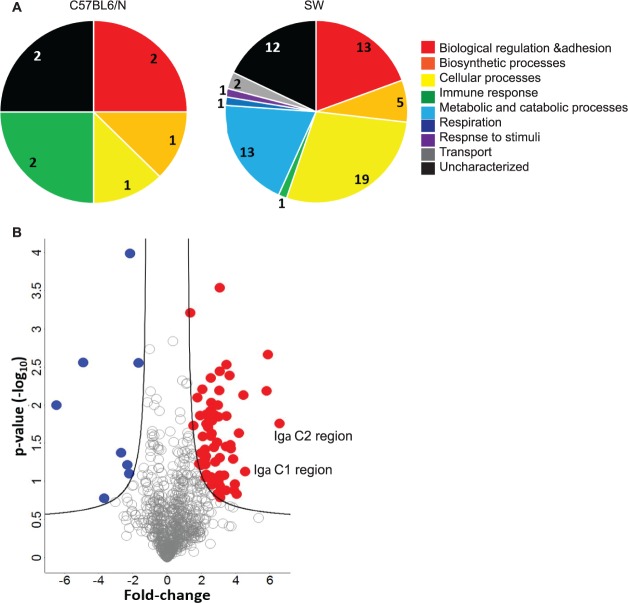
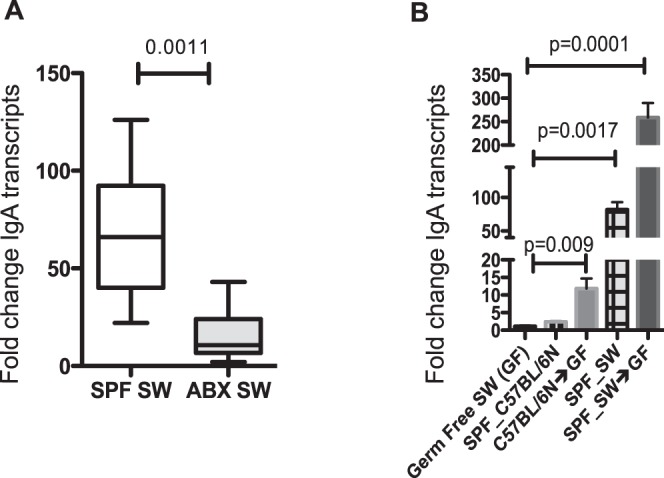
To determine whether the presence of specific gut commensal species regulates SIgA levels and IgA transcripts in the eye-associated lymphoid tissues (EALT), specific-pathogen-free (SPF) Swiss Webster (SW) mice were treated with antibiotic cocktails, germ-free (GF) SW mice were reconstituted with diverse commensal gut microbiota, or monocolonized with gut-specific commensals. Proteomic profiling and quantitative real-time polymerase chain reaction (qRT-PCR) were used to quantify SIgA and IgA levels. 16S rDNA sequencing was carried out to characterize commensal microbiota.
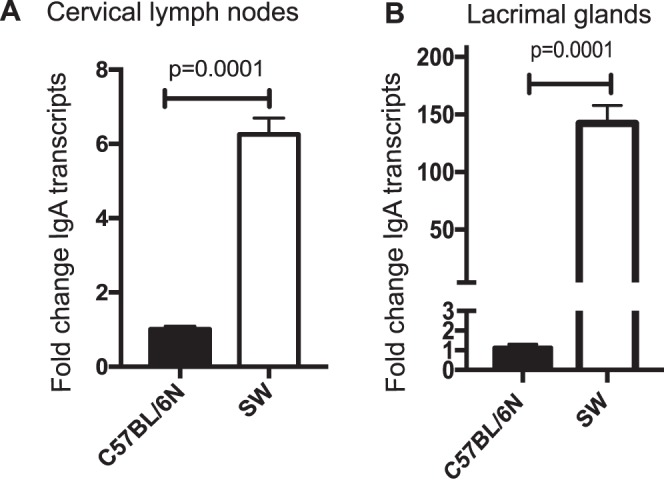
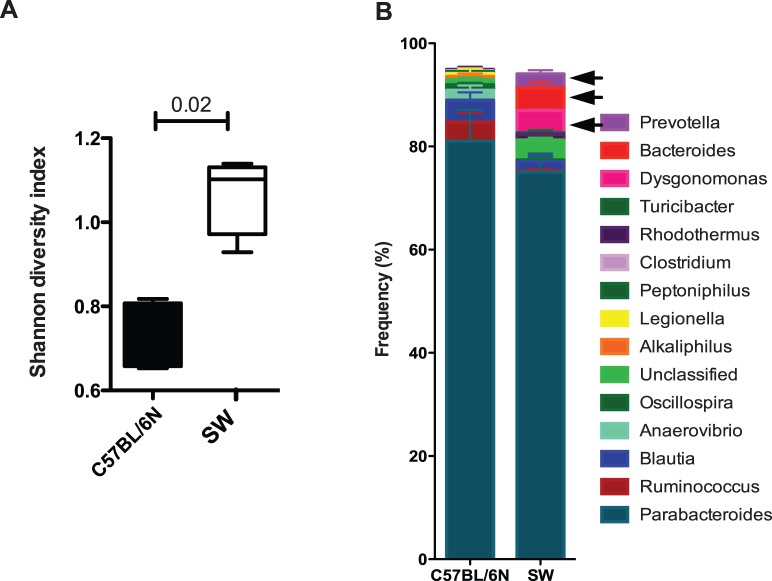
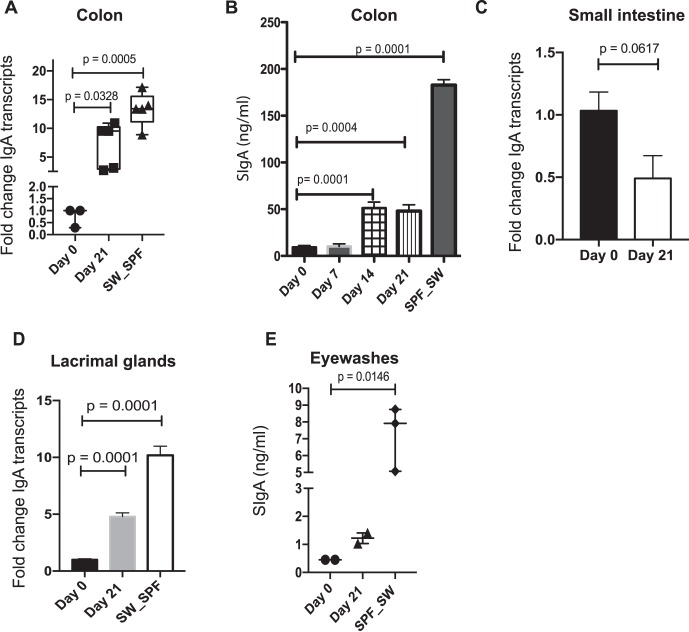
Commensal presence regulated ocular surface SIgA levels and mRNA IgA transcripts in EALT. Oral antibiotic cocktail intake significantly reduced gut commensal presence, while maintaining ocular surface commensal levels reduced SIgA and IgA transcripts in EALT. Analysis of gut microbial communities revealed that SPF SW mice carried abundant Bacteroides organisms when compared to SPF C57BL6/N mice, with B. acidifaciens being the most prominent species in SPF SW mice. Monocolonization of GF SW mice with B. acidifaciens, a strict gut anaerobe, resulted in significant increase of IgA transcripts in the EALT, implying generation of B-cell memory.
These data illustrated a "gut-eye" axis of immune regulation. Exposure of the host to gut commensal species may serve as a priming signal to generate B-cell repertoires at sites different from the gut, such as EALT, thereby ensuring broad protection.
本研究旨在评估控制分泌型免疫球蛋白A(SIgA)产生的机制,从而确保眼表健康的维持。
为了确定特定肠道共生菌的存在是否调节眼相关淋巴组织(EALT)中的SIgA水平和IgA转录本,将无特定病原体(SPF)的瑞士韦伯斯特(SW)小鼠用抗生素混合物处理,将无菌(GF)SW小鼠用不同的共生肠道微生物群重建,或用肠道特异性共生菌进行单菌定植。蛋白质组分析和定量实时聚合酶链反应(qRT-PCR)用于量化SIgA和IgA水平。进行16S rDNA测序以表征共生微生物群。
共生菌的存在调节眼表SIgA水平和EALT中的mRNA IgA转录本。口服抗生素混合物显著减少了肠道共生菌的存在,而维持眼表共生菌水平则降低了EALT中的SIgA和IgA转录本。对肠道微生物群落的分析表明,与SPF C57BL6/N小鼠相比,SPF SW小鼠携带丰富的拟杆菌属微生物,嗜酸拟杆菌是SPF SW小鼠中最突出的物种。用严格的肠道厌氧菌嗜酸拟杆菌对GF SW小鼠进行单菌定植,导致EALT中IgA转录本显著增加,这意味着产生了B细胞记忆。
这些数据说明了免疫调节的“肠-眼”轴。宿主暴露于肠道共生菌可能作为一种启动信号,在不同于肠道的部位(如EALT)产生B细胞库,从而确保广泛的保护。