Sorbonne University, UPMC University of Paris 06, INSERM, CNRS, Vision Institute, F-75012, Paris, France.
Department of Neurobiology, The University of Chicago, Chicago, Illinois, USA.
Sci Rep. 2017 Sep 20;7(1):11916. doi: 10.1038/s41598-017-12033-y.
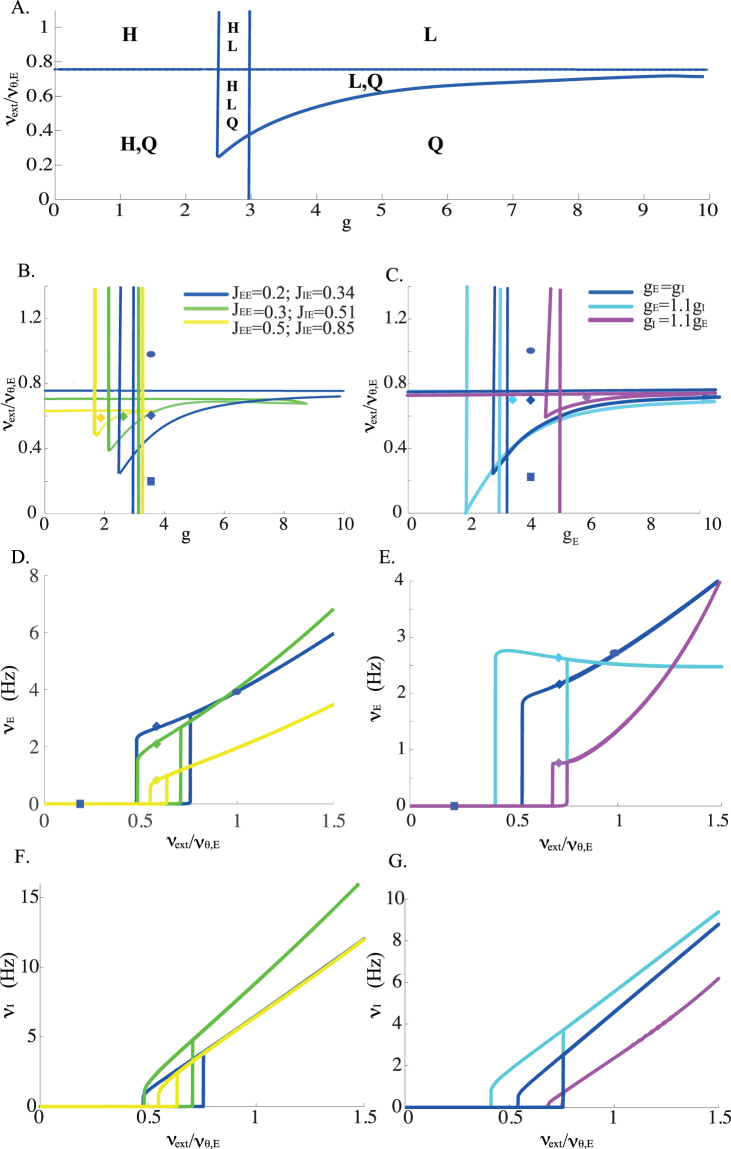
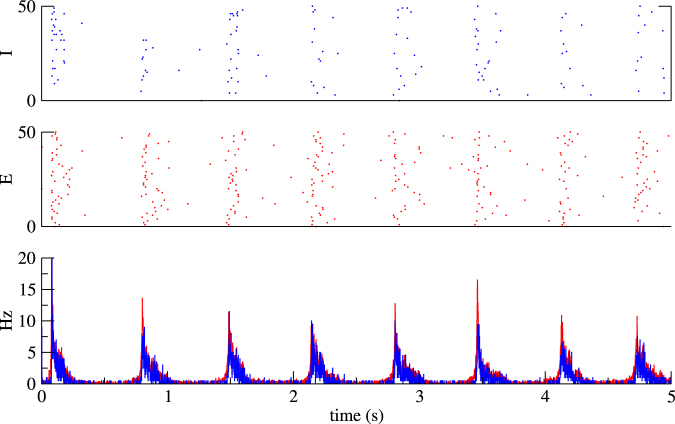
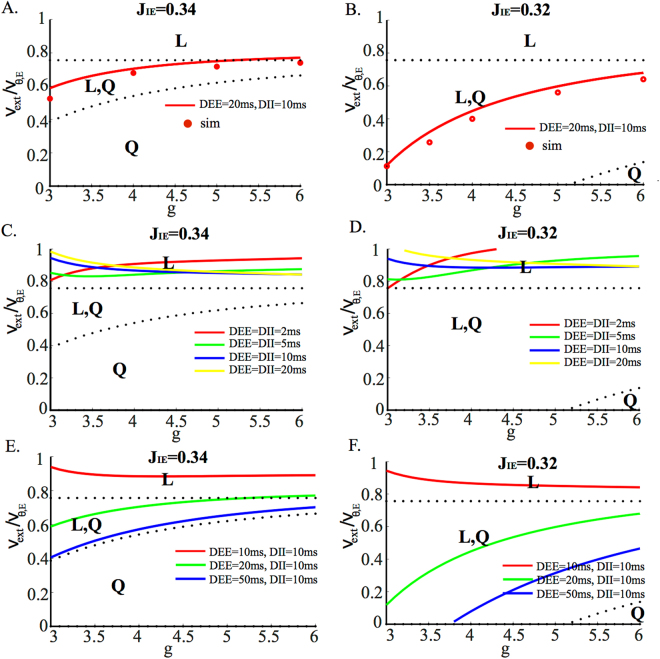
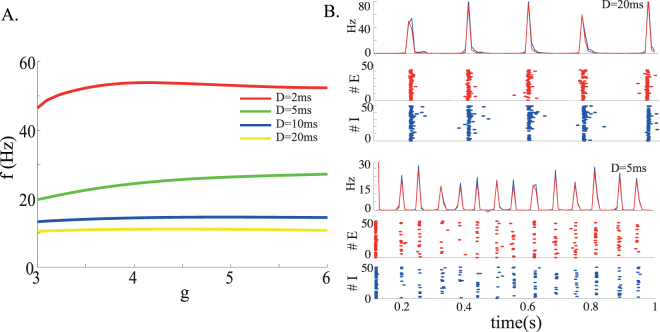
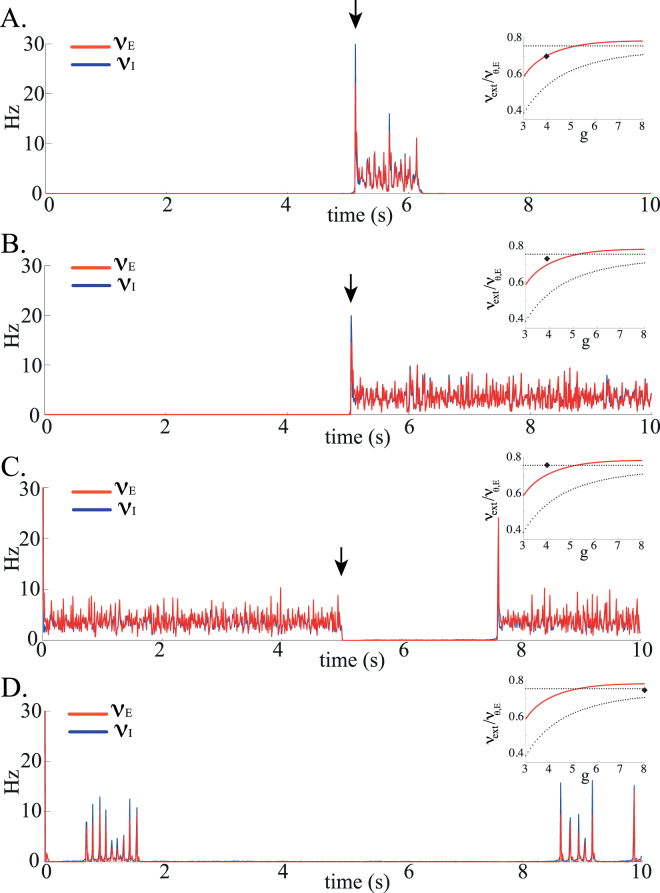
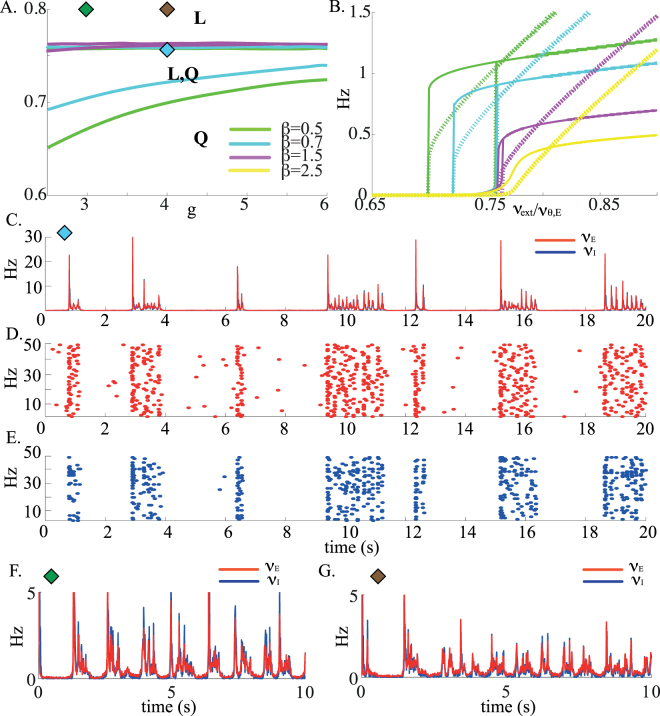
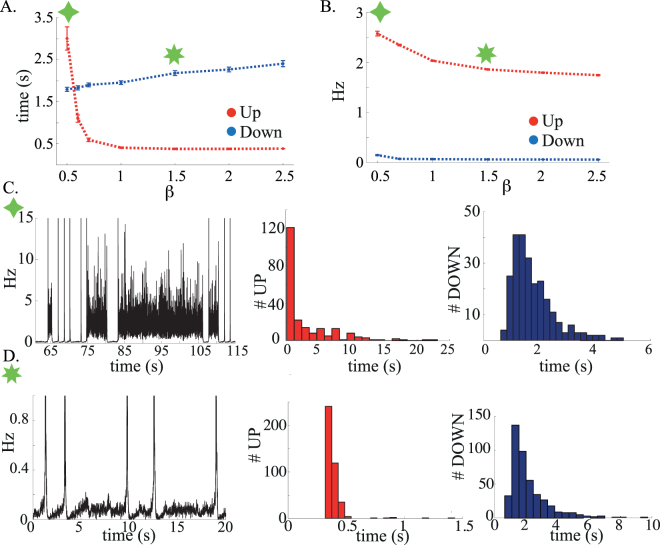
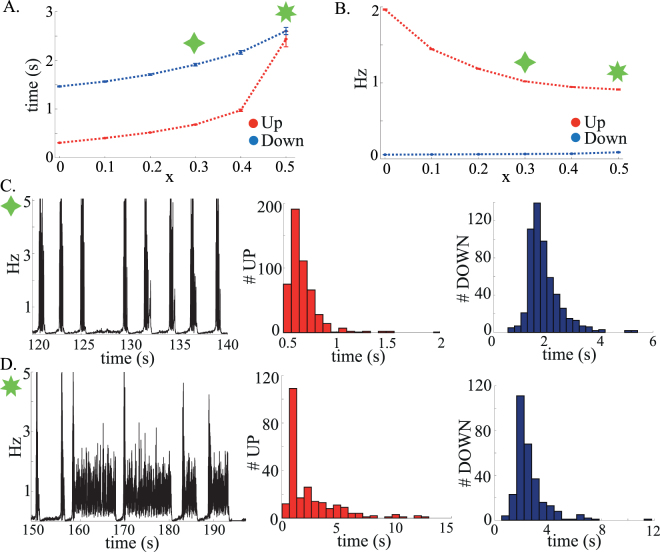
Electrophysiological recordings in cortex in vivo have revealed a rich variety of dynamical regimes ranging from irregular asynchronous states to a diversity of synchronized states, depending on species, anesthesia, and external stimulation. The average population firing rate in these states is typically low. We study analytically and numerically a network of sparsely connected excitatory and inhibitory integrate-and-fire neurons in the inhibition-dominated, low firing rate regime. For sufficiently high values of the external input, the network exhibits an asynchronous low firing frequency state (L). Depending on synaptic time constants, we show that two scenarios may occur when external inputs are decreased: (1) the L state can destabilize through a Hopf bifucation as the external input is decreased, leading to synchronized oscillations spanning d δ to β frequencies; (2) the network can reach a bistable region, between the low firing frequency network state (L) and a quiescent one (Q). Adding an adaptation current to excitatory neurons leads to spontaneous alternations between L and Q states, similar to experimental observations on UP and DOWN states alternations.
在体皮层的电生理记录揭示了丰富多样的动力学状态,这些状态范围从不规则的异步状态到多种同步状态,具体取决于物种、麻醉和外部刺激。这些状态中的平均群体发放率通常较低。我们分析和数值研究了在抑制主导、低发放率状态下稀疏连接的兴奋性和抑制性积分-点火神经元网络。对于足够高的外部输入值,网络表现出异步低发放频率状态(L)。取决于突触时间常数,我们表明,当外部输入减少时,两种情况可能会发生:(1)随着外部输入的减少,L 状态可能通过 Hopf 分岔失稳,导致跨越 d δ 到 β 频率的同步振荡;(2)网络可能到达双稳态区域,介于低发放频率网络状态(L)和静止状态(Q)之间。向兴奋性神经元添加适应电流会导致 L 和 Q 状态之间的自发交替,类似于 UP 和 DOWN 状态交替的实验观察。